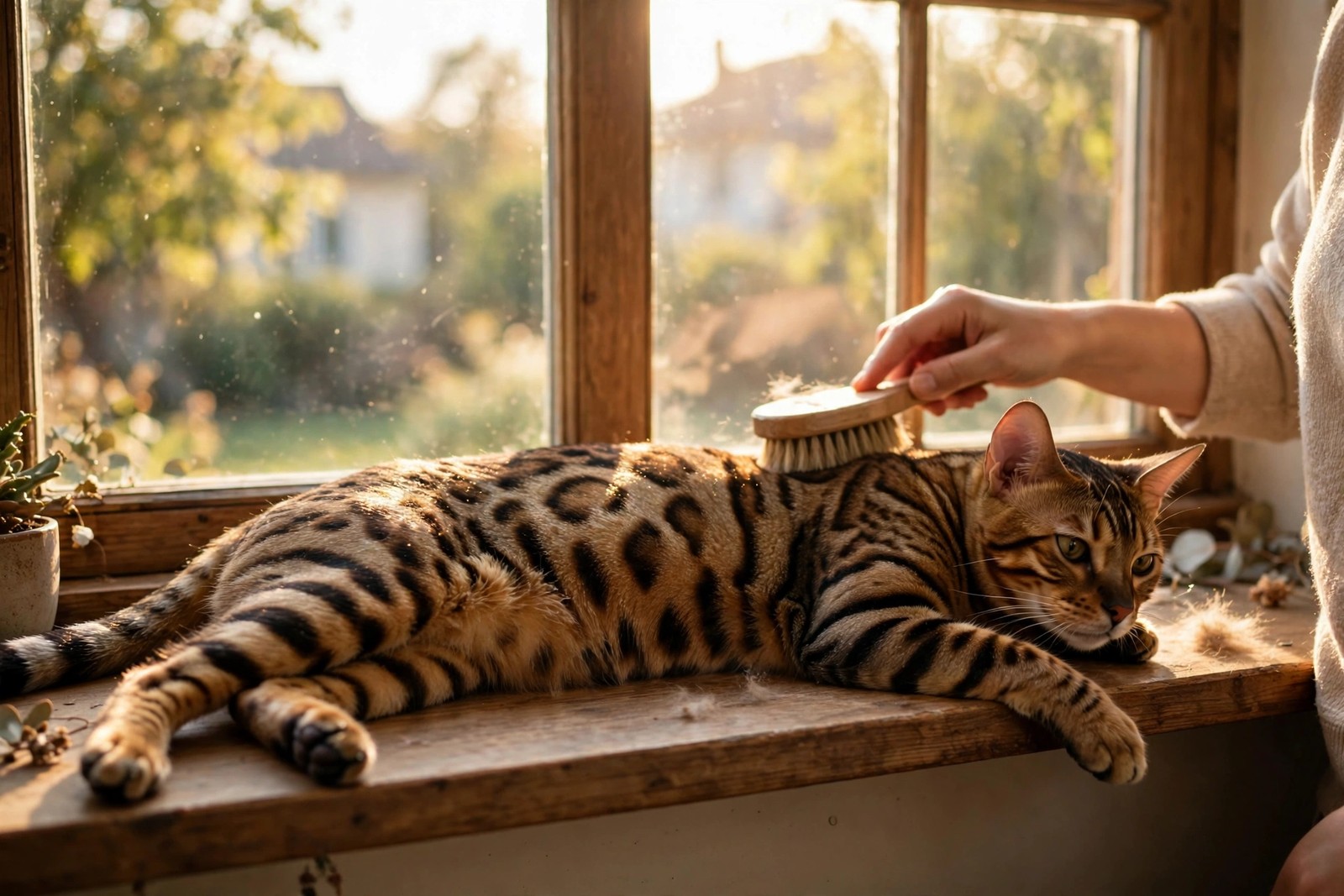
A Bengal needs surprisingly little grooming: one short brushing a week is enough for most cats. The breed's coat is short, dense, and unusually soft, often described as pelt-like, with a glittered sheen that catches the light. It does not mat, it does not tangle, and it sheds less than many shorthaired breeds. If you are choosing a Bengal expecting a low-maintenance coat on an otherwise high-energy cat, the grooming side of the bargain genuinely is the easy part.
The Weekly Five Minutes
Use a soft bristle brush or a rubber grooming mitt and work gently in the direction the hair lies. Five unhurried minutes lifts loose hair, spreads natural oils along the shafts, and keeps the rosettes or marbling looking crisp. Most Bengals treat the session as attention rather than chore, especially if it starts in kittenhood and ends before the cat gets restless. A damp hand stroked over the coat afterwards picks up strays the brush missed, a trick show owners use before judging.
Shedding Season and Bathing
Expect a modest increase in loose hair in spring as the coat adjusts; a second short brushing each week for a few weeks keeps it off your furniture. Bengals rarely need baths, and some famously enjoy water, but enjoyment is not necessity: bathe only when the coat is actually dirty or greasy, using warm water and a cat-safe shampoo, and expect the glitter to look temporarily dull until the coat fully dries. Skip routine bathing, which strips the oils that produce the sheen you are trying to preserve.
The Rest of the Session
Use the same weekly slot for the small jobs that are not about the coat: check ears for wax or debris, glance at teeth and gums, and trim claw tips every couple of weeks, since active Bengals climbing and scratching still grow sharp points. Loose hair swallowed during self-grooming is modest in this breed, but a cat who starts over-grooming, develops bald patches, or scratches persistently needs a vet rather than more brushing, as skin irritation and stress both show up this way. Senior Bengals who grow stiff may also reach less of their own back and tail base, another reason the weekly brush still earns its place in old age. A five-minute job is exactly the kind that slips through the cracks of a busy house, which is why KinsLe's Care Teams lets you schedule the weekly Bengal brush as a standing duty for one named person, confirmed done with a timestamp instead of left to memory.