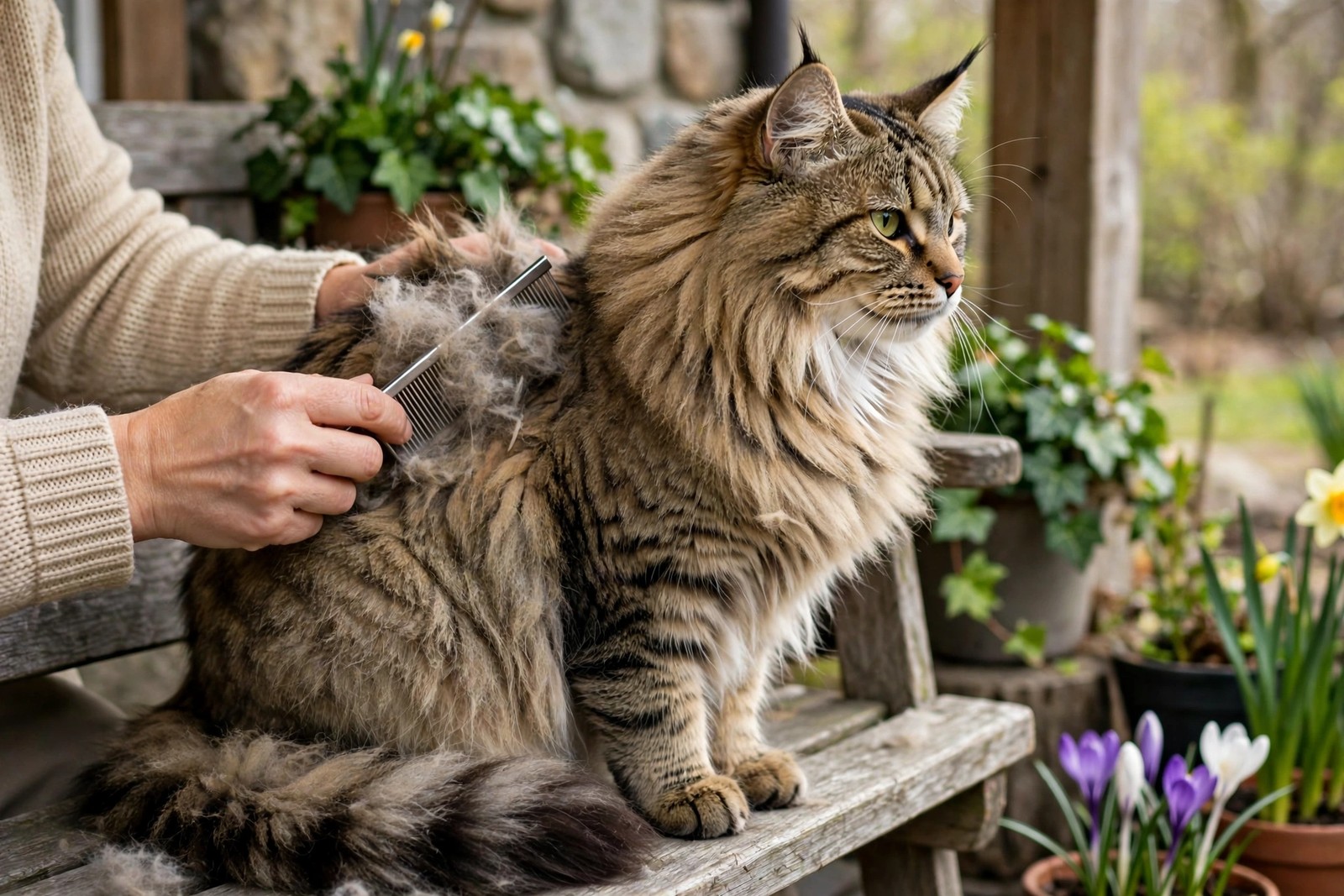
For most of the year, a Norwegian Forest Cat needs one thorough combing a week. The breed evolved in a cold Scandinavian climate and wears a serious double coat: a long, glossy, water-shedding outer layer over a dense woolly undercoat, finished with a full ruff, bushy tail, and tufted ears and paws. Surprisingly for that much fur, the coarse topcoat resists tangling, so a single weekly session that genuinely reaches the skin keeps a Wegie comfortable and mat-free outside one demanding season.
The Weekly Session, Done Properly
Use a steel comb rather than a surface brush, and work methodically in sections, lifting the coat to check that the comb glides at skin level. Spend the most time where undercoat packs down: the chest and ruff, behind the front legs, the belly, and the trousers on the hind legs. Ten to twenty minutes is realistic for a large adult. Most Norwegian Forest Cats are calm, deliberate cats who accept grooming well if it has been part of life since kittenhood, and a settled weekly rhythm beats rushing.
Spring: The Coat Lets Go All at Once
When warmer weather arrives, the winter undercoat sheds heavily over several weeks, and weekly combing falls behind fast. Loose wool left in the coat felts into mats remarkably quickly at this stage, so move to short comb-throughs every day or two until the wave passes. Expect impressive volumes of hair on the comb and a sleeker-looking cat by early summer, when the coat sits noticeably lighter until autumn rebuilds it. Extra swallowed hair in this season can mean the odd hairball; frequent vomiting or appetite loss is a vet matter, not a grooming one.
Bathing, Claws, and Honest Expectations
The water-resistant topcoat makes bathing a rare event, and a genuinely wet Wegie takes a long time to dry, so bathe only when the coat is truly soiled. Trim claws every two to three weeks, and during the weekly comb run your hands over the skin for lumps, ticks after outdoor access, or sore patches hidden under the insulation. Tight mats, skin redness, or a cat who stops grooming should go to a vet or professional groomer rather than being tackled with scissors. The weekly-to-daily swing in spring catches many households out, and KinsLe's Care Teams helps by letting you hold the combing as one shared duty in winter, then split the extra spring sessions between family members, each logged so the coat never gets ahead of anyone.