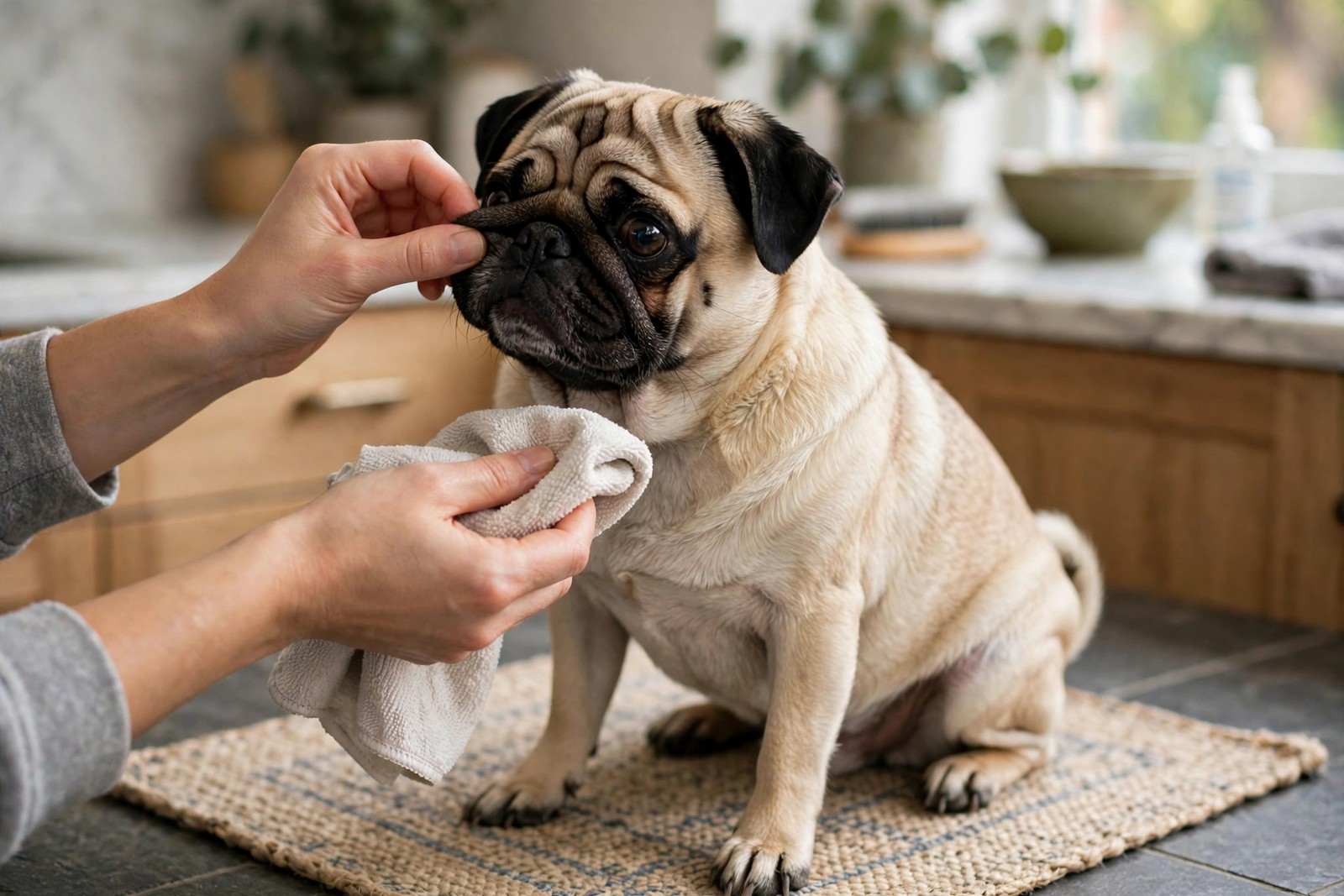
A Pug's coat looks very low-maintenance, and in one sense it is: the short, smooth double coat needs one brush a week. But the Pug's real grooming week is not about the coat. It is about the deep facial folds that must be cleaned and dried daily, ears that need a weekly check, and a breed whose weight you are watching every time your hands go over the body. Owners who only brush a Pug and skip the folds end up with the classic Pug problem of sore, smelly skin hiding inside the wrinkles.
The weekly brush and the shedding surprise
Use a rubber grooming mitt or a soft bristle brush once a week and go over the whole body, including the neck and the curl of the tail. Pugs shed steadily and surprisingly heavily, especially the fawn coat with its dense undercoat, and weekly brushing keeps loose hair on the mitt instead of across the furniture. The session doubles as a body check: you should be able to feel the ribs under a light covering, and the waist should tuck in behind them. Extra padding creeping over the ribs matters a great deal in this breed, because added weight worsens breathing in a flat-faced dog.
Folds: wiped and dried every single day
The deep fold over the nose and the smaller wrinkles on the face collect moisture, tears, food, and dirt, and the skin inside stays warm and airless. Every day, lift each fold, wipe inside it with a soft damp cloth or pad, then dry it thoroughly with a clean dry cloth; the drying is the step people skip, and a wiped-but-damp fold is still a fold where skin gets sore and starts to smell. Check the tail pocket, the shallow fold where the tail curls against the body, in the same daily round. Redness, a sour smell, or the dog pawing at its face means the skin needs a vet's look rather than more vigorous home cleaning.
Ears, nails, and eyes in the weekly session
Fold the weekly brush into a full handling session: check inside the ears for wax, redness, or smell and clean the outer ear gently if your vet has shown you how; trim or file nails that click on hard floors, since an indoor-leaning Pug does not wear them down; and look at the prominent eyes, which are exposed to dust and knocks, wiping away normal discharge from the corners with a damp cloth. A bath every few weeks keeps the coat and folds fresh, and after a bath the folds must be dried as carefully as after the daily wipe, since bath water settles in exactly the same places.
Making daily care stick
Daily fold care succeeds when it is tied to something that already happens daily, like the morning feed: food down, then wipe, dry, done. Two minutes at the same moment each day beats a weekly excavation of a neglected fold. If more than one person cares for the dog, agree that the wipe is not done until the fold is dry, and note any day the skin looked pink so a trend is visible rather than guessed at. KinsLe's Care Teams helps by carrying the daily fold wipe and dry, the weekly brush, and the ear check as separate assigned duties, each marked complete with a timestamp, so everyone can see the folds were done properly today.