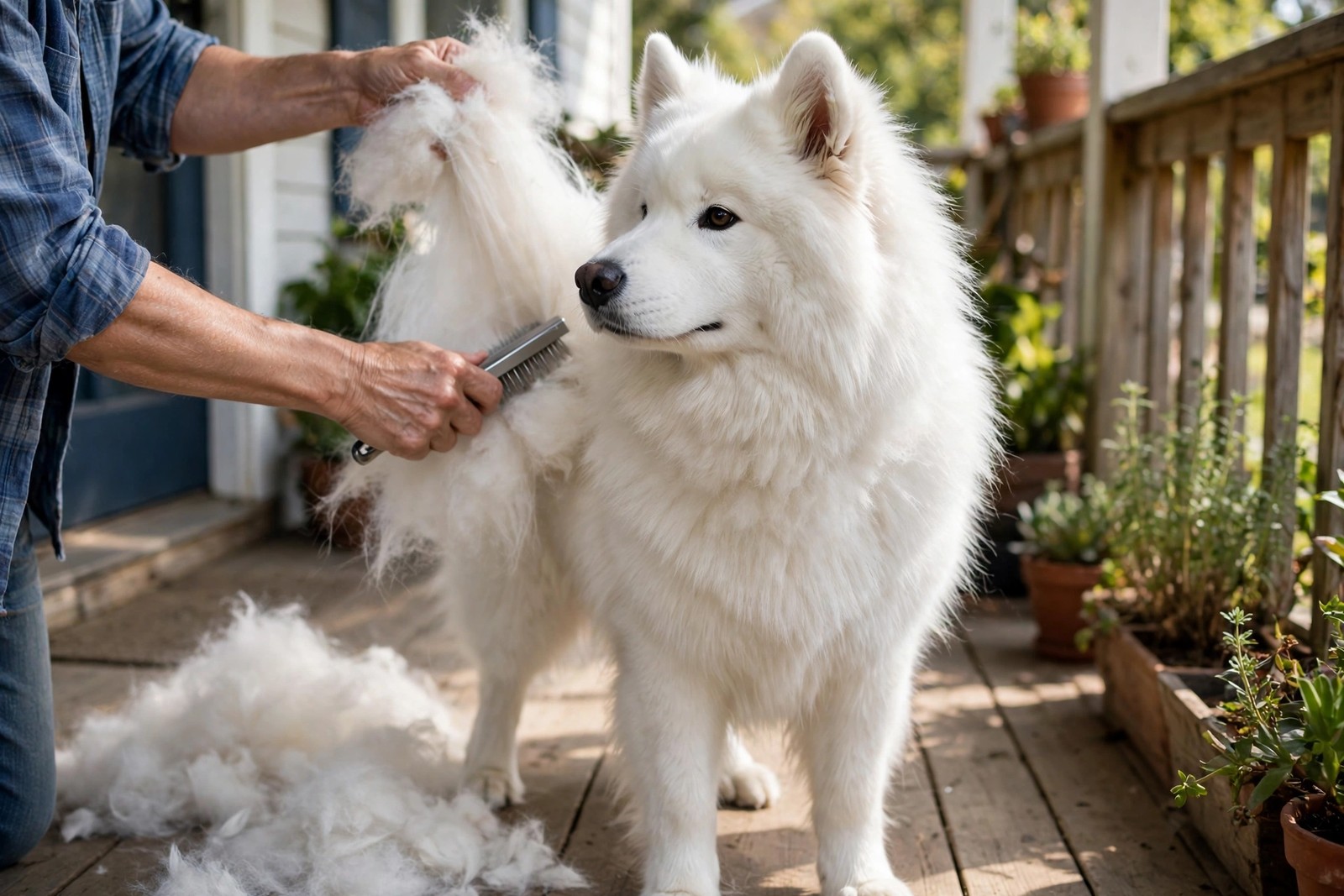
A Samoyed's brilliant white double coat is profuse by design: a long, harsh outer coat standing over a soft, woolly undercoat that insulated the breed through Siberian winters. It needs brushing three or four times a week, every session taken down to the skin, and it sheds in a serious seasonal blow on top of steady year-round loss. This is not a coat that forgives a skipped fortnight; two weeks of neglect can leave the undercoat felted across the ruff and hindquarters while the outer coat still photographs beautifully.
Line brushing a coat you cannot see through
Work in sections, lifting the coat and brushing the undercoat out in layers from the skin, using a pin brush or slicker and finishing with a metal comb. The comb is the truth test: it should reach the skin and glide; where it rides or snags, that section still holds packed undercoat. The ruff around the neck, the hair behind the ears, the armpits, and the dense trousers felt first, so they get attention at all three or four weekly sessions. Brush in good light and look at the skin at your partings, since white coats can hide redness until you part the hair properly. Place small treats beside the dog one at a time during pauses, and keep sessions measured rather than rushed.
The coat blow: daily until it clears
When the seasonal blow arrives, typically in spring and again in autumn, the undercoat comes away in handfuls and the normal rhythm is overtaken. During the blow, brush daily, working outside if you can, until the comb passes to the skin across the whole dog again and the loose hair coming out drops back to normal levels. Expect a few weeks of this, and expect hair on every surface meanwhile; daily sessions are what keep the loosening undercoat from felting into the coat that remains. A bath partway through the blow, after a thorough brush-out and followed by complete drying, can help release loosened undercoat, but a bath over packed undercoat makes felting worse.
Drying and the dirt question
Samoyed coats shed dry dirt surprisingly well once brushed, and a muddy dog often looks clean again after drying and brushing out, which is why bathing stays occasional. When a bath does happen, or the dog gets soaked, dry the coat completely to the skin in sections; the undercoat holds water against the body for hours while the outer coat feels dry. Never shave the coat down for summer or for convenience: the double coat insulates against heat as well as cold, shaving exposes pale skin to sunburn, and regrowth can be uneven. A groomer can tidy feet and hocks, but the working double coat should stay intact.
Holding three or four sessions a week
Three or four full sessions, plus daily sessions during the blow, is a serious weekly grooming commitment, and it goes best as a shared, visible routine. Agree the days, record which sections were finished, and note when the blow starts, because the shift to daily brushing should happen at the first handfuls of undercoat, not a week later. Puppies need short, gentle introductions to standing and line brushing long before the adult coat reaches full density. KinsLe's Care Teams lets you assign each session to a named person and mark it complete with a timestamp, so everyone at home can see whether this week's three or four sessions, or today's blow session, actually happened.