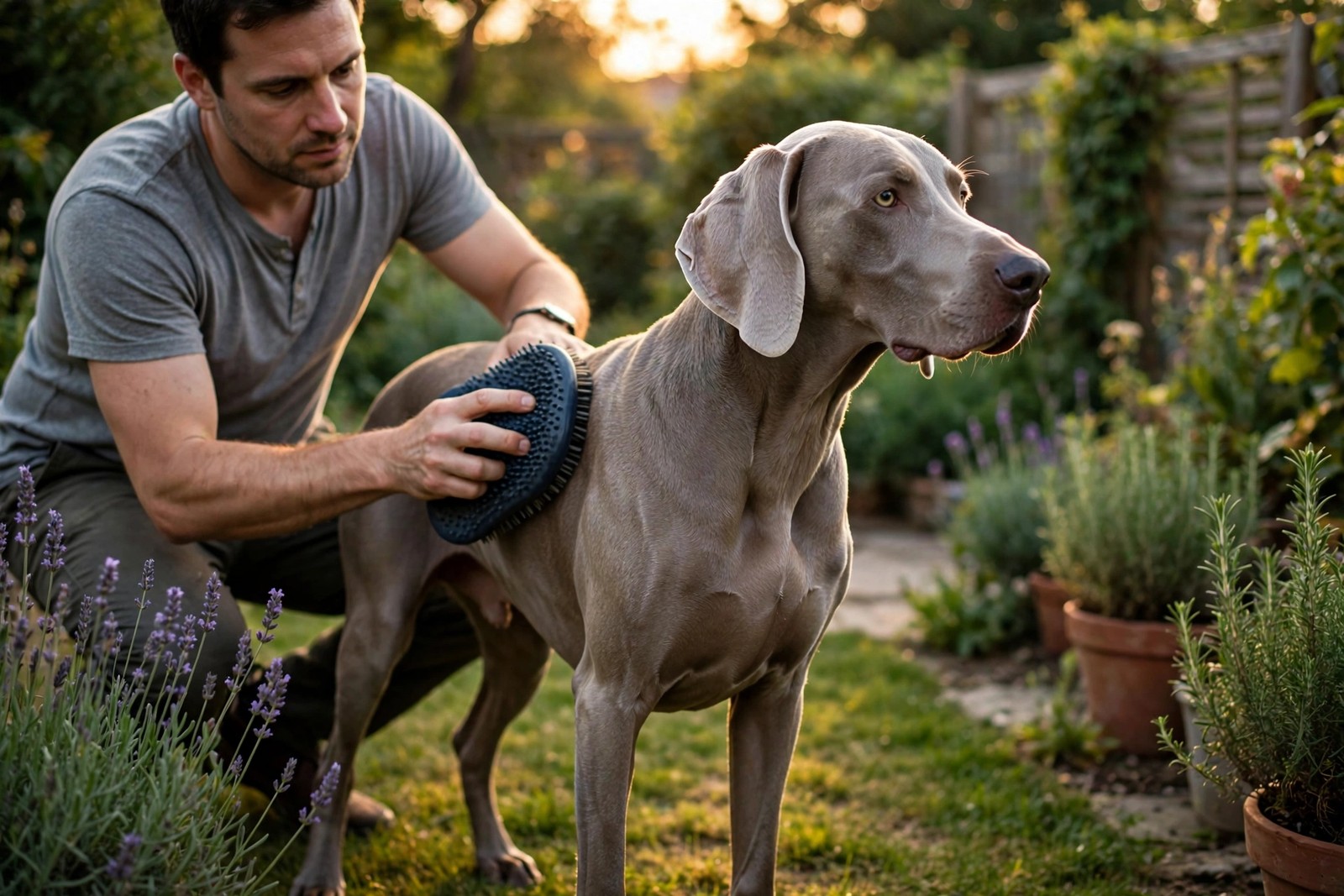
A Weimaraner coat needs about 10 to 15 minutes of grooming a week, and most of that is a single quick brush. This breed's famous silver-grey coat is short, smooth, and single: there is no undercoat underneath it. That one fact settles most grooming questions, because a coat without an undercoat cannot felt or mat, no matter how long you leave it between brushes.
The weekly brush: what it is actually for
Brush once a week, twice during the heavier shedding periods in spring and autumn, using a rubber grooming mitt or a soft bristle brush. Five minutes of firm strokes in the direction of the hair removes loose and dead hair before it lands on your furniture, spreads natural skin oils along the coat so it keeps its sheen, and gives you a hands-on check of the whole dog. You are looking for ticks, small cuts from running through cover, dry or flaky patches, and any new lump under the skin — things a high-energy hunting breed picks up without announcing.
Because the coat lies flat and dries fast, there is nothing to detangle, trim, or part. Any advice about working through a Weimaraner's matted undercoat is advice written for a different breed; if you ever feel a rough patch, it will be dried mud or a skin issue worth looking at, not a tangle.
Bathing: rarely, and only when earned
Weimaraners do not need routine bathing. A bath every couple of months, or when the dog has rolled in something foul or come home genuinely muddy, is enough for most. More frequent washing strips the oils that give the coat its gloss and can leave the skin dry and itchy. Use a mild dog shampoo, rinse thoroughly, and expect the short coat to dry quickly with a towel.
The exception is skin trouble. Persistent itching, redness, a yeasty smell, or hair loss are not grooming problems to wash away; they are reasons to see a vet, since allergies and skin infections are treated medically, not with more baths.
Where the real weekly work is: nails, ears, teeth
The coat may be nearly carefree, but the rest of a Weimaraner is not. Those big, active feet grow strong nails that need checking weekly and trimming roughly every two to three weeks, more often if the dog runs mainly on grass rather than pavement. Long floppy ears trap moisture, so lift and check them once a week for redness, dark wax, or a sour smell, and clean them only with a vet-approved ear cleaner when they actually need it.
Teeth deserve a brush several times a week if your dog tolerates it. Weimaraners live active lives and chew enthusiastically, and dental disease builds quietly in a dog whose coat gives you so little else to do.
Fitting it into a Weimaraner week
Do the brush after exercise, when the dog is pleasantly tired and willing to stand still, and keep the whole session under fifteen minutes including nails and ears. A puppy introduced to the mitt, the nail clippers, and ear checks in short, rewarded sessions becomes an adult who treats grooming as unremarkable. Put the weekly session on a fixed day and assign it in KinsLe's Care Teams, and the smallest grooming job of any large breed still never gets skipped in a busy household.