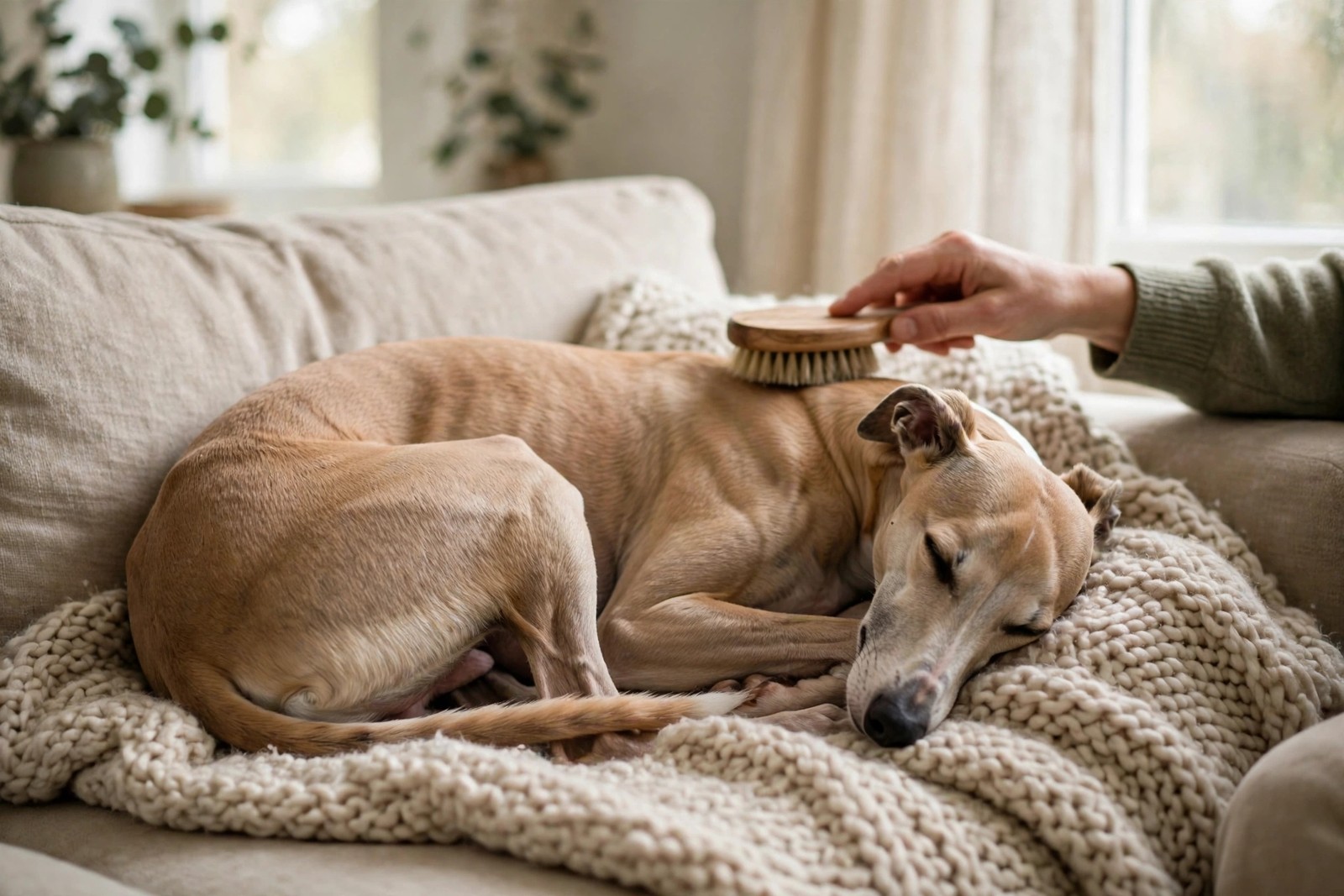
A Whippet coat asks for about five minutes once a week, and owners who expect a demanding routine are often surprised by how little there is to do. The coat is short, fine, and single, lying close to the body with no undercoat beneath it. Nothing mats, because there is no second layer to tangle against the first, and there is no seasonal coat blow-out to rake through. A soft brush or a grooming mitt lifts loose hair and dust and leaves the coat glossy. Skipping a week simply means you miss the checks that ride along with the brushing, and those checks are the real point of the session.
Thin skin: the check that matters most
Whippet skin is noticeably thinner than that of many other breeds, and it covers a lean, bony frame with very little fat padding over the hips, ribs, and legs. Cuts and scrapes from brambles, wire, rough play, and catching a doorway are common, and a small nick can tear further if it goes unnoticed. While you brush, run your palms slowly over the whole dog and look at anything your fingers catch on: fresh grazes, scabs, lumps, dry patches, and sore spots between the toes.
Clean minor grazes gently and watch them over the following days. A cut that keeps opening, looks hot or swollen, weeps, or makes your dog lick at it constantly needs a veterinarian rather than another week of watching. Whippets also feel the cold through that fine coat, so note winter dryness or flaking at the same check; a dog who is flaky, itchy, and uncomfortable deserves a vet conversation about skin and diet instead of extra bathing, which usually makes dry skin worse.
Nails and teeth in the same session
Whippet nails grow quickly and many Whippets do much of their exercise on grass, which wears nails down far less than pavement does. Long nails change how the foot lands and can make a sighthound reluctant on hard floors, so check them weekly and trim or file little and often rather than taking a lot off at once. Dewclaws need the same attention because they barely touch the ground and can curl if they are forgotten for weeks.
Teeth deserve a weekly look too. Lift the lip on each side and check for tartar building along the gumline, redness at the gum edge, and any tooth that looks broken or discoloured. Regular toothbrushing helps where your dog tolerates it, built up gradually with dog toothpaste and praise, but even owners who brush should still do this visual check, because it is how a cracked tooth or sore gum gets spotted early. Bad breath that is new and strong, drooling, or dropping food are reasons to book a dental check with your vet.
Bathing and everyday coat care
Bathe a Whippet only when your dog is actually dirty, which for a fastidious, low-odour breed may be quite infrequent. Use lukewarm water, because a lean dog with a fine coat chills quickly, and dry your dog thoroughly afterwards, offering a warm room and a blanket rather than letting your dog shiver dry. In cold weather a well-fitting coat for walks protects both warmth and skin, and rinsing mud off the legs and belly with plain water after a wet walk avoids the need for a full bath.
Keep the whole routine gentle and brief, on the same day each week, ideally after a run when your Whippet is ready to curl up anyway. Puppies should learn the handling in tiny pieces, a few brush strokes and one paw touched at a time, so the adult routine never feels like a struggle.
Five minutes of brushing, a careful skin check, a nail check, and a look at the teeth: that is the complete weekly commitment for a Whippet. With KinsLe Care Teams, that short weekly session can sit on a shared list where the person who brushed, checked the skin and nails, and looked at the teeth marks it complete for everyone else to see.