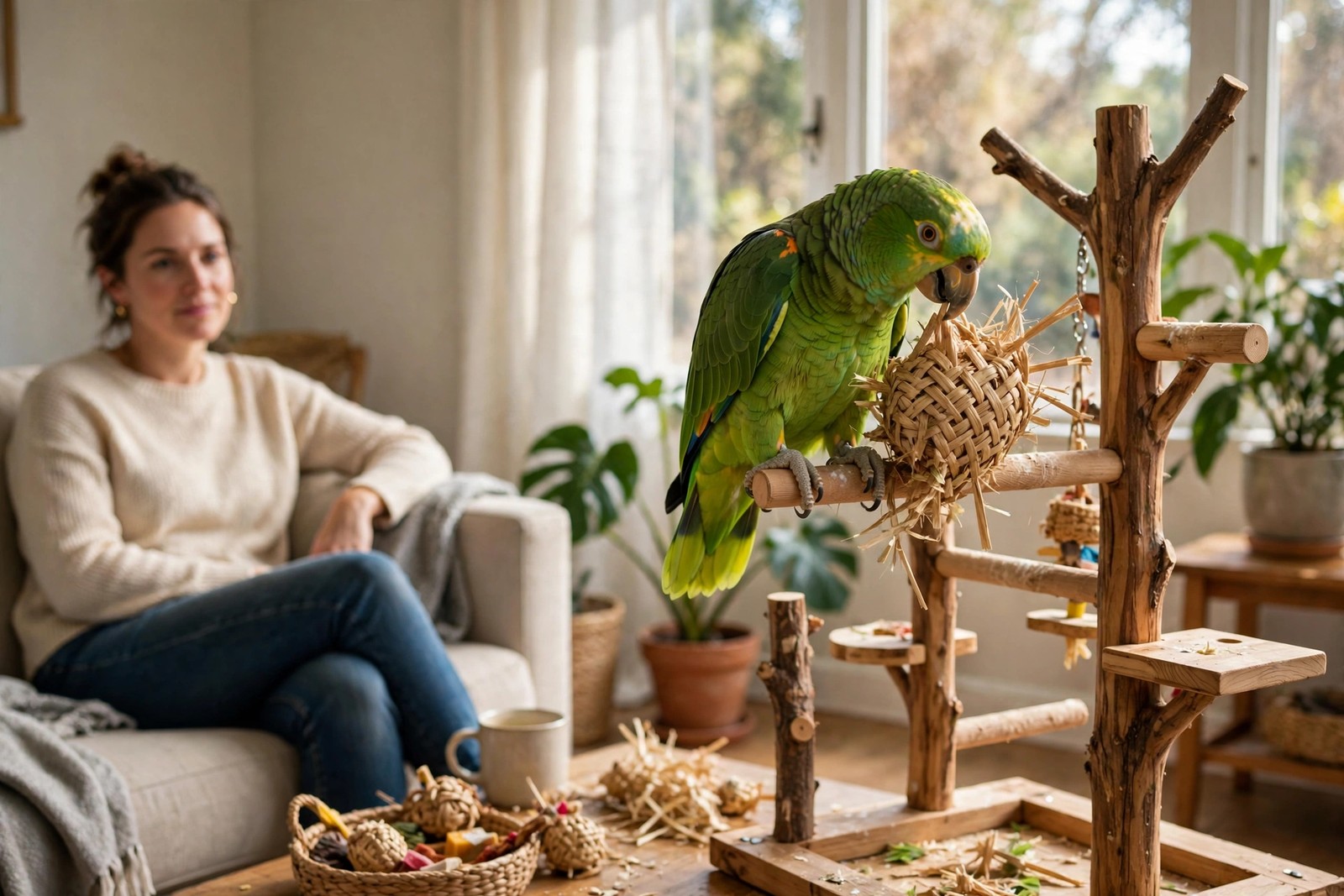
Plan on a minimum of three to four hours of supervised out-of-cage time every day for most parrots. That is a floor, not a target: parrots are flying, flock-living animals who in the wild spend their days moving, foraging, and staying in near-constant contact with companions. Cage time alone, however large the cage, does not meet that need, and chronic under-stimulation is behind a large share of screaming, feather-damaging behavior, and aggression seen in pet parrots.
Scale the hours to the bird
Smaller conures, lovebirds, and cockatiels can thrive on three to four hours if the time is genuinely interactive and the cage itself is roomy and well furnished. Medium parrots such as African greys and amazons usually need four hours or more, with mental work built in — training, foraging toys, and conversation — because intelligence left idle tends to turn anxious. Large macaws and cockatoos sit at the top of the scale: five to six hours or more is a fair planning figure, and a single cockatoo in particular may expect to be involved in household life for most of the waking day.
A parrot kept singly also needs more of your time than one with a bonded companion bird, because you are the entire flock.
How to structure the hours
Two or three sessions usually work better than one marathon. A morning session after breakfast suits most households — parrots are naturally active and vocal early — and a longer evening session covers social time, training, and play before the bedtime routine. During out-of-cage time the bird should be able to fly or walk and climb, work at foraging toys, and spend time near people. Sitting on top of a closed cage in an empty room counts for far less than the clock suggests.
Protect the session properly: close windows and doors, switch off ceiling fans, keep other pets out unless introductions are closely managed, move toxic houseplants and exposed cables out of reach, and stay in the room. An unsupervised parrot can chew a door frame, a wire, or a poisonous leaf in minutes.
Signs the current amount is not enough
Persistent screaming for attention, biting when returned to the cage, restless pacing or repetitive movements, and feather-damaging behavior are common signals that a parrot needs more time out, more occupation, or both. A sudden change in a bird who was previously settled is different — appetite loss, fluffed posture, or reduced vocalization can indicate illness, and an avian veterinarian should see the bird promptly rather than the schedule simply being extended.
Track the routine for a fortnight before judging it. Parrots settle into predictable households, and many behavior complaints soften noticeably once the daily hours stop varying.
Putting the morning and evening sessions into KinsLe's Care Teams, with a named person responsible for supervising each one and completions timestamped, guarantees your parrot's hours happen even when the household's day gets rearranged.