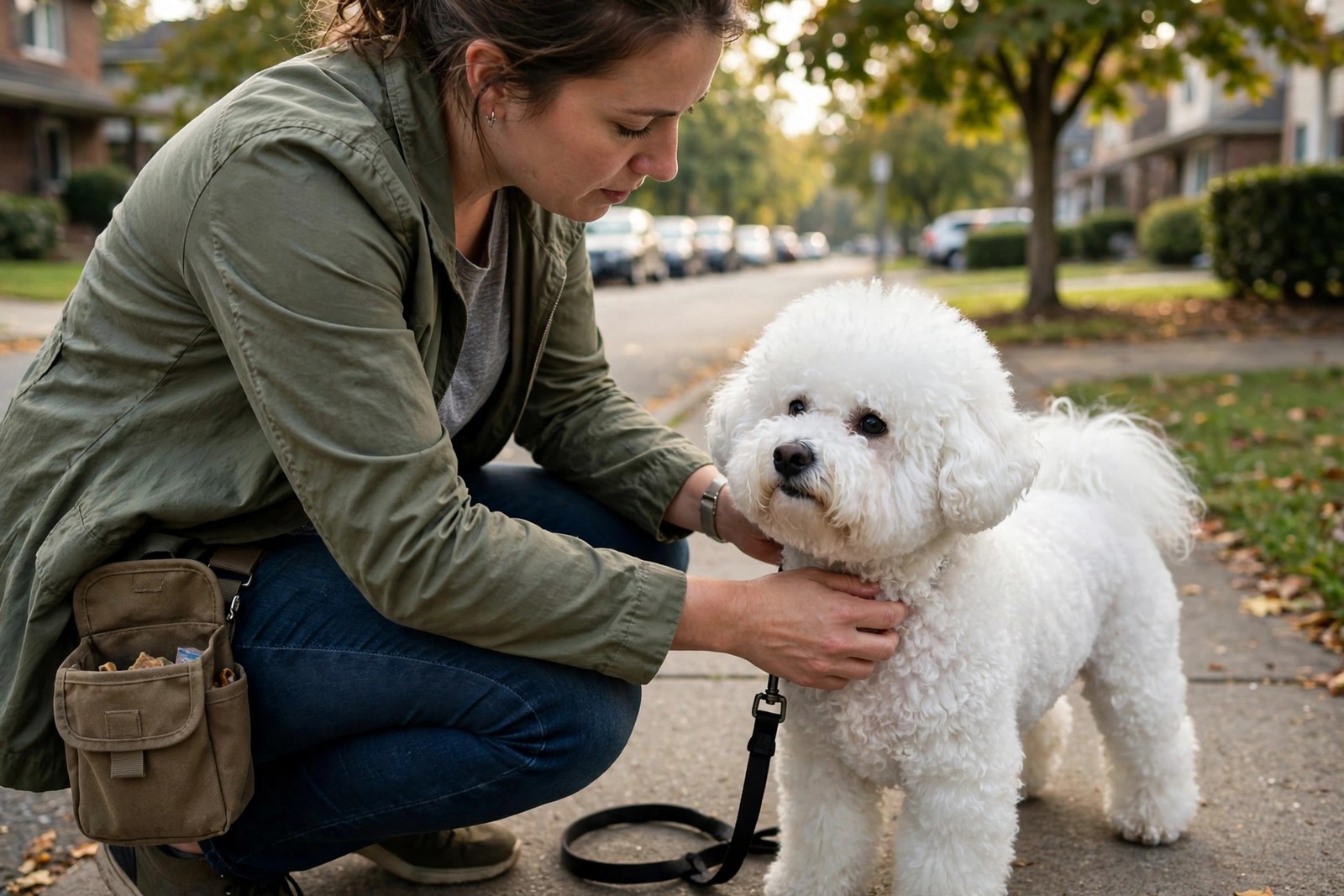
Twelve to eighteen pounds is the healthy adult range usually quoted for a Bichon Frise. Treat the range as a guide, not a verdict: frame, height and muscle vary, so body condition matters more than the scale — ribs should be felt easily under a thin fat cover, with a visible waist from above and the side. If your dog sits outside the range but feels lean and is vet-checked, their personal healthy weight wins over any chart.
The Basics First
For a Bichon, feeding well means measuring, because this breed's cheerful appetite rarely regulates itself. Serve a complete adult diet in weighed or carefully measured portions, and make any change of food gradually over several days so digestion keeps up. Fresh water, refreshed daily, does the rest of the daily work, and treats stay a small, counted share of the day rather than a second diet running alongside the meals.
The coat is the complication. A Bichon's profuse double coat adds visual bulk that the scale does not feel, so owners relying on looks alone can miss slow gain for months. Hands-on checks — ribs felt through the coat, a waist found from above after a brush-out — are the only reliable reading between weigh-ins for this breed.
Practical Steps That Help
The checks that keep a Bichon inside the range:
- Weigh on the same scale monthly and write the number down
- Feel for ribs through the coat weekly, not just after a trim
- Measure meals instead of filling the bowl by eye
- Break treats into pea-sized pieces and count them in the day's food
- Recheck portions after any drop in activity, and adjust in small steps
Compare your Bichon with his own last month, not with the dog at the park. Frame and coat vary enough between individuals that another dog's number tells you nothing about yours, while a change from his own usual appetite, energy, and rib feel is the signal worth acting on.
Keeping It Going
If several people feed one small dog, the portions drift: a second breakfast here, a generous treat there, and a 15-pound dog is soon eating a 20-pound dog's day. Agree the amounts out loud and keep them where everyone can see them at feeding time. In KinsLe, Care Teams lets whoever feeds the Bichon that day see the duty as theirs, and the timestamp on each completed feeding shows the next person it is already done.