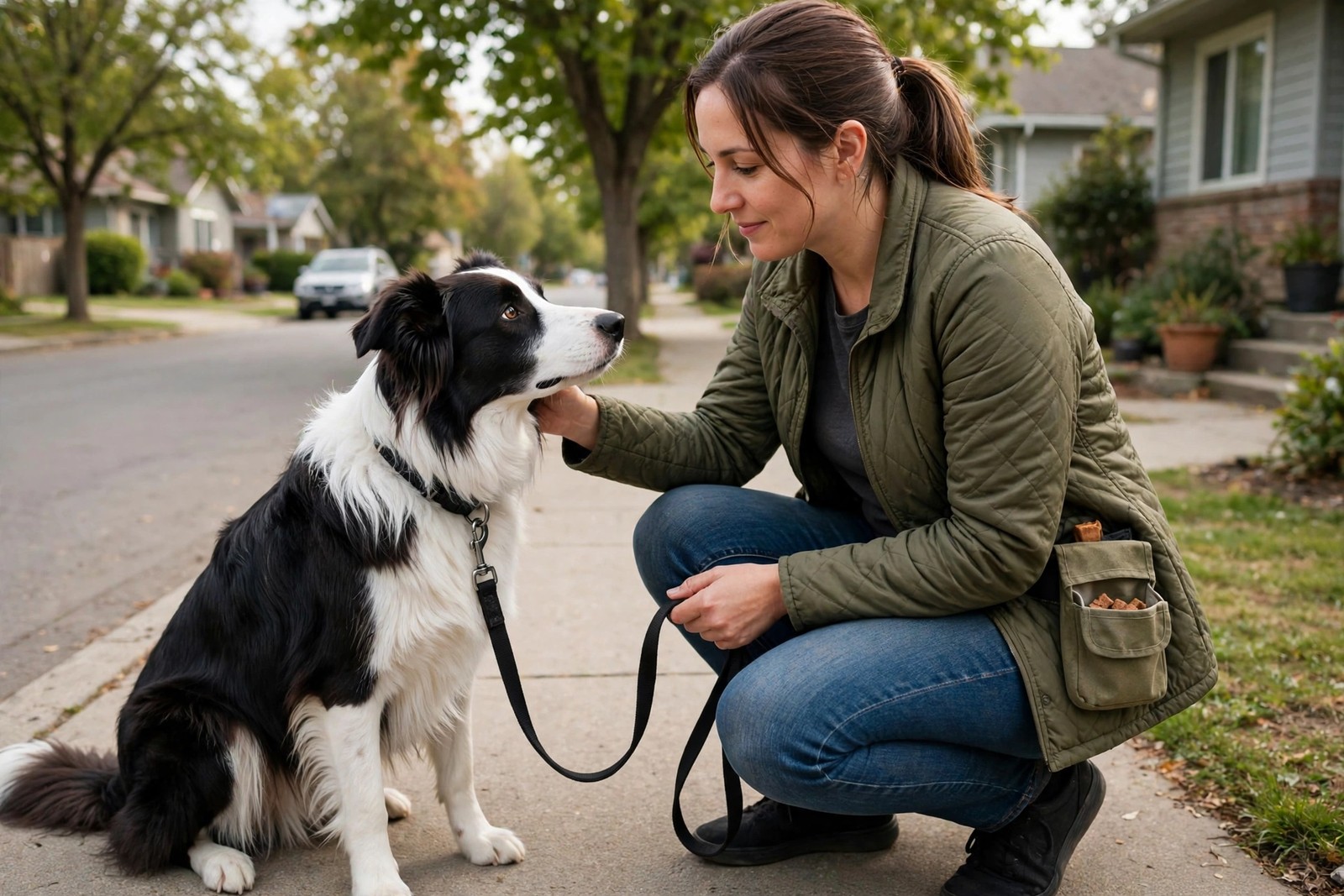
An adult Border Collie typically weighs 30 to 55 lb, which converts to about 14 to 25 kg. Females commonly weigh 30 to 45 lb (about 14 to 20 kg), and males cover 35 to 55 lb (about 16 to 25 kg). The span looks wide because the breed varies in height and bone, and because condition differs sharply between a dog who works sheep daily and a dog who lives as a household companion. Both dogs can be healthy at very different numbers.
An Athletic Frame With Little to Spare
The Border Collie build is lean by design: a moderately long body, a deep but not wide chest, and hindquarters built for turning at speed. In ideal condition the dog looks athletic rather than filled out. Ribs should be easy to feel under a light fat covering, and many fit Collies show a clear waist from above and a pronounced tuck from the side. The rough coat can add apparent volume, especially around the neck and hindquarters, so part the coat and judge with your hands.
Muscle distribution tells a useful story in this breed. A working dog carries firm, developed thighs and shoulders, and that muscle legitimately raises the scale reading. A pet dog at the same weight with soft thighs and padded ribs carries a different composition entirely. Pinch and palpation reveal what the total conceals.
Let the Workload Set the Target
Energy demand in Border Collies swings more dramatically than in pet breeds with steadier routines. A dog in daily hill work or intensive training may need substantially more food during the working season, and the same dog can gain quickly when injury, weather, or a quieter household cuts the work. Adjust portions in small steps as the load changes, and recheck condition every few weeks during transitions rather than waiting for a visible change.
Owners of pet Collies face the opposite trap. The breed's intensity reads as athleticism even when the dog's actual exercise amounts to an hour of walking and garden play. Feeding such a dog at working-dog levels produces steady gain, which then slows the dog and invites still larger portions in a misguided attempt to restore energy. The condition check breaks that cycle, because ribs and waist report the truth that demeanour hides.
Age, Neutering, Vet Input, and Consistent Weighing Conditions
Young Border Collies often stay lean through adolescence and fill out during the second year, and owners should resist fattening a naturally slight youngster who eats well and passes vet checks. Neutering and ageing both tend to ease energy needs, so the ration that suited a two-year-old may overfeed the same dog at six. A scheduled condition check twice a year catches that drift while a small portion change still fixes it.
Unexplained change in either direction merits a vet conversation. Weight loss in a dog who trains hard and eats eagerly, or gain that continues despite verified portions, gives a vet reason to investigate possibilities ranging from parasites to metabolic conditions. Dated records of weight, ration, and workload turn that visit into a focused review rather than a guess.
Weigh under consistent conditions to keep the record honest. A Collie weighed after a wet morning run, a full meal, and a long drink can read several pounds above the same dog weighed dry and before breakfast. Choose one routine, such as a dry dog before the morning feed on the first day of each month, and hold to it. Consistency turns small readings into a trustworthy trend, and the trend is what portion decisions should follow.
A breed this responsive to workload rewards owners who record the pattern, and KinsLe Care Teams links your Collie's weigh-in duty to the training weeks in one shared record for the household.