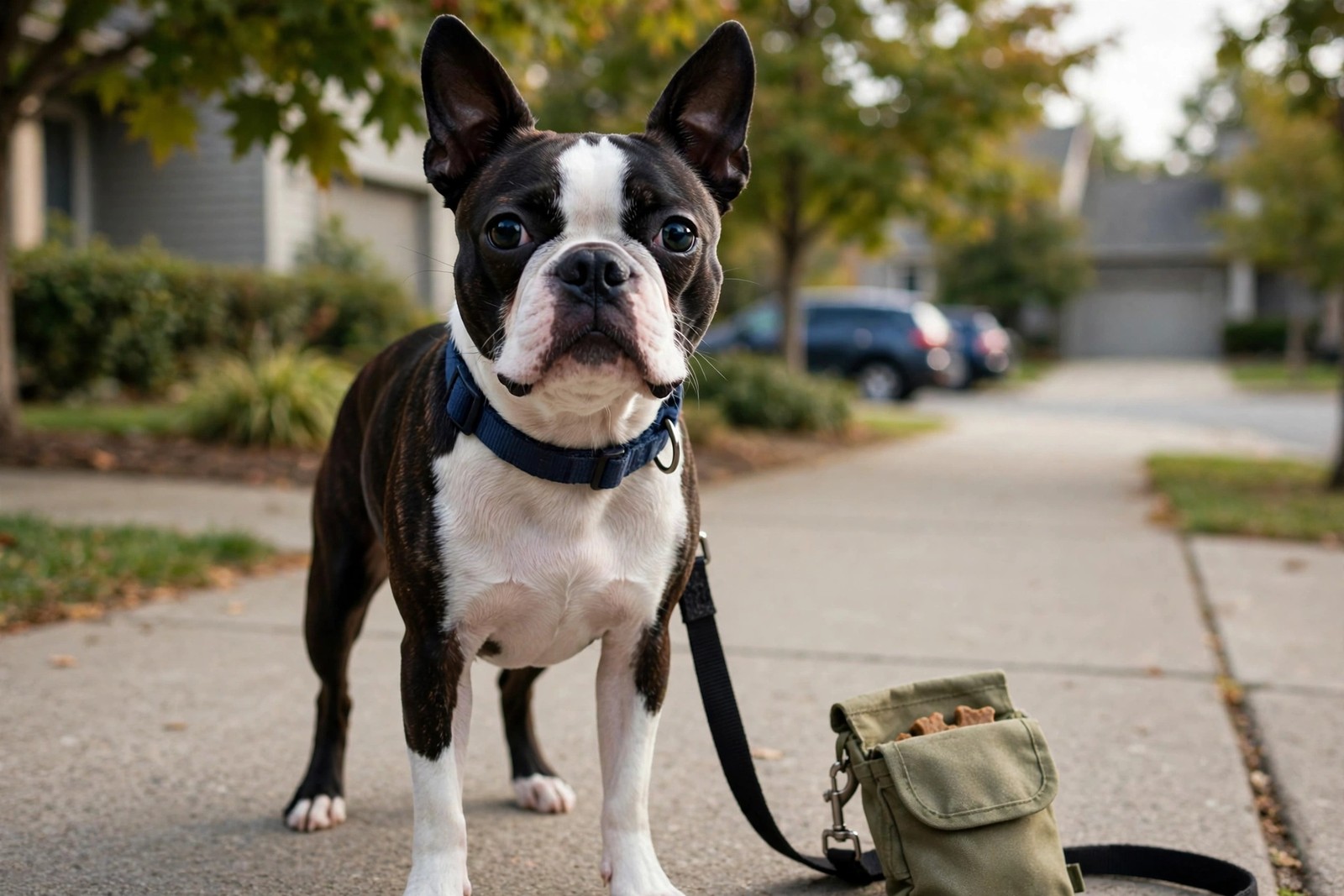
An adult Boston Terrier typically weighs 12 to 25 lb, which converts to about 5 to 11 kg. The breed standard sorts Boston Terriers into three weight classes: dogs under 15 lb (about 7 kg), dogs from 15 to 20 lb (about 7 to 9 kg), and dogs from 20 to 25 lb (about 9 to 11 kg). A dog's class reflects frame size rather than quality, and a healthy Boston Terrier sits inside one class with lean condition rather than straining toward the top of the next.
A Square Frame With Nowhere to Hide Extras
The Boston Terrier stands compact and square, with a short back, a broad chest for its size, and a smooth coat that conceals nothing. That transparency helps owners. Extra fat appears early as a softening over the ribs, a thickening at the neck, and a waist that fades when viewed from above. Run your palms along the ribcage and expect to feel ribs readily under a thin covering. Look down and expect a modest narrowing behind the ribs, even in the broadest class.
Small frames magnify small errors. Two extra pounds on a 15 lb dog represent a far larger share of body weight than two extra pounds on a large breed, and the joints, heart, and airways of a compact dog feel that share quickly. Kitchen scales for food and a monthly weigh-in for the dog cost little and give this breed the precision its margins require.
Weight and Breathing Belong in One Conversation
Boston Terriers have short muzzles, and excess weight can make breathing effort harder, particularly in heat and during excitement. Owners should treat noisy, laboured breathing, reduced stamina, or trouble settling in warm weather as prompts for a vet conversation about both airway and weight, because a vet can assess how the two interact in an individual dog. Keeping a Boston Terrier lean is one of the few weight-related steps fully inside owner control, and it supports comfort every single day.
Exercise needs a measured approach in this breed. Short, frequent, moderate outings in cool parts of the day suit the Boston Terrier better than intense sessions that tempt owners to overfeed afterwards in compensation. Condition, not appetite after a walk, should set the portion.
Portions at a Small Scale
Daily rations for a dog of this size are small enough that casual extras distort them badly. A single large biscuit aimed at a bigger dog can equal a meaningful slice of a Boston Terrier's day. Break treats into tiny pieces, count dental chews inside the daily total, and keep the treat pot where the whole household can see the allowance shrinking.
Weight that rises despite weighed portions and counted treats deserves veterinary investigation, as does any fall in weight or appetite in a dog this size, where losses register fast. A vet can explore possibilities that feeding records alone cannot settle, and a dated log of weights makes the pattern plain.
Sleep offers an extra clue in this breed. A Boston Terrier who gains weight may snore more heavily, shift position often during the night, and wake restless in warm rooms. Owners sometimes accept the noise as a breed trait, and some of it is, yet a clear change in sleep noise alongside a softening waist gives you two reasons to book the vet conversation rather than one. Note both changes with dates and bring the pair to the appointment.
Close margins reward close record-keeping across everyone who feeds the dog, and KinsLe Care Teams keeps your Boston Terrier's weigh-in and weighed portion visible to each feeder in the home.