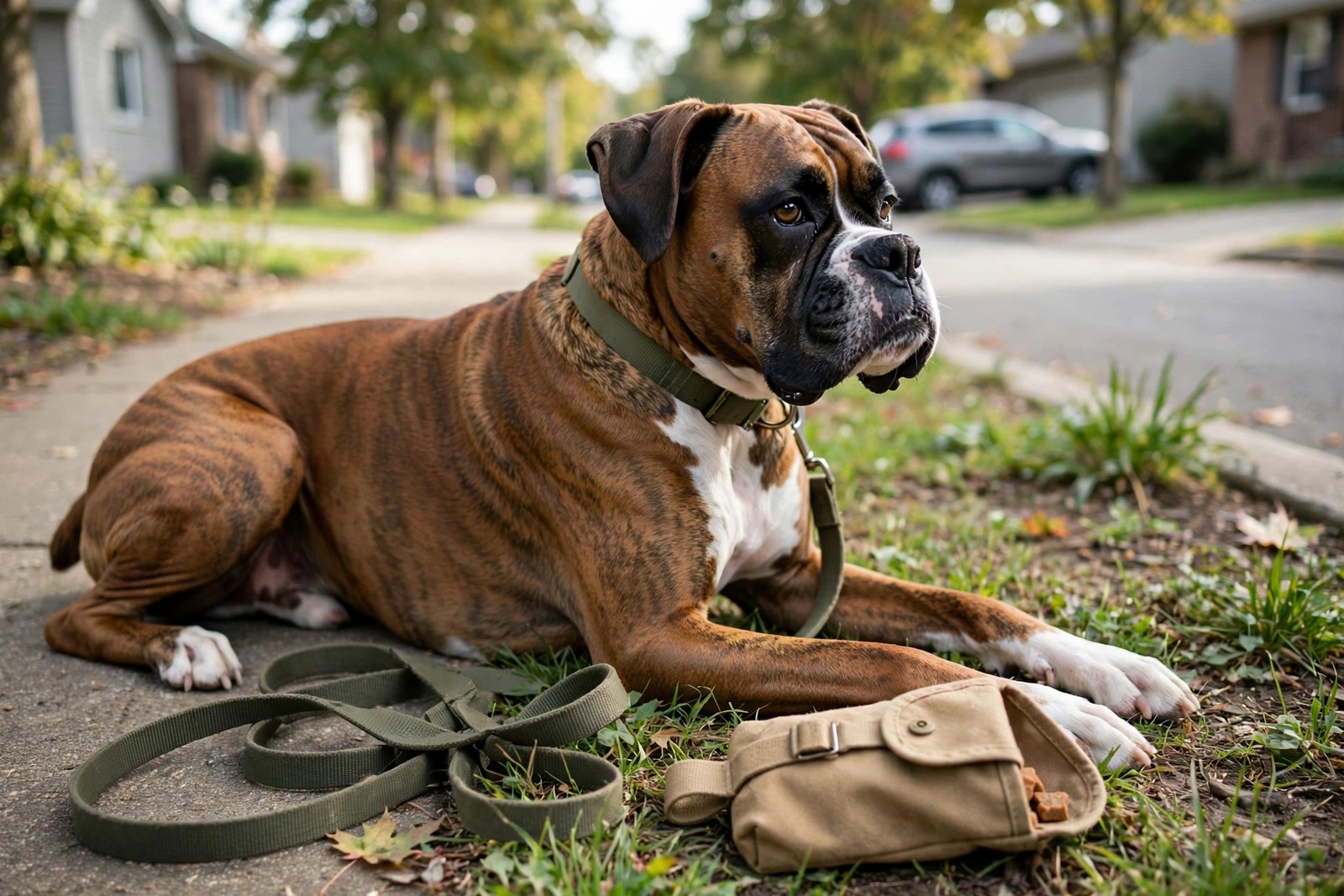
Fifty to eighty pounds is the healthy adult range usually quoted for a Boxer, the largest males reaching its upper end. Treat the range as a guide, not a verdict: frame, height and muscle vary, so body condition matters more than the scale — ribs should be felt easily under a thin fat cover, with a visible waist from above and the side. If your dog sits outside the range but feels lean and is vet-checked, their personal healthy weight wins over any chart.
What Owners Need to Know
Feeding a Boxer is feeding an athlete's build on a family schedule: a complete diet in measured meals, changed gradually over several days when you switch, with fresh water always down. The breed's deep chest and lean muscle mean condition reads differently than on a stockier dog — a healthy Boxer can look almost ribby at a glance during the lean young-adult stage, while the same silhouette on an older, slower dog may be early gain hiding in plain sight.
Use your hands monthly, not your eyes: ribs felt easily under a thin fat cover, a waist visible from above, and a clear tuck from the side. Treats stay a small share of the day, and for a breed this food-motivated, training rewards come out of the measured ration rather than on top of it.
Practical Steps That Help
The routine that holds a Boxer's weight steady:
- Feed measured meals at set times rather than leaving food down
- Weigh monthly on the same scale and record the trend, not just the day
- Recheck ribs and waist by hand at each weigh-in
- Take training treats from the day's ration, in small pieces
- Adjust portions in small steps when the trend moves, then recheck
A short record of weights and portion changes pays off at the vet's: a Boxer drifting a few pounds heavier across two visits is a pattern you can act on early, while a single weigh-in is only a snapshot.
Day to Day, Done Well
Judge your Boxer against his own baseline: his usual appetite, his energy on walks, and the feel of his ribs last month. A change from that personal normal — clearing the bowl faster, begging harder, slowing on climbs — is the signal worth acting on, long before the scale moves far. Where several people share his care, Care Teams on KinsLe assigns the day's meals and the monthly weigh-in to a named person, and the timestamp left on every finished task means nobody guesses whether today's meal already happened.