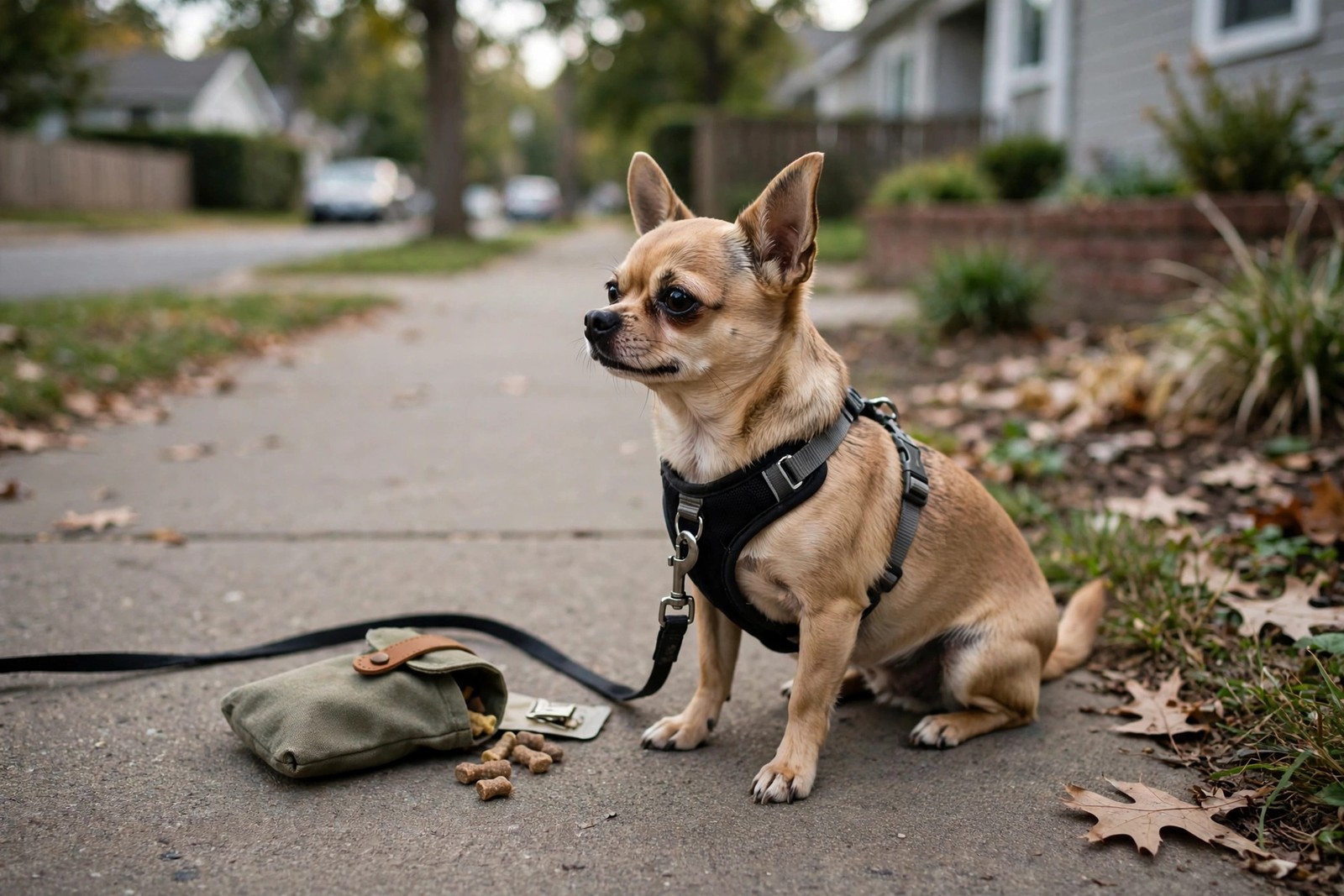
An adult Chihuahua typically weighs about 3 to 6 lb, which converts to about 1.4 to 2.7 kg. Many healthy adults cluster between 3 and 6 lb (about 1.4 to 2.7 kg), and breed guidance caps the ideal at 6 lb (about 2.7 kg) rather than setting a minimum. A dog below the cluster can be naturally fine-boned and healthy, and a dog at the top can be lean or overfed. At this size the range only frames the question, because individual frames vary from delicate to slightly cobby while the total weight barely changes.
Small Numbers, Large Percentages
Arithmetic behaves differently on a Chihuahua. Half a pound gained by a 4 lb dog equals an eighth of its entire body weight, a proportion that would alarm the owner of any larger breed. Bathroom scales that round coarsely cannot track such shifts, so use a kitchen scale or a small pet scale and record ounces or grams at each check. Weigh at the same time of day, ideally before a meal, and write the figure down rather than trusting an impression formed while holding a dog who weighs less than a bag of flour.
Handling matters during the check. A Chihuahua's ribs sit under very little tissue, and the correct test uses feather-light pressure. Ribs should be felt readily without pressing, the spine should feel covered rather than exposed like a row of beads, and the waist should pinch in clearly behind the ribs when viewed from above. A rounded, barrel-like outline on a frame this small signals excess long before the scale looks dramatic.
Treats and Portions at Toy Scale
The treat economy needs rescaling for this breed. A biscuit designed for a medium dog can hold a quarter of a Chihuahua's daily requirement, and a dental chew offered daily without adjusting meals can drive steady gain that owners blame on the main food. Break every treat into fragments the size of a pea or smaller, count chews inside the daily allowance, and weigh the meal ration in grams. Scoops and cups cannot measure portions this small with any honesty.
Multiple small meals suit many Chihuahuas, particularly very small adults and youngsters, because tiny stomachs hold little at once. Your vet can advise on meal frequency for your individual dog, especially where a very small dog shows signs such as trembling or lethargy between long gaps in feeding, which a vet may wish to investigate.
Aim for the Middle, Act on Rapid Change, and Read Coat and Harness Fit
Owners sometimes keep a Chihuahua padded from a belief that extra weight protects a fragile dog. Condition does not work that way. Excess fat strains small joints and the kneecaps in particular, which are a recognised area of concern in toy breeds that a vet can assess during routine examinations. Deliberate thinness carries its own risks for a dog with minimal reserves. The target is the middle: covered bones, a clear waist, and bright energy.
Any rapid change in either direction deserves prompt veterinary attention in a dog with so little margin. Loss of appetite for even a short period, visible weight loss across a week, or gain that continues under weighed portions all give a vet reason to investigate possibilities that home scales cannot identify.
Clothing and harnesses can mask change in a dog this small. A coat that fitted in winter may strain by spring, and a harness that suddenly leaves marks or needs loosening has measured the dog for you. Treat fit changes as data. Reweigh the dog the same day, compare the figure with the last record, and adjust the gram-level portions early, while the correction still counts in fragments of treats rather than in weeks of restriction.
Trends this small stay visible only when someone writes them down every week, and KinsLe Care Teams assigns that weekly weigh-in to a named person, with each result kept in the shared record.