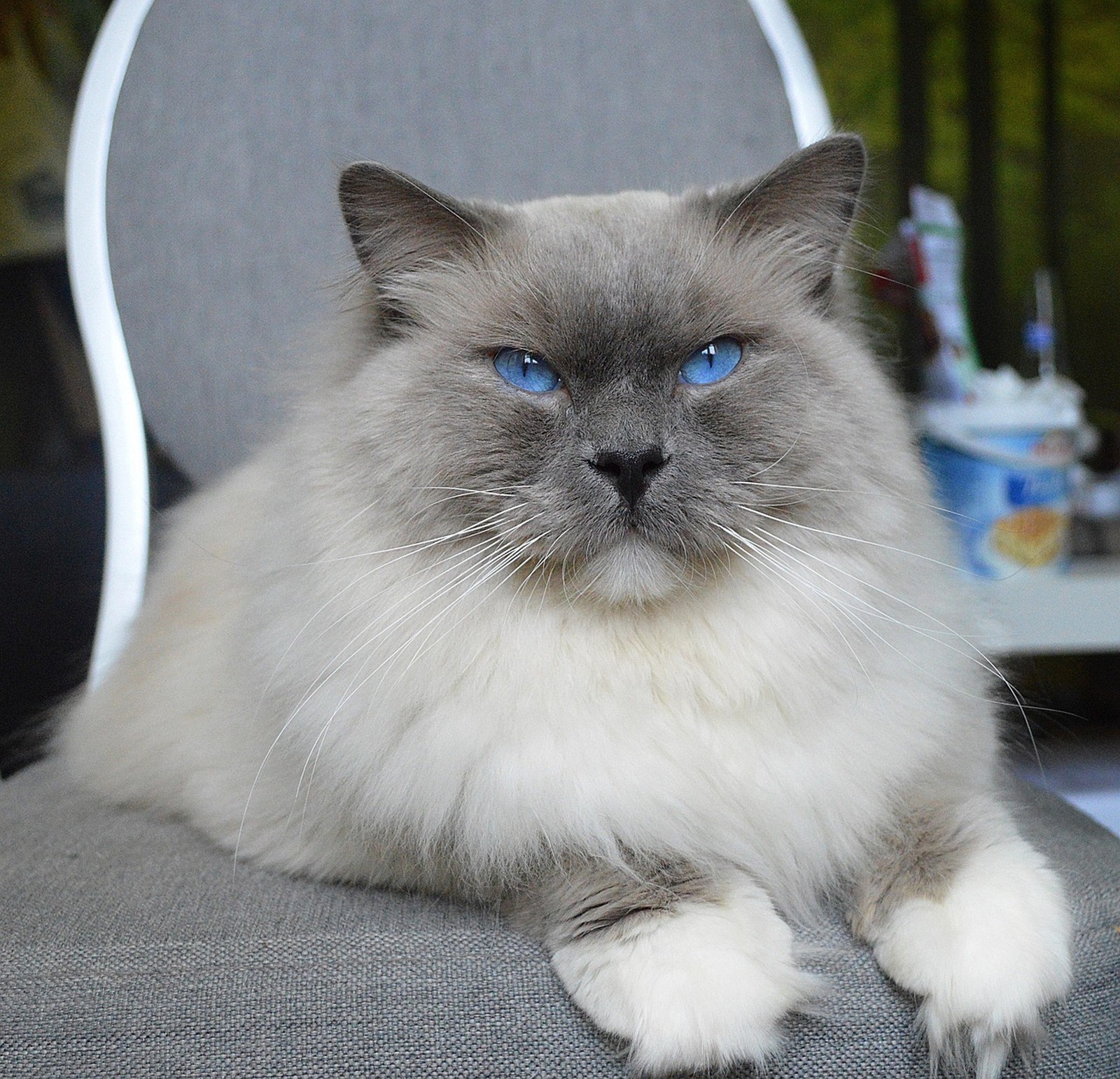
An adult Ragdoll typically weighs 15 to 20 pounds for a male and 10 to 15 pounds for a female. Ragdolls are among the largest domestic cat breeds — long, heavily built, and slower to mature than most — so these ranges sit well above the 8-to-12-pound span of an average cat, and comparing your Ragdoll to a neighbour's smaller breed will mislead you in both directions.
A Breed That Finishes Late
Ragdolls keep growing long after other cats stop, commonly until three or four years of age. A two-year-old male at 13 pounds who is still lengthening and filling out is usually a work in progress, not a feeding problem. The flip side is that owners can grant a 'still growing' allowance long after growth has finished, and this breed — relaxed, indoor, and famously food-content — gains quietly once the allowance stops being true. Mark the fourth birthday as the point where the adult range applies in full, and judge the cat in front of you rather than the kitten you remember.
The Hands-On Check That Settles It
Scales tell you mass; they cannot tell you composition. Run both hands along your Ragdoll's sides: healthy ribs are felt easily under a light layer of fat, without digging. From above, look for a gentle narrowing behind the ribcage; from the side, the belly should sit higher than the chest rather than swinging level with it. Ragdolls carry a normal soft fold of skin and fat on the lower belly — the primordial pouch — which is not itself a weight problem, so judge by ribs and outline, not by the pouch. If the ribs have disappeared under padding or the back looks flat and wide, the cat is carrying more than the breed's size explains, whatever the scale says.
Keeping a Placid Breed in Range
The typical Ragdoll weight problem is slow gain in a neutered indoor adult: a calm temperament, modest exercise ambitions, and meals measured by eye. Fixes are unglamorous and effective — weigh the food rather than scooping it, split the day's ration into set meals instead of leaving a topped-up bowl, keep treats inside the ration rather than on top of it, and add short play sessions the cat actually engages in, wand toys being the usual winner with this breed. Recheck weight monthly; aim for stability, and discuss any steady climb or unexplained loss with your vet, particularly in a senior, where weight loss can be the earliest visible sign of several common conditions.
Consistency across feeders is where households usually leak: one person measures breakfast, another adds a 'small' extra scoop at noon. KinsLe's Family Sharing puts the Ragdoll's current weight, target range, and measured daily ration on the profile everyone shares, so each person feeding that day works from the same numbers instead of their own estimate.