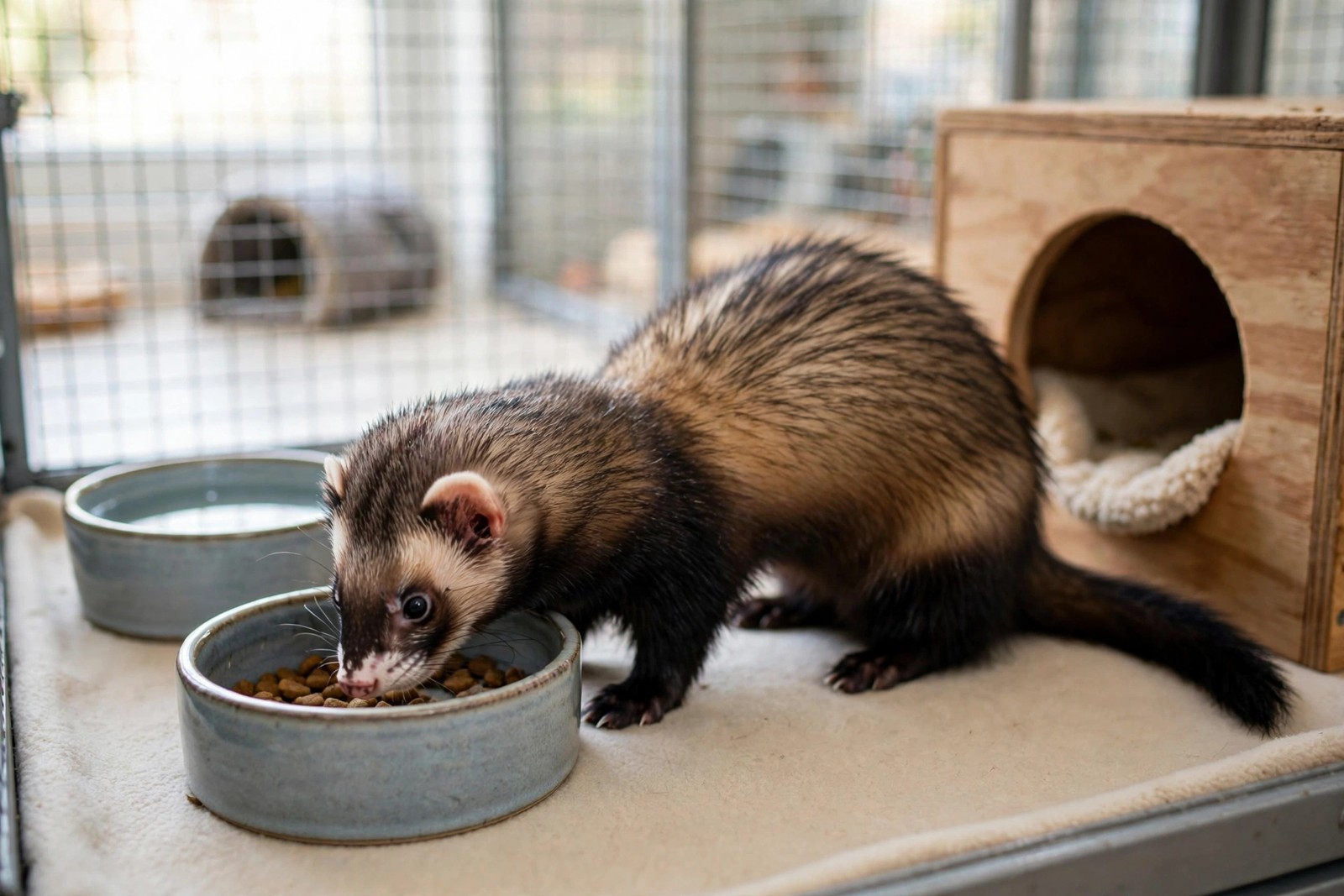
Feed a ferret little and often, and keep suitable food within reach for most of the day. A ferret's gut moves food through in only a few hours, far faster than a dog's or a cat's, so it cannot store a large meal and live comfortably on two feedings. Most healthy adults graze through about 6 to 8 small feeds across 24 hours, typically 3 to 4 during their lively morning spell and 3 to 4 during the evening one, and that split adds up to the full 6 to 8. In practice that means a filled bowl they can return to, refreshed regularly, rather than a measured breakfast and supper with empty hours between.
What belongs in the bowl
A ferret is an obligate carnivore, built for animal protein and fat, not for plant material. Choose a complete ferret food, or a suitable meat-based food your vet is happy with, where meat is the main ingredient and the protein level is high and the fibre level is low. Read the ingredient list in order: named meats should come first, and pea, corn, grain, and sugary ingredients should not dominate it, because a ferret digests plant protein and carbohydrate poorly and sweet foods are a poor fit for its pancreas.
Plain cooked or raw meat, handled with the same hygiene you would use for your own food, can be offered in small amounts alongside the complete food, but meat alone is not balanced, so it should sit beside the main diet rather than replace it. Fresh water must always be available, in a heavy bowl that resists tipping as well as from a bottle if your ferret uses one, and both should be checked daily because ferrets play in water and foul it quickly.
Foods to leave out entirely are sugary treats, dairy, fruit, vegetables, and dog food, which is too low in the protein and fat a ferret needs. Even ferret treats should stay occasional and meat-based.
How much, and how to judge it
Let appetite and body condition set the exact amount rather than a fixed scoop. A healthy adult should feel softly padded over the ribs without the ribs vanishing under fat, and should stay at a steady weight from week to week. Kits, pregnant or nursing jills, and ferrets recovering from illness eat noticeably more and should never have food restricted. In colder weather many ferrets eat more and lay down a thicker coat and a little extra weight, then slim again in spring, and that seasonal swing is expected.
Because ferrets stash food, check sleeping boxes, tunnels, and corners during cleaning. Hoarded fresh food goes stale where it is hidden, so remove it when you find it, and give fresh-meat portions small enough to be eaten at once rather than carried away. Dry complete food keeps better in the bowl, which is one reason many owners use it as the always-available base.
When appetite is a warning
A ferret that stops eating is a concern much sooner than a dog that skips a meal, precisely because digestion and energy use run fast. Missing food for a day, repeated vomiting, black or bloody droppings, marked lethargy, drooling, or pawing at the mouth all warrant a prompt call to a vet, not a wait-and-see weekend. Older ferrets in particular should have appetite and weight changes checked rather than put down to age.
Weigh your ferret every week or two on a kitchen scale and keep the figures together, so a slow drift down is visible while it is still small. KinsLe's Care Teams can split the twice-daily bowl refresh, water check, and hoard hunt between the people who share your ferret's care, with each completed job timestamped so the bowl is never left empty by accident.