
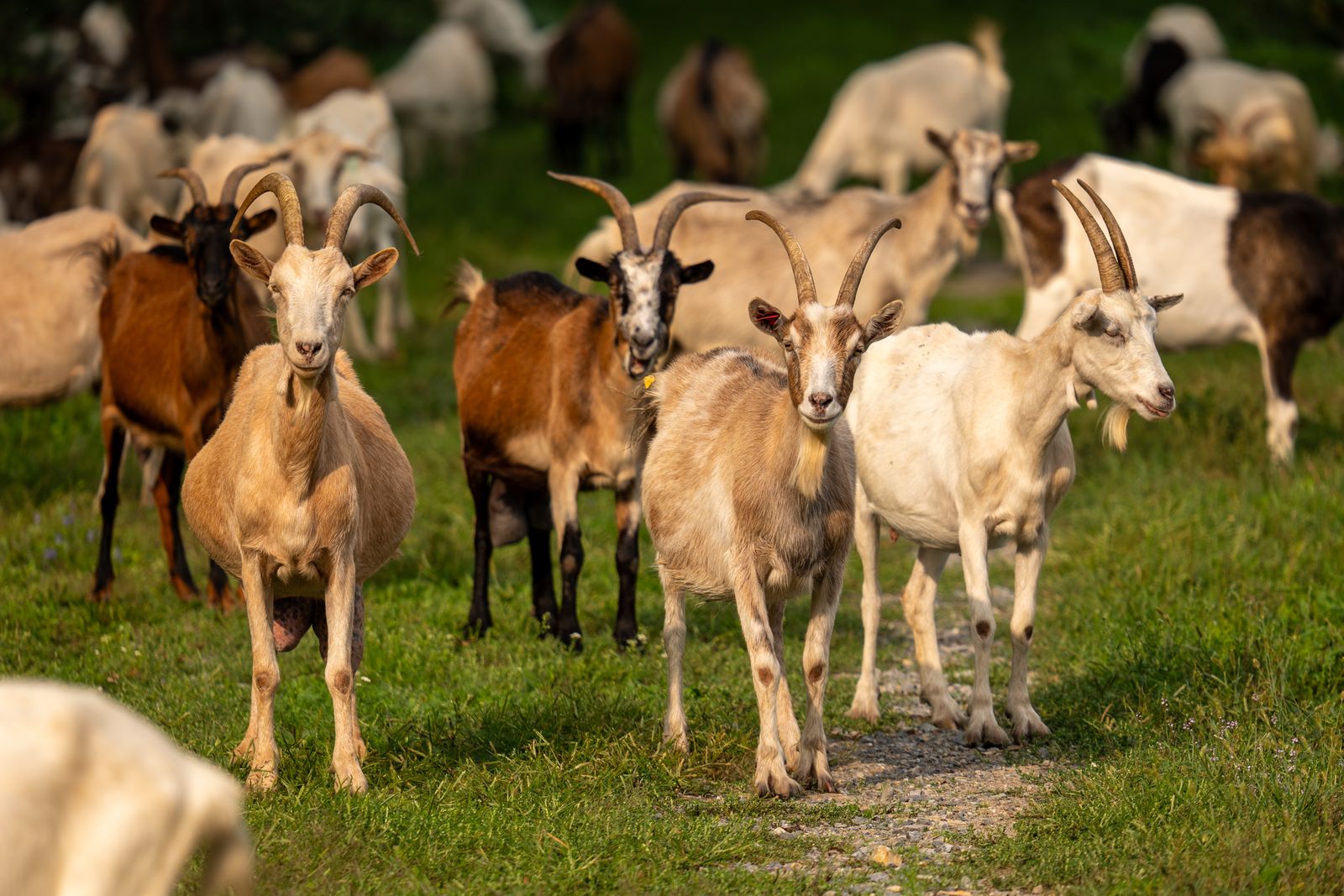
How much to feed goats depends on their size, age, and job, but the rule for most goats is simple: forage first. Hay, pasture and browse should carry the diet, while grain stays a measured extra reserved for animals with a genuine extra need — fast-growing kids, does in late pregnancy or in milk, and goats recovering condition. Overfeeding grain is far more common, and far more harmful, than underfeeding it.
Start With Forage, Not the Grain Bucket
Goats are browsers, not grazers like sheep. Given a choice, they prefer leaves, twigs, weeds, and brush at head height over short grass at their feet. Good hay is the backbone when pasture and browse are limited. A typical adult goat eats roughly 2 to 4 percent of its body weight in dry matter a day, most of it as hay or forage. In practice, that means hay available most of the day for stalled or dry-lot goats, and enough pasture rotation that browsing goats are not stripped down to dirt. Quality matters: moldy, dusty hay should be discarded, not fed through.
When Grain Helps — and When It Hurts
Grain and commercial goat feed concentrate energy in a small portion, which is exactly why they are risky. A milking doe producing heavily, a doe in late pregnancy, or a fast-growing kid may benefit from a measured daily ration introduced slowly. A healthy, dry adult wether or pet goat on good hay usually needs little or no grain at all.
Too much grain, or a sudden increase, can disrupt the rumen — the fermentation stomach that does most of a goat's digestion. Signs of trouble can include going off feed, bloating, scouring, and lethargy, and those warrant prompt veterinary help, especially if several goats are affected after a feed change.
Practical habits that keep grain safe:
- Introduce any new feed over 7 to 10 days, mixing increasing amounts into the old ration
- Feed measured portions at consistent times, not free-choice grain
- Keep grain bins latched — goats who break in and gorge are a veterinary emergency
- Balance minerals for goats specifically, and avoid feeding sheep minerals that may lack needed copper
Body condition is your best guide between weigh-ins. You should be able to feel ribs with light pressure under a smooth covering — not sharp and prominent, and not buried under fat.
Kids, Seniors, and Special Cases
Kids need milk or a suitable replacement early in life, then gradually add quality hay and a starter feed as they begin to nibble. Weaning should be gradual, not abrupt. Senior goats may need softer, higher-quality hay if teeth are worn, and they should be watched to be sure younger herd mates are not pushing them off the feeder.
Keeping Every Goat's Plan Clear With KinsLe
Each goat in the herd can have a profile of its own, and the profiles are what you share. Family Sharing in KinsLe lets you share a goat's profile with family members, so the people closest to the herd are looking at the same goat you are when you talk through who needs grain, who is hay-only, and who is still on starter.
Sharing works because it replaces second-hand messages with direct access to the profile itself. A family member you have shared with does not have to rely on a note on the fridge or a description passed along by someone else; they open the profile you shared and know exactly which animal is being discussed.
Used that way, KinsLe's Family Sharing simply shares each goat's profile with the family members you choose.