
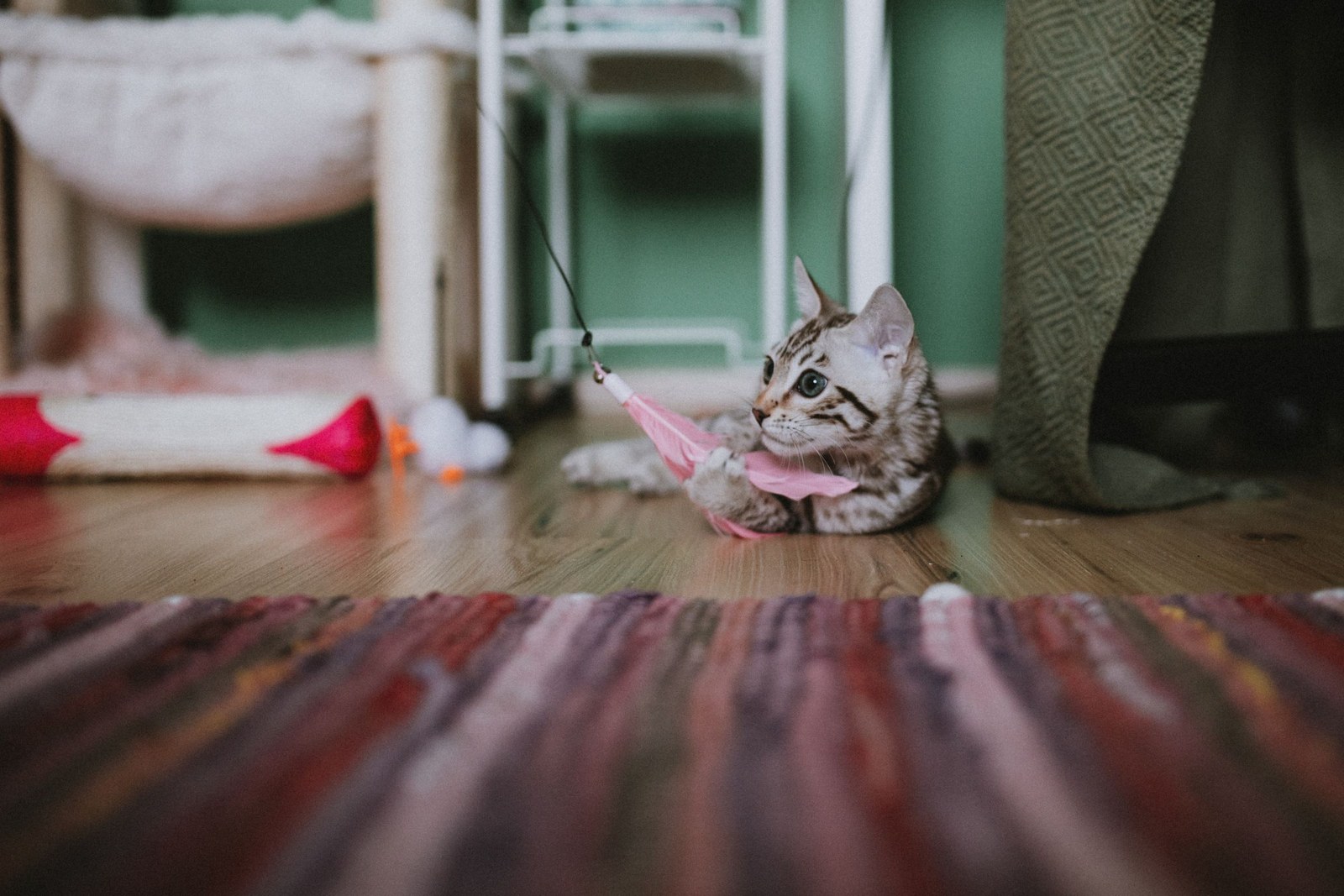
A young kitten does best with short, gentle handling several times a day and several brief play sessions with toys like wand teasers — and then as much sleep as she wants in between. Handling and play are how kittens learn that people are safe and how they build coordination, but growing kittens also sleep the majority of the day, and waking one up to play works against everything you are trying to build.
Handling: little and often
Aim for frequent, short sessions rather than one long cuddle marathon. Pick your kitten up supporting her chest and hindquarters, hold her securely against you, stroke her for a minute or two, and set her down before she squirms to leave. Build in the touches her future self will thank you for: gentle paw handling, a quick ear look, lifting a lip to glimpse teeth, and brief brushing. These thirty-second rehearsals make nail trims, vet exams, and medication far less dramatic at six months.
Let her approach sometimes, too. Sitting on the floor and letting a kitten climb into your lap teaches her that people are a choice, not a capture. Children should handle kittens seated, supervised, and briefly — and a kitten who walks away is done, full stop. Respecting that exit is what makes her come back.
Play: short bursts, toy first
Kittens play in bursts of a few minutes throughout the day. Wand toys, crinkle balls, and cardboard boxes are ideal; a good session mimics hunt, catch, and then a small meal or snack, after which most kittens groom and crash for a nap. Rotate toys every couple of days to keep novelty alive, and put wand toys away between sessions — unsupervised string is a swallowing hazard.
Two rules protect you both. First, never use hands or feet as toys, however cute it seems at nine weeks; you are training the adult cat's habits now. Redirect biting to a toy and end the session if she keeps targeting skin. Second, end games while she's still having fun rather than escalated — an overstimulated kitten with dilated pupils, a lashing tail, and flattened ears is asking for a break, not more action.
Protect the sleep
Kittens can sleep sixteen hours or more a day, and growth literally happens there. Give yours a warm, draft-free sleeping spot where the household agrees she is off duty, and do not let visitors or children fish her out of a nap for photos. A kitten woken repeatedly becomes cranky, mouthy, and harder to train — the rest is not laziness, it is development.
A balanced day roughly looks like: wake, toilet, play, eat, groom, sleep — repeated. You do not need a stopwatch; you need repetition and an eye on her signals.
Coordinating kitten care with your family
The handling plan falls apart when one person plays rough, another wakes her for cuddles, and nobody remembers when she last ate. KinsLe Messenger is the per-pet communications hub for your kitten — one thread where family can share care notes, feeding updates, vet messages, and yes, the photos from today's play session, all organized around her profile instead of scattered across group chats. Put the agreed handling limits in your KinsLe Messenger thread on KinsLe, so anyone cuddling her can see the last feeding time and the rule about letting her end each session.