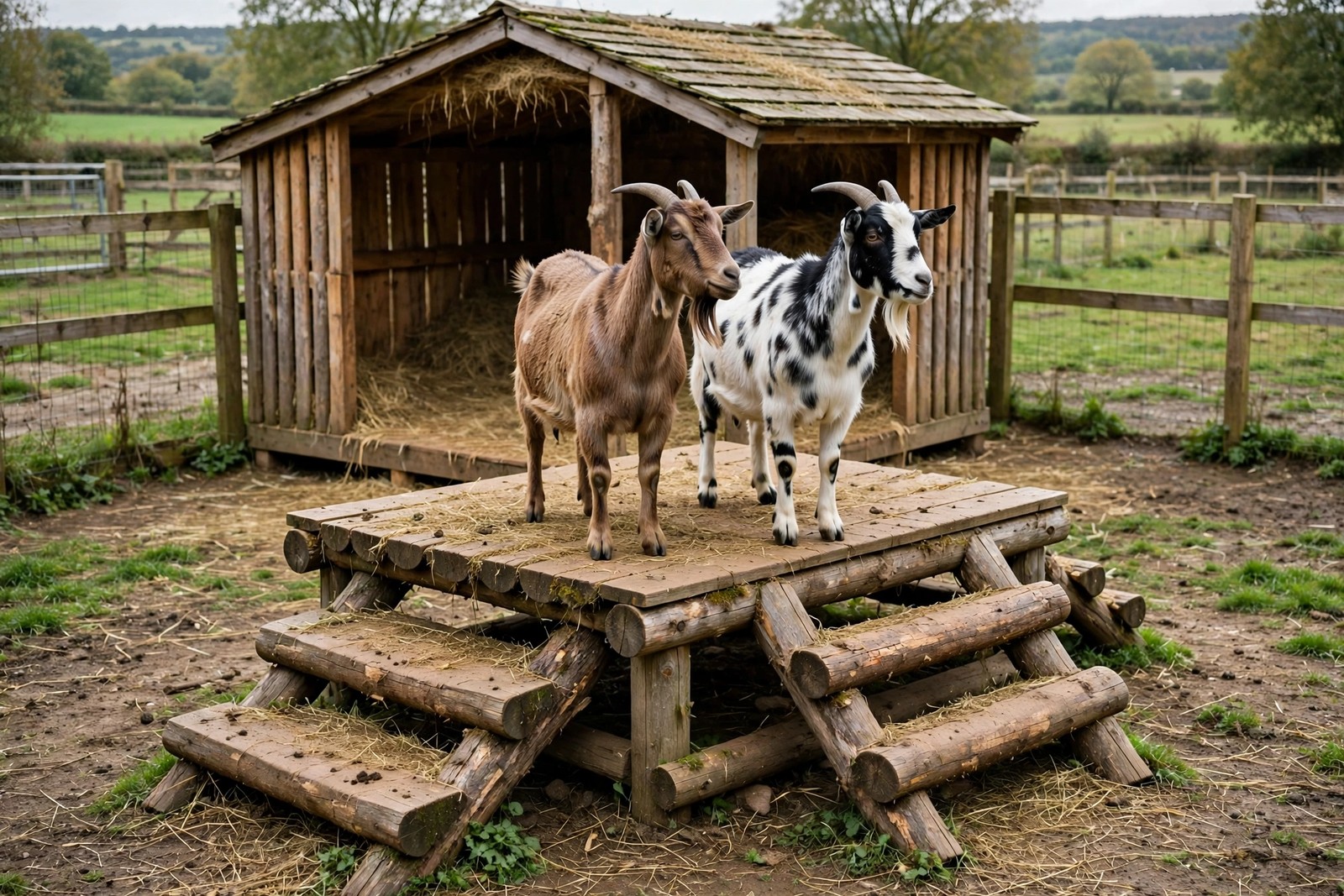
Shelter space starts at fifteen to twenty square feet per goat, and the outdoor pen needs two hundred to two hundred and fifty square feet at the very least, but minimums keep goats alive rather than content. A small herd with a quarter to half an acre to browse, climb, and spread out in is a far better picture of what goats actually need, and the figures below explain where the space really goes.
Shelter: 15 to 20 square feet per goat
Goats hate rain and must be able to get completely dry and out of the wind. Allow 15 to 20 square feet of roofed, dry-floored shelter per adult goat — more for large breeds and for does with kids, who need a separate corner they can defend. A three-sided shed opening away from the prevailing wind works in most climates, with deep dry bedding in winter. Crowd the shelter and you get bullying at the doorway, damp bedding, and respiratory problems; goats lower in the herd order will simply stand outside in the rain rather than fight for a place, which is how pneumonia starts.
Height matters in the shelter too. Goats rest on raised platforms if you provide them, and a sturdy bench or shelf inside adds usable space without adding a single square foot to the building.
The pen: minimum versus useful
A bare exercise pen should give each goat at least 200 to 250 square feet, so a pair needs a pen of around 500 square feet — roughly 25 by 20 feet — attached to the shelter for bad weather and night use. That pen must not be empty. Goats are browsers and climbers, and a flat pen produces bored goats who test the fence all day. Stumps, large rocks, cable spools, and a climbing platform of pallets or a purpose-built tower turn the same square footage into territory they actually use.
For grazing or browsing ground, plan roughly a quarter to half an acre for a small herd of two to four goats if the land is decent brush and grass, and more if it is poor. Goats prefer weeds, shrubs, and bark over grass, so a smaller brushy plot can serve them better than a larger lawn. Rotating between two areas lets one recover and helps break the parasite cycle that builds up on ground goats use continuously.
Fencing: space is only yours if it holds them
Budget fence quality into any space calculation. Goats need fencing at least four feet high — woven wire or stock panels rather than a few strands — with no gaps a head can push through, because a goat that gets its head through will keep pushing. Gates need latches a goat cannot work with its lips, which rules out simple hooks. A pen of the perfect size behind weak fencing is not space at all; it is a countdown to goats in the garden and on the road.
Kids, bucks, and herd reality
Goats are herd animals and should never be kept singly, so plan space for at least two from the start. A buck needs his own pen and shelter, set where he can see the herd but not reach it, and breeding adds a kidding area of roughly 25 square feet that can be closed off. Kids double the running and climbing long before they double the food bill, so a herd that fits in spring can feel cramped by autumn.
Share the layout once you have it right. Once shared under KinsLe Family Sharing, the profile for this herd can be opened by the relatives you select.