
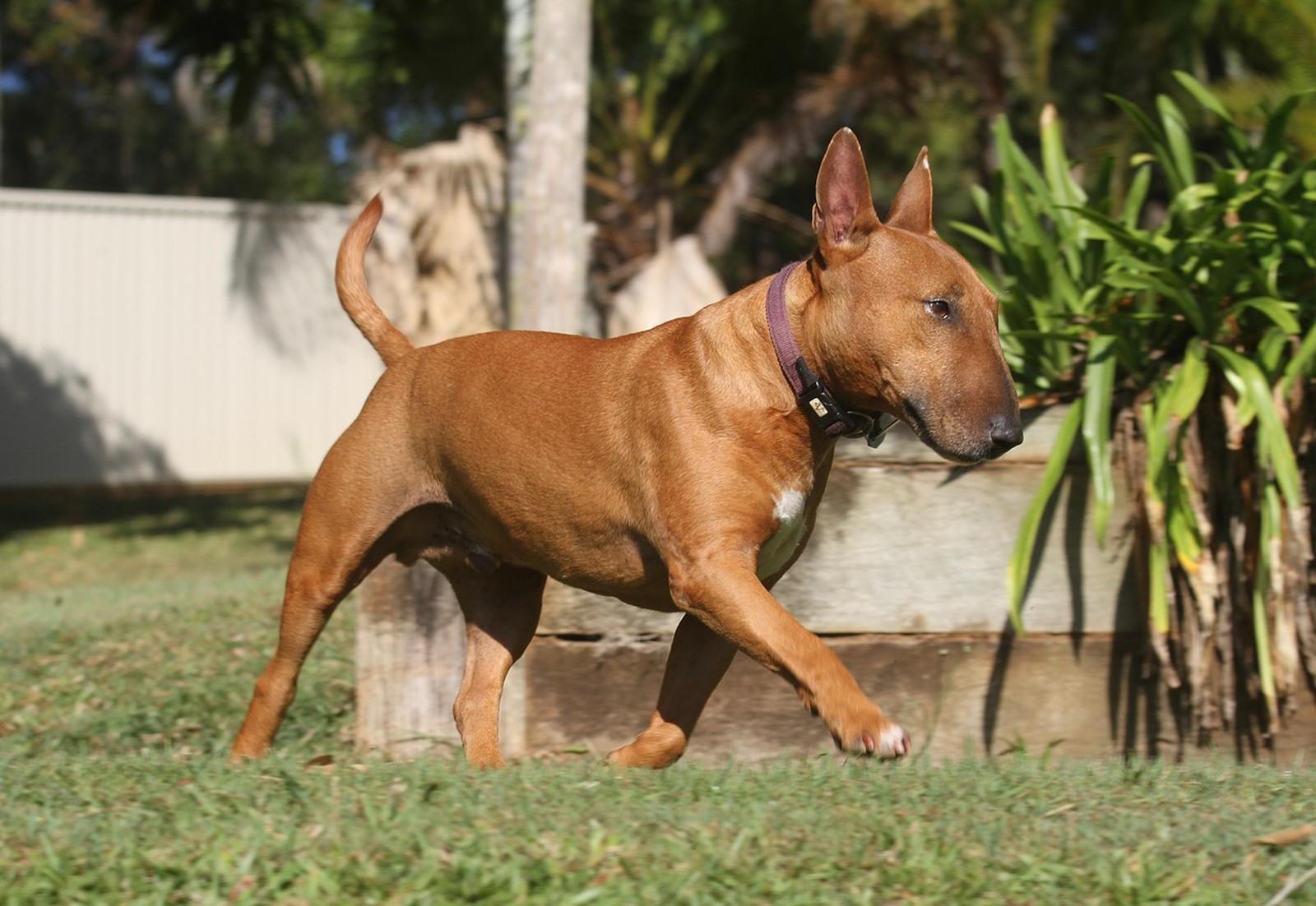
Smaller Than a Bull Terrier, Not Smaller in Presence
A Miniature Bull Terrier needs moderate space, judged by durability as much as by dimensions. He stands lower than his standard-sized cousin and weighs less, but pound for pound he is one of the densest, strongest small dogs you can invite indoors, with an egg-shaped head, a barrel chest, and a clown's commitment to physical comedy. A flat can hold him comfortably if the layout is sensible; a cluttered bedsit full of wobbling shelving and trailing cables will suffer. Think of his space requirement as a clear, robust living area where a muscular dog can turn, play, and launch into sudden motion without collecting the furniture.
Planning for Zoomies and the Bull Terrier Charge
Every Mini Bull owner learns about the sudden sprint: a joyful, wall-bouncing circuit of the home, often after a walk or a bath, performed at a speed his build should not allow. Design for it rather than fighting it. Keep one room's floor plan open enough for a loop, move breakables above tail-and-shoulder height, and put rugs down where he corners so he turns on grip instead of sliding into door frames. Doorways between his bed, his water, and the garden door should be wide and unobstructed, because he travels those routes at enthusiasm speed. Stairs deserve a gate for puppies and for older dogs; his enthusiasm going down exceeds his braking equipment.
The Chew Station and Rest Area
This breed chews with intent, and a home that gives chewing a legal address saves its skirting boards. Set up a defined station, a hard-wearing bed he is allowed to excavate, a rotation of tough toys kept in one box, and a rule that all chewing happens there, enforced by every person in the house. His sleeping spot should be in the family's orbit; Mini Bulls are deeply people-oriented and a dog exiled to a distant room will often simply relocate himself to your doorway, your sofa, or your bed. A bed built for a dog who sleeps in heavy, sprawling positions, and who may dig himself a nest nightly, should be replaceable and washable rather than precious.
Outdoor Space and Daily Expenditure
A secure garden earns its keep with this breed: somewhere he can gallop a few circuits, play a vigorous game, and toilet last thing at night without a lead. Fencing must be strong rather than merely tall, because a Mini Bull tests boundaries with his shoulders and treats a rotten panel as a puzzle. Garden or not, he needs proper daily walks and play that engage his brain as well as his legs; trick training and scent games in the house are excellent wet-day substitutes. An under-exercised Mini Bull in a small home does not become quiet; he becomes an interior redesign project with strong opinions about cushions.
When the Home Is Losing
Chewed door frames, excavated sofa bases, and a dog who cannot settle in the evening are the classic signs that exercise, chewing outlets, or company are short, and they appear fastest in small homes where there is nowhere for his energy to dissipate. Increase the day's work and review the chew station before blaming square footage; most Mini Bulls in flats thrive once the household runs his energy like a schedule instead of a surprise.
Because his rules about chewing, exercise, and furniture only work when nobody freelances, KinsLe's Family Sharing puts the Miniature Bull Terrier's profile and care notes in front of the whole household, keeping his routine identical in everyone's hands.