
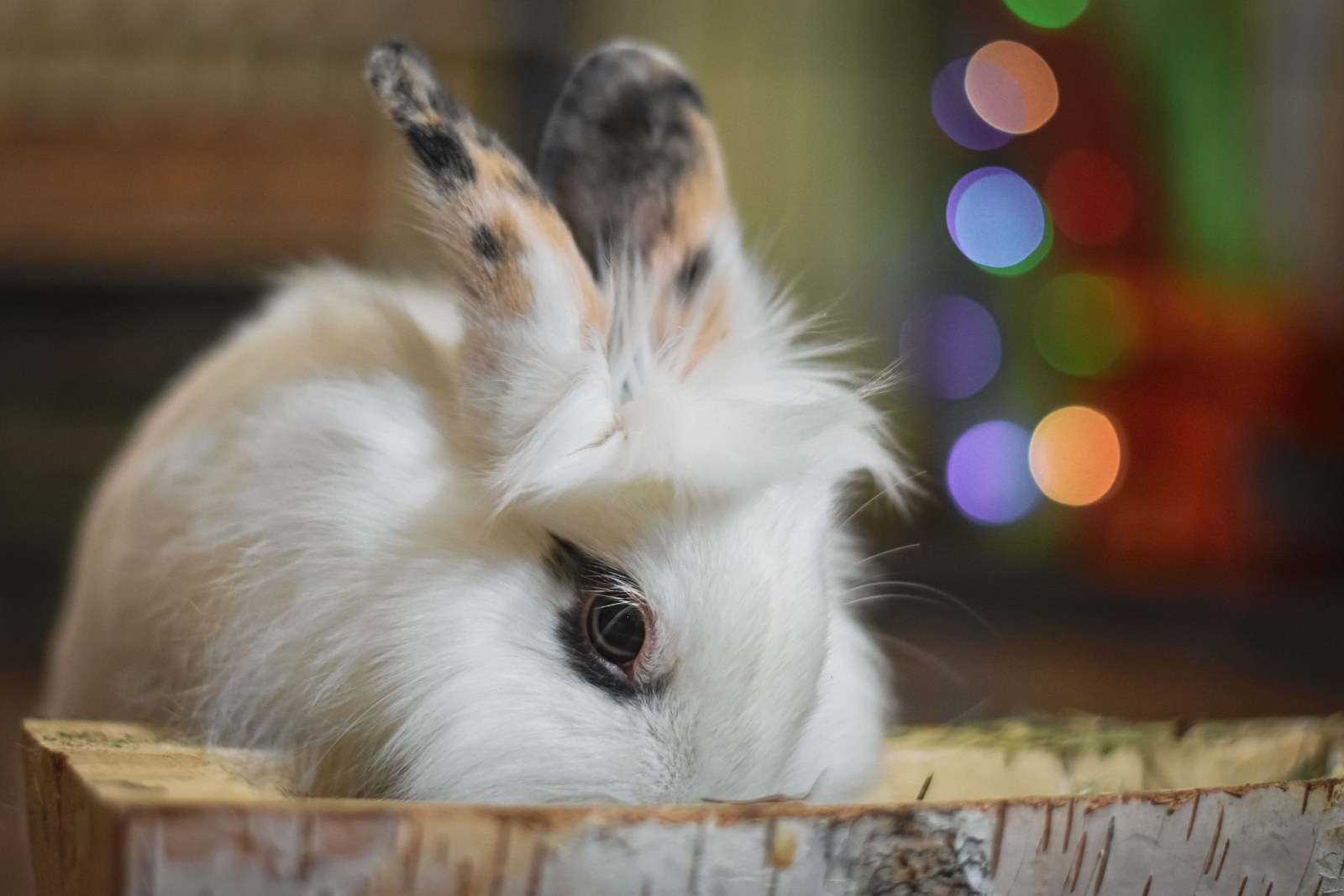
An indoor rabbit needs far more space than a traditional cage provides: enough room to take several hops in a row, stretch out fully on their side, and stand tall on their hind legs without touching the top — plus daily access to a larger exercise area. A practical home base is an exercise pen, often around 4 feet by 4 feet or larger, attached to or opening into a rabbit-proofed room or run for many hours a day.
Think in Rabbit Movements, Not Cage Sizes
Pet-store cages were designed for shelf space, not for rabbits. A better test is behavioral. Can your rabbit:
- Hop at least three full hops in one direction without hitting a wall?
- Periscope — stand upright on hind legs to survey the room — without bumping their head?
- Flop completely onto their side and stretch nose-to-tail?
- Turn, groom, and move between a litter box, hay, water, and a hideaway without squeezing?
If any answer is no, the space is too small, no matter what the box at the store claimed. Many welfare guidelines describe a combined living and exercise area of roughly 60 square feet for a pair of rabbits; while every home differs, the direction is clear — give as much room as you possibly can.
A Pen Setup That Works in Real Homes
An exercise pen (often called an x-pen) makes an excellent home base on a washable mat or low-pile rug over hard flooring. Inside, arrange:
- A large litter box filled with paper-based litter and a generous pile of hay at one end — rabbits like to graze while they go
- A hay rack or hay bag to keep extra hay clean and dry
- A sturdy hideaway house or cardboard box with two exits, so your rabbit can retreat and feel safe
- A heavy ceramic water bowl, harder to tip than a bottle
- Chew items — willow balls, apple wood sticks, a cardboard tunnel — rotated to stay interesting
Many owners leave the pen door open whenever they are home, letting the rabbit free-roam a rabbit-proofed living room, then close it overnight or while away. A free-roam rabbit with a pen as a bedroom is a wonderful setup if cords and baseboards are protected.
Why Space Is a Health Issue
Rabbits are built to move. Confined rabbits gain weight, lose muscle, and can develop sore hocks from sitting on unsuitable flooring, along with frustration behaviors like bar chewing, digging at corners, and lunging. Space lets a rabbit express normal behavior — dawn and dusk are peak activity times, so schedule exercise access then if all-day roaming is not possible. Room to run also supports healthy digestion and makes litter training easier, since rabbits naturally pick one corner when they have real choice.
Bigger space also means better companionship math: bonded pairs need room to be together and room to take a break from each other, just like any roommates.
Sharing the Setup Work With KinsLe Care Teams
A generous setup asks for daily upkeep — refreshing hay, checking water, sweeping stray droppings, and resetting chews. KinsLe's Care Teams let you assign those pen setup, cleaning, and exercise duties across the household, with timestamped completions so a roommate or family member can see at a glance that the morning hay refresh already happened. Nobody double-feeds, nothing gets skipped, and your rabbit's routine stays steady even when one person's schedule changes. For each morning's pen reset, the Care Teams schedule on KinsLe assigns hay, water, and sweeping to a named household member, and each finished job shows there with its completion time.