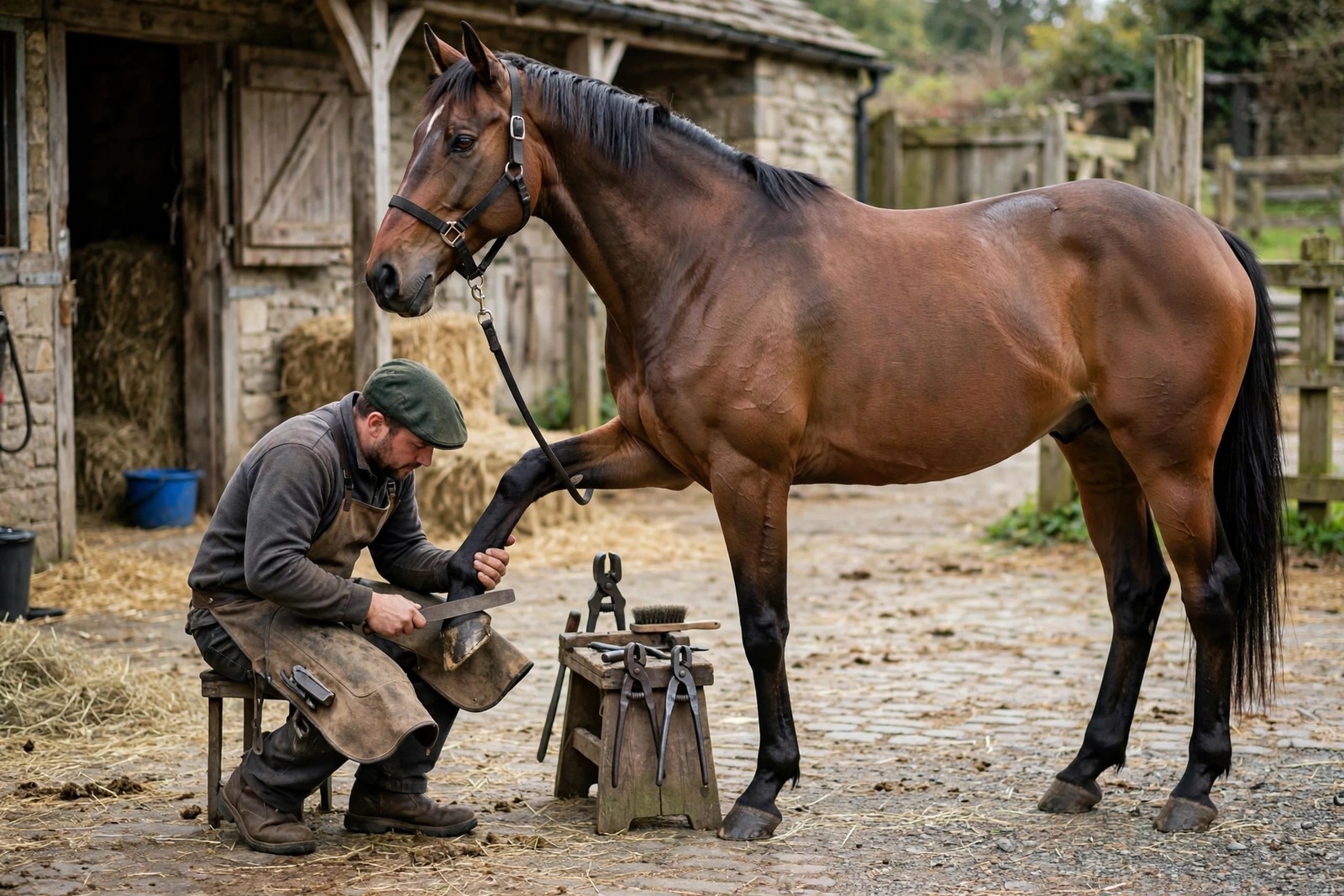
Most horses need their hooves trimmed by a farrier every 6 to 8 weeks. Booked on that cycle, a horse sees the farrier roughly 7 to 9 times a year, and the appointment should already be in the diary before the feet start to look overgrown. Hoof wall grows continuously, roughly a quarter to a third of an inch in a month for many horses, and once extra length builds up at the toe the whole angle of the foot changes, which loads tendons, joints, and the wall itself in ways the horse cannot correct on its own.
What moves a horse within the range
A barefoot horse working on roads and firm tracks wears some wall away between visits and may sit comfortably at 7 or 8 weeks if growth and wear stay in balance. The same horse rested in a soft field wears almost nothing away and usually needs the 6-week end of the range. Young horses, horses in hard work, and horses whose feet grow quickly after a change of feed or season also tend toward shorter intervals. Shod horses keep to the same 6 to 8 week rhythm, because the shoe does not stop growth: as the wall grows the shoe shifts position, nails loosen, and clenches rise, even though the foot may not look dramatically longer.
Individual feet differ within the same horse. Hind feet often grow at a slightly different rate from front feet, and a foot that flares on one side needs balancing at the visit rather than a cosmetic shortening. That is a farrier's judgment, made with the horse moving as well as standing, which is why trimming is skilled work rather than a tidying job for an owner with a rasp.
Signs the interval has run too long
Do not wait for these, but treat any of them as a prompt to bring the appointment forward: a toe long enough to change the angle of the pastern, flares or cracks running up the wall, a shoe that feels loose or has shifted sideways, tripping, forging where a hind foot strikes a front one, or a horse that starts standing or moving differently. Chips at the ground edge of a barefoot hoof between visits are common and often minor, while cracks that reach soft tissue, heat in the foot, a strong digital pulse, or sudden lameness are reasons to call a vet as well as the farrier.
What the owner does between visits
Pick out all four feet daily, ideally before and after exercise. Those few minutes remove stones and packed mud that bruise the sole, let you smell the early sour note of thrush around the frog, and teach you what each foot normally looks and feels like, so a hot, unbalanced, or damaged foot stands out at once. Run a hand down each leg as you work and check shoes for movement if your horse is shod.
Keep a simple record of each visit: date, barefoot trim or new or refitted shoes, and anything the farrier flagged about balance, soles, or a particular foot. Patterns across three or four visits are what let you and the farrier fine-tune the interval for your individual horse rather than guessing from a general rule.
A wet season softens wall and speeds wear and chipping, while hard dry ground can leave feet brittle, so expect the farrier to adjust the plan across the year. KinsLe's Care Teams can hold that plan for your horse, assigning the daily hoof picking to whoever is on yard duty and flagging the next farrier date, with each finished task timestamped for everyone to see.