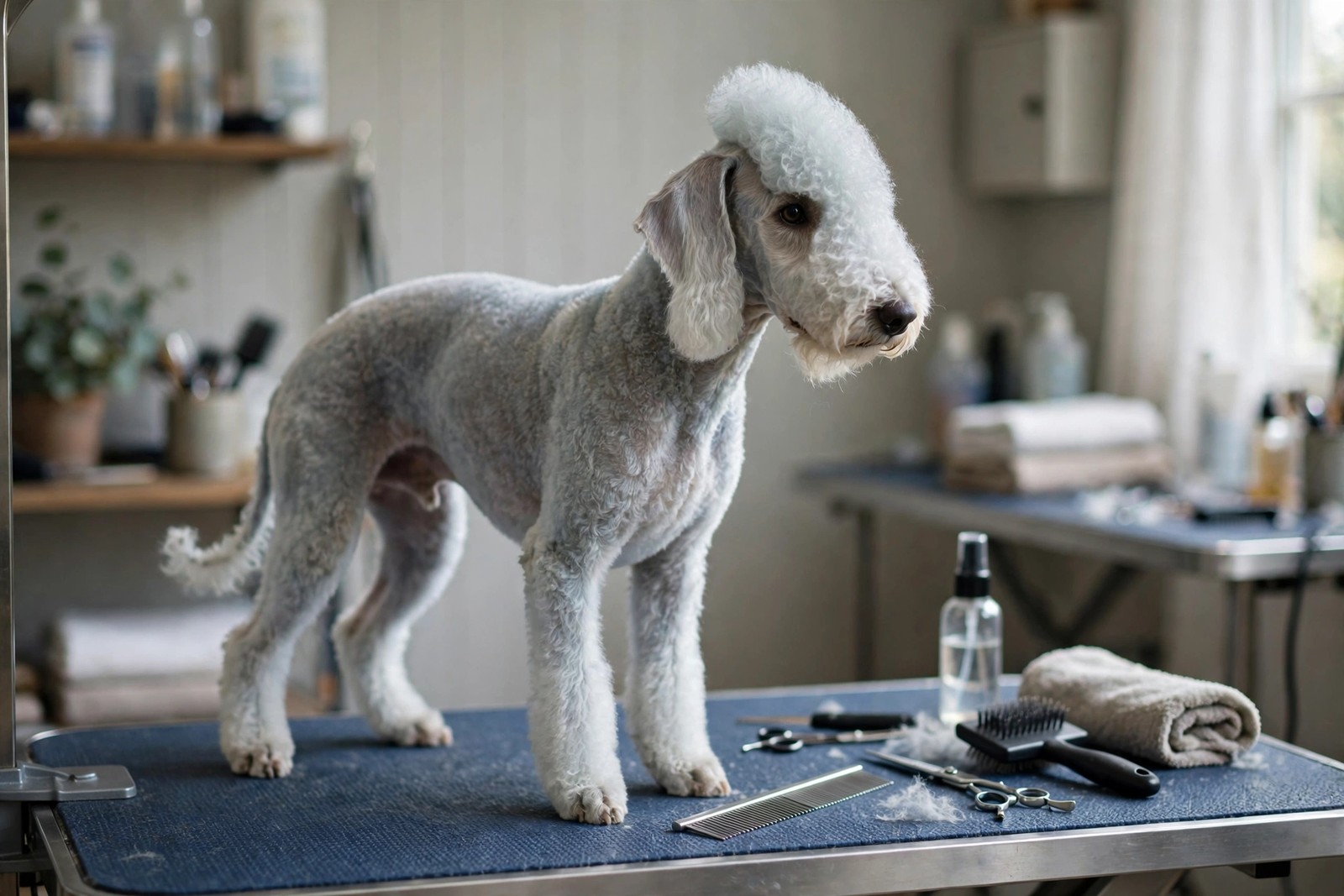
The lamb look is a haircut, not an accident
A Bedlington Terrier's famous silhouette — the pear-shaped head with its profuse topknot, the clean face, the arched body coat standing away from the skin — does not grow that way. It is sculpted. The breed's coat is a soft mixture of hard and soft hairs that curls as it grows, sheds very little and keeps growing, so without regular clipping and scissoring a Bedlington becomes a shapeless, matted mop within a few months. Expect a full professional groom every month or two to hold the shape, with consistent home care in between.
This is the central fact new owners miss: low-shedding is not low-maintenance. Hair that does not fall out stays in the coat, where it tangles with its neighbours instead.
Combing between cuts is non-negotiable
At home, comb a Bedlington several times a week, and do it properly with a steel comb that reaches the skin, not a surface skim with a brush. The soft curls felt together fastest behind the ears, in the armpits, around the collar, under the belly and where the legs meet the body. A comb that glides through to the skin means the coat is genuinely open; resistance means a web of tangles is forming beneath a tidy-looking surface.
Always comb out fully before a bath. Water on a tangled Bedlington coat tightens the tangles into solid mats that dry like felt, and the only humane fix at that point is clipping them out, which ruins the outline you are paying to maintain. Spritzing lightly while combing reduces static and hair breakage on this fine-textured coat.
What the professional groom involves
A groomer who knows the breed clips the face, ears and throat clean, shapes the topknot so it arches unbroken into the neck, scissoring the body coat to stand crisp and the legs to a tapered finish, and keeps the tail mostly close with its characteristic shape. The cut is detailed enough that many owners stay with one experienced groomer who learns their dog's coat, rather than rotating salons.
Between appointments the outline softens quickly, especially the topknot, which flops and parts as it grows. That is normal and not a sign the last groom was poor — the coat simply grows fast and soft. Book the next appointment before you leave the salon, because letting the interval stretch is how a Bedlington arrives matted and leaves shaved.
Puppies, coat colour and home trims
Bedlington puppies are usually born dark, often black or deep brown, and lighten over their first year or two into the blue, sandy or liver shades of the adult. Puppy coat is softer and mats even faster than adult hair, so begin gentle combing in the first weeks at home, in short sessions paired with treats, so the adult grooming workload is accepted as normal life rather than fought monthly.
Confident owners sometimes learn to tidy between grooms — levelling the topknot's worst flop, trimming around the feet and eyes — but full home clipping of this breed is a genuine skill, and uneven scissoring shows immediately against the smooth outline. There is no shame in leaving the shape to the groomer and owning the combing, which is where coats are actually saved or lost.
Ears, skin and the vet threshold
Bedlingtons grow hair inside the ear canal, and grooming visits traditionally include clearing some of it so air can circulate; ask your groomer and veterinarian what approach they favour for your dog, and watch for head-shaking, scratching or a yeasty smell that suggests an ear problem needing a veterinary check. The breed's fine skin can also react to harsh products, so use gentle dog shampoo, rinse the dense curls very thoroughly and dry fully, since a damp underlayer against the skin invites itching.
Nails grow fast on a lightly built terrier and need trimming every few weeks, including the dewclaws. For a breed whose calendar is this full, KinsLe's Care Teams lets everyone helping see the combing sessions already done and the next groomer visit coming, so this exacting little coat never depends on one diary.