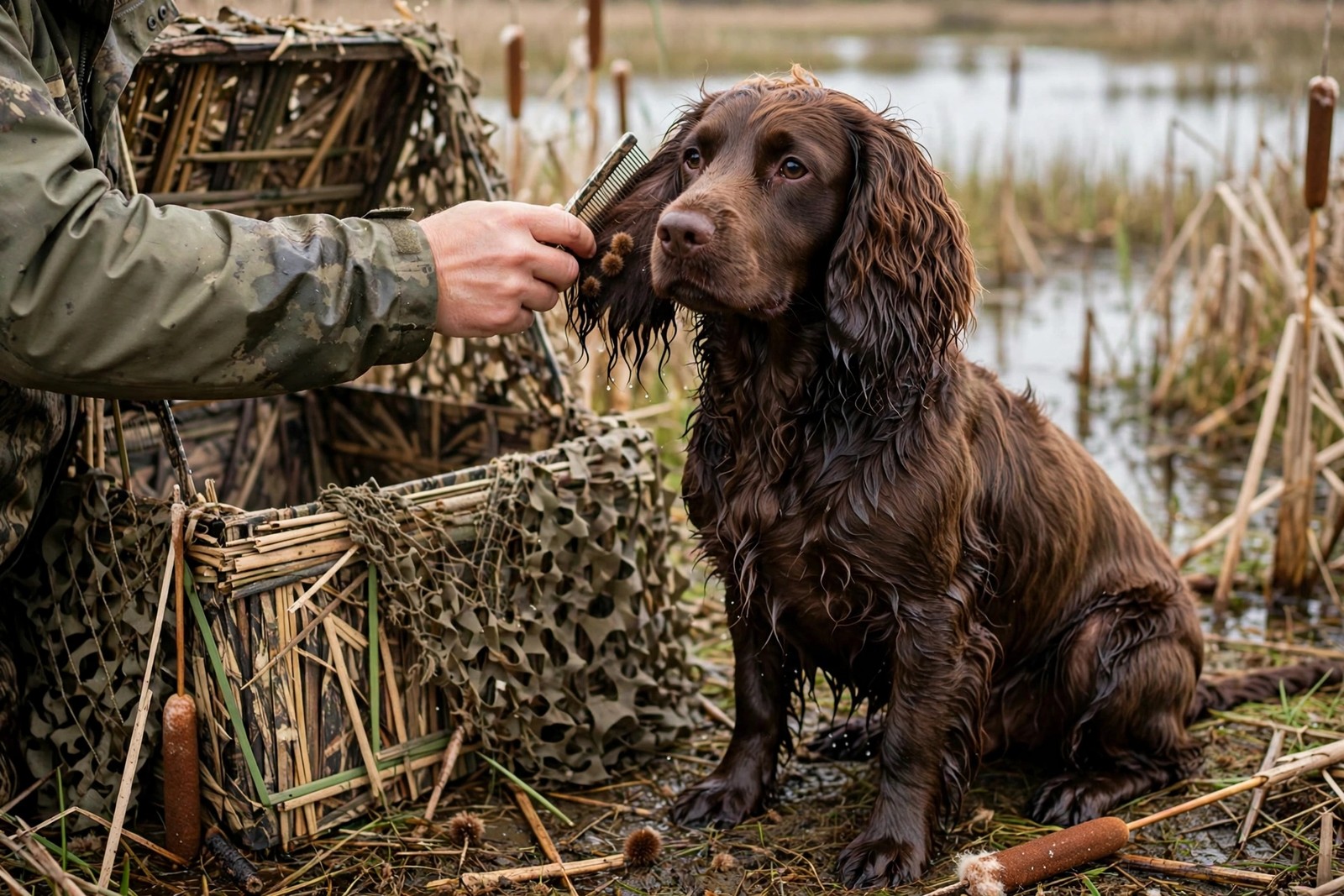
A working spaniel coat in chocolate brown
The Boykin Spaniel, South Carolina's compact retrieving dog, wears a medium-length double coat in solid liver brown, flat to moderately wavy, with lighter feathering on the ears, chest, belly and backs of the legs. It is a coat designed for a dog that swims, pushes through marsh cover and sits in a duck blind in cold weather — practical, weather-resistant and not at all fussy. Brushing two or three times a week keeps it in order for most of the year, and the dog does not need regular haircuts to stay correct.
What the Boykin does need is grooming that follows its activity. A week of field work asks more of the brush than a week of suburban walks.
Brushing and the feathering problem areas
A slicker brush or comb through the body coat twice a week removes loose hair and keeps moderate shedding manageable. Then slow down for the feathering: the long hair on the ears tangles where it meets the neck, the chest fringe knots from collar and harness friction, and the leg feathering picks up everything the field offers. Comb those areas to the skin, in sections, and use your fingers first on any tangle rather than ripping through with the comb.
After hunting, training or a swim in weedy water, do a same-day check regardless of the schedule. Burrs and sticky seeds work deeper into feathering overnight, grass seeds can lodge between toes and in ears, and dried marsh mud sets almost like cement in the ear fringe. Five minutes with a comb on the tailgate saves a matted dog and a miserable session later.
Trimming: tidy, never sculptured
Boykins take only light trimming. Hair between the paw pads can be levelled so the dog grips boat decks and floors and stops packing mud between the toes. Straggly feathering ends can be evened, the feet tidied and the hair under the ear flap thinned a little to help airflow, but the outline should stay natural and functional. Clipping the body coat short is neither needed nor helpful: it removes the weather protection a retrieving dog relies on and the regrowth often comes back softer and more tangle-prone.
Many hunting Boykins get a slightly closer tidy of the belly and leg feathering before the season simply to reduce burr collection, which is a practical choice rather than a fashion one. Discuss it with a groomer who understands sporting spaniels, because a pet-salon teddy trim is not the same thing.
Ears, bathing and water work
Spaniel ears are the weekly non-negotiable. The Boykin's drop ears cover the canal, and a dog that swims and retrieves in warm, wet cover brings moisture home under them. Lift each ear weekly — after every swim is better — check for redness, dark discharge or a sweet, yeasty smell, and dry the inner flap thoroughly. A Boykin that starts head-shaking, holding one ear low or scratching persistently after water work should see a veterinarian rather than be managed with repeated home cleaning.
Bathing follows the work: after genuinely muddy or swampy days, with a dog shampoo rinsed completely out of the feathering, and otherwise every month or two. Between baths, a freshwater rinse after swimming removes most of what matters. Nails need trimming every few weeks — working dogs on soft ground wear them less than owners expect — and teeth benefit from regular attention.
Blending coat care with a sporting life
The Boykin routine works best built around the dog's calendar: brushing days on rest days, ear checks as part of the post-hunt unload, baths when the truck comes home muddy. Keep a comb wherever the dog gets dried off, not in a distant cupboard, and teach puppies the ear lift and foot handling early, because a Boykin examined weekly from puppyhood accepts it as part of the retrieve-day ritual. When several people share training and care, KinsLe's Care Teams can log the brushing and ear checks against the dog's week, so coat care keeps up even when the field schedule gets busy.