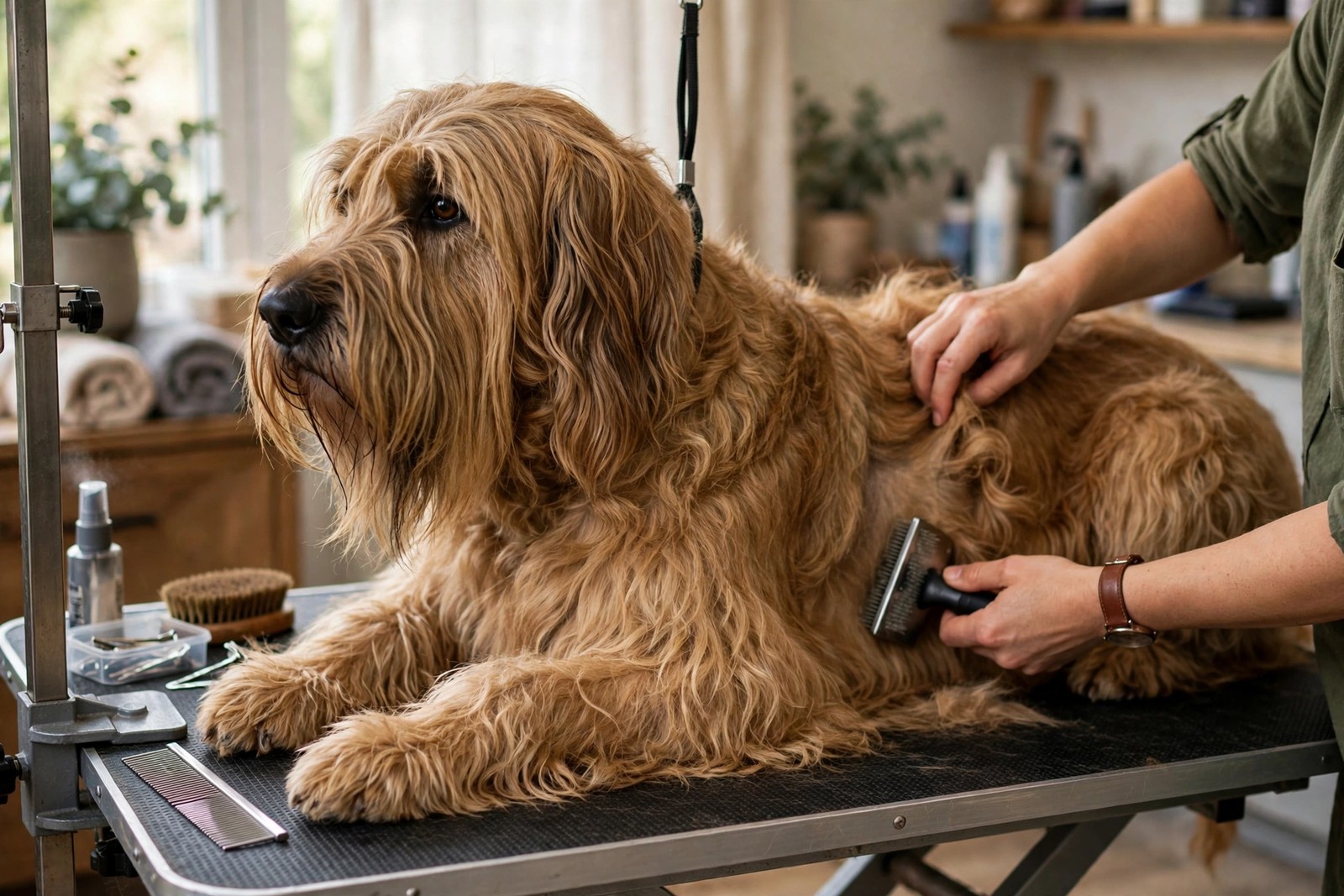
A big dog with a big grooming bill in time
A Briard's coat is a commitment measured in hours. This large French herding breed carries a long, coarse, slightly wavy double coat — dry, goat-like outer hair over a fine dense undercoat — that can reach well past six inches on the body, with a full beard, moustache and eyebrows overflowing the face. Brushing two or three times a week is the working rhythm, and a proper session on an adult in full coat takes the better part of an hour. Anything less frequent, or anything that only skims the surface, ends the same way: felted mats at the skin and a dog clipped down to start over.
Brushing to the skin, in layers
The only method that works on a Briard is working in sections down to the skin. Part the coat in lines, hold the upper hair out of the way, and brush the exposed layer from the roots out with a pin brush, checking with a comb before moving on. Cover the body, then the legs, chest, tail and the long hair on the head, and pay deliberate attention to the friction zones: behind the ears, under the collar, in the armpits, along the belly and at the backs of the thighs, where the fine undercoat felts first.
Work dry-ish rather than soaking wet, with a light mist to cut static, and tease tangles apart from the ends inward with your fingers before the brush ever pulls on them.
Beard, face and the double dewclaws
The beard and moustache trap water, food and mud, and a Briard that has drunk deeply will redecorate the floor and your trousers with a shake of that magnificent face. Comb the beard through at every session, wash it when it gets genuinely grubby and expect it to need a wipe most days.
On the hind legs sit the breed's required double dewclaws, as with its cousin the Beauceron. Those nails never wear on the ground and hide inside profuse leg hair, so part the hair, find all of them and trim on schedule. A forgotten dewclaw on a Briard can grow round into the pad while completely invisible under the coat, which is reason enough to make feet a formal part of every second session.
Bathing and the adolescent coat change
Bathing a full-coated Briard is an event: expect it every few weeks to a couple of months depending on the dog's life, always after a complete brush-out, because water locks existing tangles into felt. Shampooing and rinsing that much hair takes time, and drying takes longer — the undercoat can stay damp against the skin for many hours, so dry in sections with the coat lifted, and never put a damp Briard away in a crate to finish drying on its own.
The hardest season is the coat change, when puppy coat gives way to adult hair in the young dog. It can mat almost overnight, and daily attention for a stretch is normal.
Ears, body checks and when to call the vet
Brush-outs are your inspection time on a dog whose coat hides everything. Feel for lumps, ticks and sore spots with flat palms against the body, check inside the ears for redness or a build-up of wax and hair, and watch how the dog moves afterwards for stiffness a stoic herder might not show otherwise. Skin that becomes persistently flaky, itchy or greasy under that coarse coat, or scratching that continues after a thorough grooming, warrants a veterinarian's assessment rather than another product from the grooming shelf.
Given the sheer hours involved, KinsLe's Care Teams allows a Briard's household to log full brush-outs, beard care and dewclaw trims as separate shared duties, so this magnificent coat is maintained by a rota instead of resting on whoever feels guiltiest.