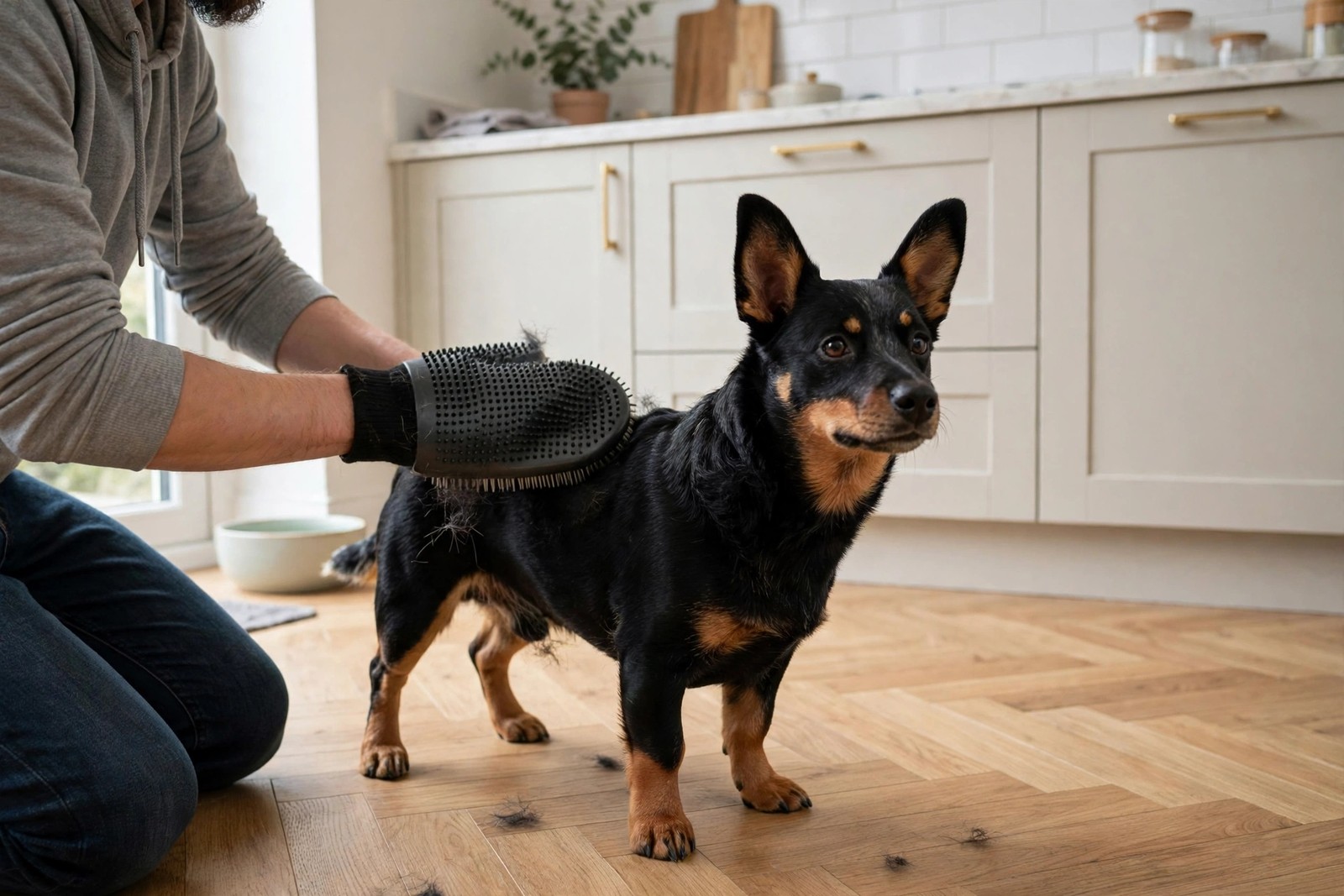
One of the easiest coats in the herding group
A Lancashire Heeler needs grooming about once a week, and most sessions take five to ten minutes. The breed's coat is short, dense, and weather-resistant — a fine undercoat under a smooth topcoat, in black and tan or liver and tan — built for a small dog who worked cattle around Lancashire farms and had no time for fuss. Loose hair is the main issue rather than tangles: this coat does not mat in normal use, so the weekly job is a brisk brush-through that lifts out dead hair and leaves the topcoat lying flat and glossy.
The weekly session, start to finish
A natural bristle brush, a rubber grooming mitt, or a soft slicker all suit the Heeler; work with the lie of the coat over the body, then against it once to loosen undercoat, then smooth it back down. That single pass doubles as a skin check on a short-coated dog — lumps, ticks, dry patches, and small scrapes from farmyard-style adventures are easy to feel with your fingertips as you go. Finish with a look at the coat's shine: a healthy Heeler topcoat has a distinct sheen, and a sudden dull, flaky coat on a dog whose routine has not changed is worth mentioning at the next vet visit.
Shedding season asks a little more
Twice a year the undercoat turns over, and a weekly brush becomes two or three shorter ones for a few weeks. You will see the undercoat tufting out along the flanks and behind the thighs first. Extra sessions then — ideally outside — keep the loose hair on the brush instead of the sofa, and they stop the coat looking patchy while the new undercoat settles. No special deshedding regimen is needed beyond frequency; the coat is short enough that patience and a mitt do the whole job.
Baths, and why less is more
Heelers need baths only when they have rolled in something memorable or come home genuinely filthy from muddy work. The topcoat sheds water and surface dirt well, and a wipe-down handles most muddy legs and bellies. Over-bathing strips the oils that keep this coat weatherproof and glossy, and can leave the skin dry and itchy — the opposite of what a working farm dog's jacket is for. When a bath does happen, rinse thoroughly, since soap residue in a dense short coat is a common cause of post-bath scratching.
The parts that need more care than the coat
For this breed the supporting list matters more than the brush: nails checked every two to three weeks, because a light, quick dog does not always wear them down; ears looked at weekly, since the upright ears catch dust and debris outdoors; and teeth brushed several times a week, as small breeds are prone to dental buildup. Building all three into the same weekly sitting as the brush is the simplest way to keep them from being forgotten, and Heelers — food-motivated and clever — learn the routine quickly when it ends in something tasty.
A ten-minute job worth sharing
Because the whole Heeler routine fits into one short sitting, it is an ideal first grooming responsibility for an older child in the family, or a task that rotates without anyone losing track of whether it happened. KinsLe's Care Teams lets you bundle the brush, nails, ears, and teeth into one weekly checklist, assign it to whoever is on Heeler duty, and see the completion time before assuming the dog still needs doing.