
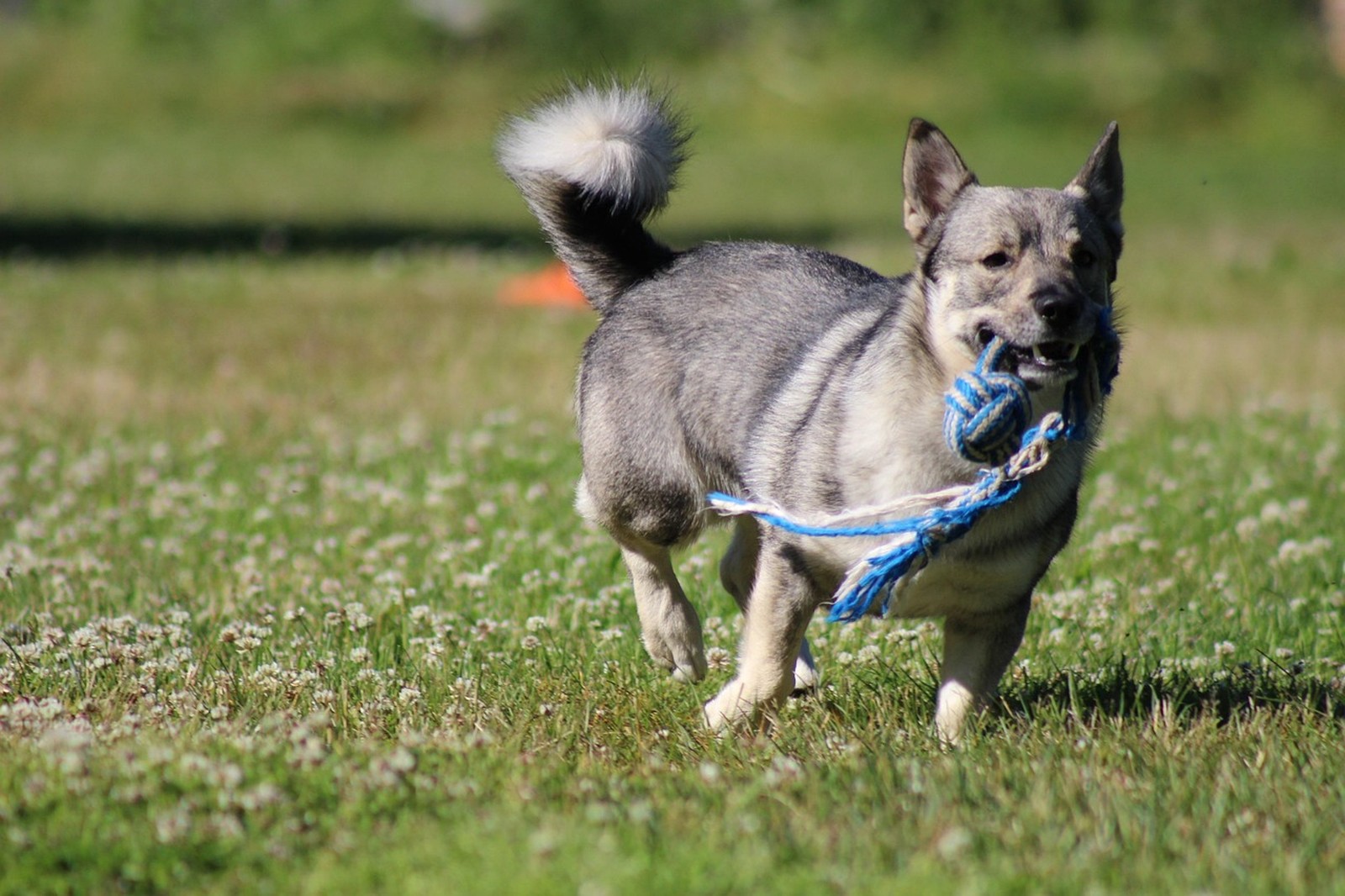
A practical farm coat for most of the year
The Swedish Vallhund, a low-slung herding dog built like a small spitz-corgi cross in outline, carries a medium-length double coat designed for Scandinavian farm weather: harsh guard hairs outside, a soft dense undercoat beneath. For most of the year it is one of the easier coats in this article series to own. A weekly brush with a slicker, finishing with a comb to check you have reached the skin, removes loose hair and keeps the coat lying tight and weather-ready.
There is nothing to trim and no styling to maintain. Mud picked up herding or walking dries and brushes out of the harsh topcoat readily, so baths stay occasional — when the dog is truly grubby rather than on a fixed schedule. Rinse well and dry thoroughly; that undercoat holds moisture against the skin if a wet Vallhund is left to dry in a heap.
The shedding seasons change the maths
Twice a year the Vallhund blows its undercoat, and the volume that comes out of a dog this size surprises most first-time owners. Weekly brushing will not keep pace; switch to short daily sessions with an undercoat rake and slicker during the worst weeks, working in sections so dead undercoat is pulled from the whole dog rather than just the easy top layer.
Little and often beats one marathon session — the dog stays comfortable, the house stays survivable, and you can watch the skin as the coat thins. A bath part-way through the shed, followed by a thorough cool dry, loosens dead undercoat and makes the following days' brushing noticeably more productive. Behind the ears and around the neck ruff are the spots where loosened undercoat packs into wads if it is not raked out.
Feet, nails and herding-dog details
A low dog's belly and leg feathering collect wet and mud disproportionately, so a quick rinse or brush of the underside after wet walks is a Vallhund-specific habit worth building. Trim the hair between the paw pads in snow or grit, and check nails regularly — herding dogs wear nails unevenly depending on terrain, and the front dewclaws, where present, grow un-worn and curl if nobody is watching them.
The ruff around the neck deserves a comb of its own during the weekly session, because collar friction works loose undercoat into a dense ring there that a slicker passes straight over. Ears stand upright and are easy to check during the weekly brush; teeth benefit from the same session's attention. As Vallhunds age, that weekly brush-out is also your early-warning system — new lumps, thinning patches and stiff joints are all noticed first by hands moving methodically over the dog.
Sharing the shed-season surge
Vallhund grooming is a light weekly job that becomes a daily one for a few weeks at a time, and households cope best when that surge is planned rather than discovered.
KinsLe Care Teams handles both gears of a Swedish Vallhund's year, letting you assign the standing weekly brush-out and then share out the daily shedding-season sessions, each closed with a timestamp so the coat care never silently lapses.