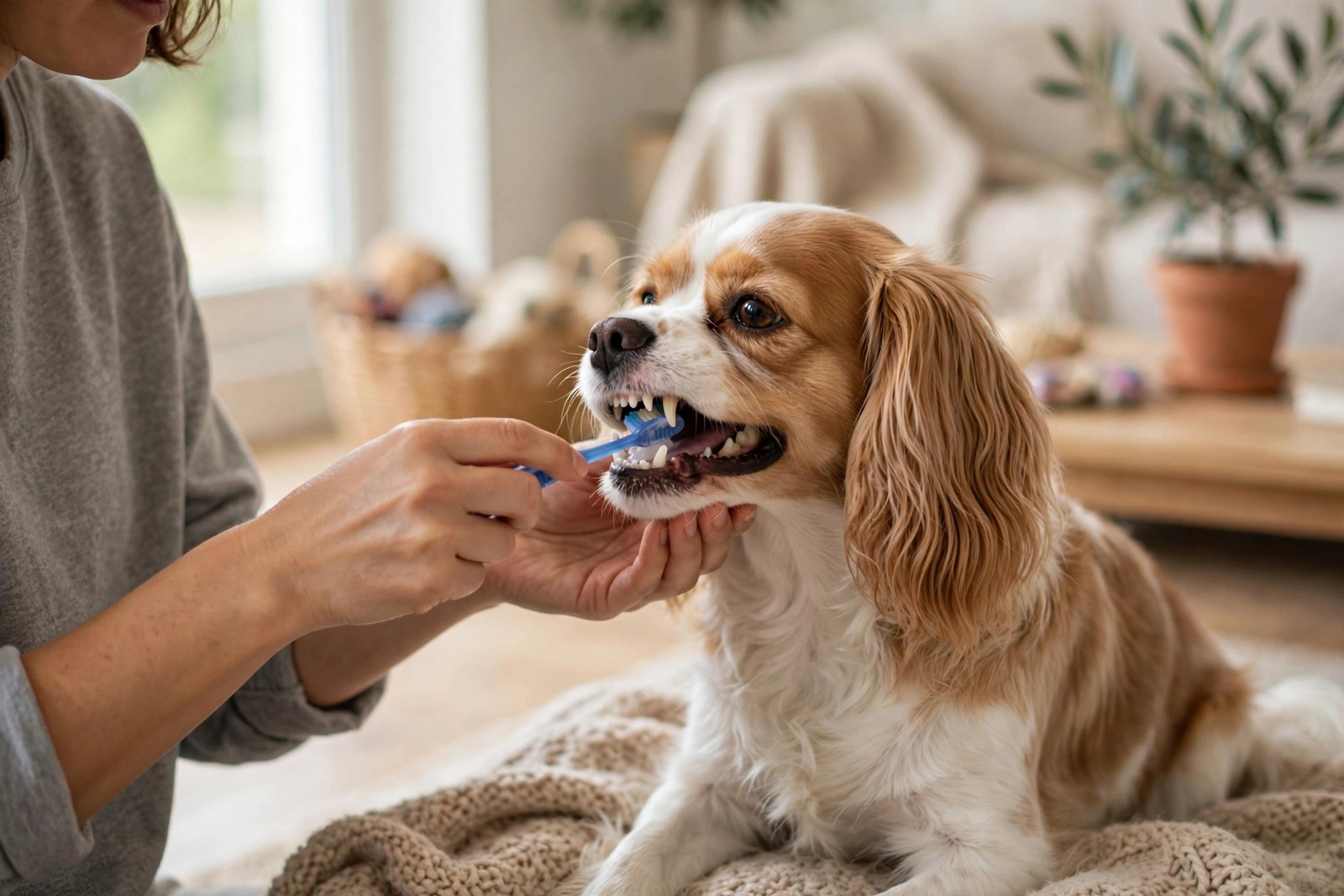
Two different clocks govern a dog's dental care. Home care runs daily: brushing with a brush or finger brush made for dogs, and toothpaste formulated for them — human toothpaste is not safe for a dog to swallow. Professional care runs slower: a vet dental check at least once a year, with a scale-and-polish under anaesthetic whenever tartar and gum disease pass what home care can reverse; small breeds and flat-faced dogs, whose crowded teeth trap plaque fast, often need that professional clean more frequently, sometimes yearly.
Building the Home Routine
Introduce brushing gradually: tasty dog toothpaste licked from your finger first, then a brush lifted to the outer surfaces of the big cheek teeth, a few seconds building up over days. Focus on the gum line of the upper back teeth, where plaque builds fastest. Dental chews, diets, and water additives can support brushing but none replaces it. Angle the brush at the gum line and work in small circles, a few teeth at a time, and finish while your dog is still cooperating, so the session ends on a win and tomorrow's starts easier. Watch for the escalation signs between vet visits — tartar crust, red gum edges, bad breath — because the right cleaning interval for your individual dog is set by how fast those appear, not by a fixed calendar.
Working With Your Vet
Dental decisions follow the same careful order as any health question: watch the mouth between visits, note when tartar, red gum edges, or breath changes first appear, and let a veterinarian judge whether a professional clean is due. Only a proper examination shows what is happening below the gum line, where the damage that matters most quietly collects.
Ask your vet to grade your dog's mouth at every annual check and agree the plan: home routine, when to re-check, and when a professional clean is due. Book sooner for bleeding gums, a broken tooth, dropping food, or a sudden change in breath — dental pain is common and dogs hide it well.
Keep the dental thread of her record straight: the date of each professional clean, the grade your vet gave her mouth, and any teeth removed or placed on watch. Months later, that short history shows whether her cleaning interval is holding or needs shortening — far better than guessing from memory in the waiting room.
Her Pet Passport on KinsLe holds those dental dates, grades, and visit notes in a single portable packet, so whichever vet, boarder, or sitter needs her history has it whole rather than in fragments.