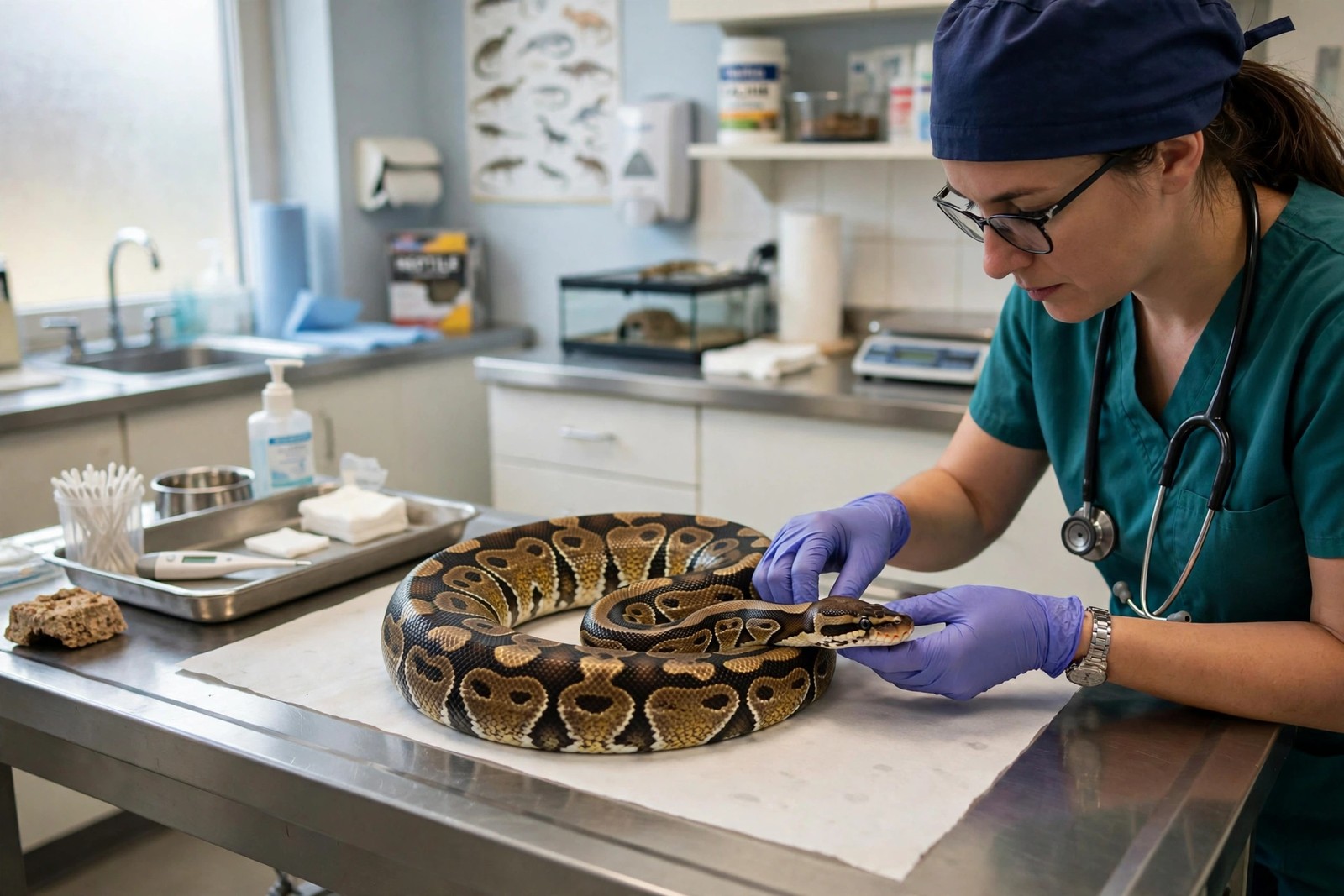
For an adult ball python in good health, the working rhythm is a yearly examination, with an early visit soon after the snake arrives to set the baseline: weight, body condition, a look in the mouth, a check for mites, and screening advice tailored to a new arrival, often including a faecal parasite test. Unlike dogs and cats, snakes need no vaccinations, so the yearly visit is about examination and your records: weight trend, feeding pattern, sheds, and enclosure temperatures and humidity as actually measured, not as intended. Juveniles, breeding females, and any snake with a history of fasting or respiratory trouble may be advised to come more often.
Choosing the Right Vet and Bringing the Right Data
Use a vet who actually treats reptiles — ideally an exotics practice — and find them before an emergency, because a snake who needs help at midnight cannot wait for a search. Bring your log: dates and sizes of feeds (taken and refused), shed dates and whether the shed came off whole, weight history, and photos or readings of your enclosure's warm and cool end temperatures and humidity; most 'snake problems' presented to vets are husbandry problems visible only in that data. Between visits, your checks are appetite pattern, weight stability, clean whole sheds, silent breathing (any wheeze, mucus, or open-mouth breathing in a snake is abnormal), and a mite check around the eyes and under the chin after any new addition to the collection.
Working With Your Vet
With a ball python, arrive able to answer the questions this species always raises: when the last feed was taken and what size it was, how long any fast has run, and whether recent sheds came away whole. Set those details beside the examination rather than offering a general summary, and let the vet draw the conclusions — a long fast paired with steady weight reads very differently from the same fast with a falling trend, and only the examination can separate the two.
Wheezing, mucus bubbles, mouth sores, retained shed over the eyes, mites, or weight loss with food refusal in a ball python all need a reptile vet promptly — breathing signs are same-day.
For this species the log worth keeping is short and specific: feed dates with prey size, refusals, shed dates and completeness, and a monthly weight. Ball pythons are famous for fasts that mean nothing, and that short record is how a vet tells a seasonal pause from a genuine slide. Refresh the entries after any enclosure change, new addition to the collection or move of house, since those events reset what counts as this snake's normal.
The Pet Passport in KinsLe is where that log belongs at appointment time: one portable packet holding this python's records, so a new or returning vet reads the year in minutes.