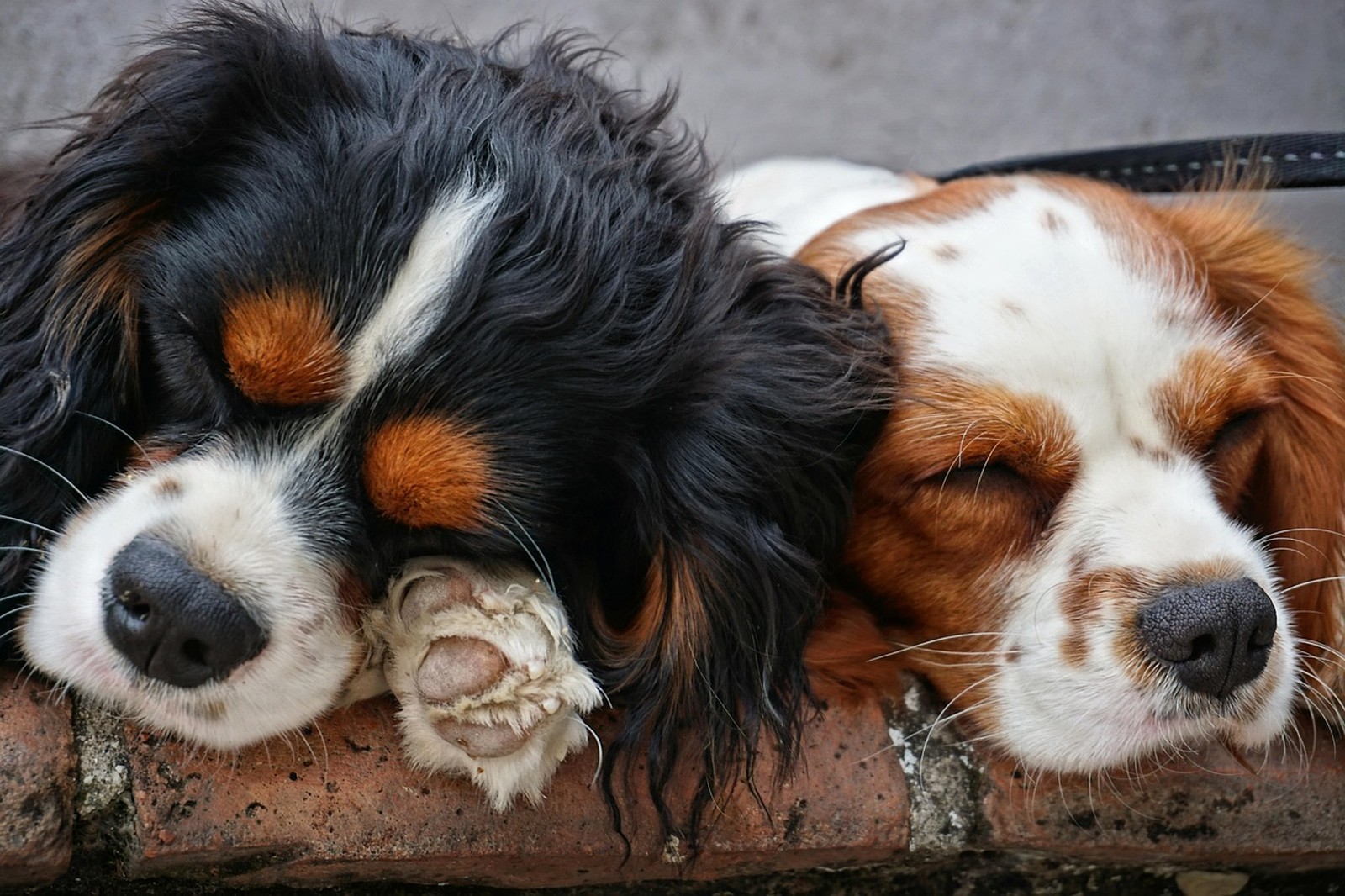
A Cavalier's grooming clock is set by two things: a silky, medium-length coat that tangles rather than mats solid, and feathering — the long fringe on ears, chest, belly, legs, and tail — that collects burrs, food, and moisture. The schedule below keeps that coat flowing instead of knotted.
Brushing Three to Four Times a Week
Set aside ten to fifteen minutes, three to four times weekly. Work in sections with a pin brush, then follow with a comb right down to the skin; a Cavalier can look smooth on top while small tangles build underneath, especially behind the ears, in the armpits, and where the chest feathering meets the front legs. Mist the coat lightly before brushing — brushing a Cavalier bone-dry snaps the fine silk hair.
Ear feathering deserves its own pass every session. The long hair under and around the ear tangles first and hides damp skin. Comb it out gently from the ends upward, and never pull a mat straight out; tease it apart with fingers and a comb, or clip beneath it if it has felted.
Ears, Baths, and Feet
Those dropped, heavily feathered ears trap warm air, so check inside at least twice a week for redness, a yeasty smell, or dark wax, and dry the inner ear after baths and swimming. Recurring odor or head-shaking is a veterinarian visit, not a cleaning problem to push through at home.
Bathe every three to four weeks, using conditioner on the feathering so it combs out afterward instead of knotting in the tub. Between baths, a quick rinse of muddy leg feathering alone is enough. Trim nails every three to four weeks, and trim the hair between the paw pads monthly so it stops tracking mud and slipping on hard floors. Brush teeth several times a week; Cavaliers are a small breed with crowded mouths.
Puppy Coats and Professional Help
A Cavalier puppy's coat is shorter and simpler until roughly the first year, when adult feathering grows in and the brushing frequency has to step up with it — owners caught out by that change are the ones who end up with a shaved chest. Most pet Cavaliers do not need a professional groomer on a fixed cycle if home brushing holds, but a tidy trim of feet and feathering every eight to twelve weeks keeps length manageable. Dogs kept in full coat for showing are a different, daily commitment.
Keeping the Midweek Sessions From Vanishing
The failure point for this breed is rarely the weekend brush; it is the Wednesday and Friday sessions that stop tangles forming. Put names to them instead of relying on whoever remembers. KinsLe's Care Teams lets you assign each brush-through and ear check in the Cavalier's week to a specific person and see the timestamp when it was finished, so feathering care stays shared and visible rather than assumed.