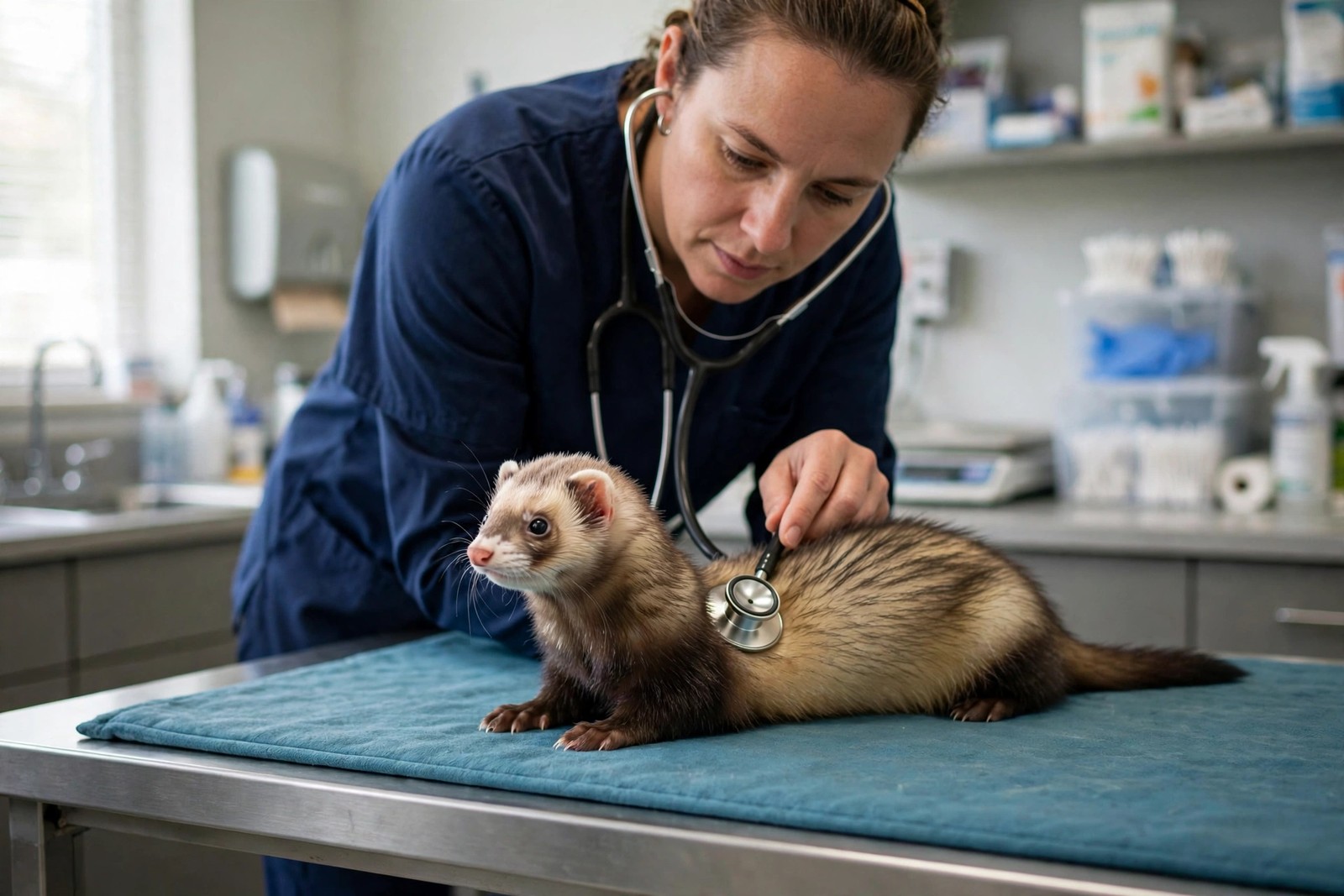
Plan on an annual vet visit for a healthy adult ferret, moving to two visits a year from around age four or five. Ferrets are prone to age-related conditions such as insulinoma, adrenal disease and lymphoma, which can move fast once signs appear, so those later checks matter. Kits also need their early vaccinations — distemper cover is essential, because canine distemper is rarely survivable in ferrets — plus rabies cover where local rules require it. At each visit expect weight, teeth, ears (ear mites are common), heart and lungs, abdomen palpation (vets feel for enlarged spleens and organs), and a review of coat and skin.
Between-Visit Watching for Ferrets
Owners catch ferret disease early by knowing normal: energy, appetite, stool consistency, coat thickness, and body shape. The classic early flags are hind-leg weakness or occasional wobbliness and staring episodes (possible low blood sugar), hair loss starting at the tail and moving forward, itchiness, a swollen vulva in a neutered female (adrenal disease signs), weight loss, drooling or pawing at the mouth, and reduced play. Weigh monthly and keep a simple log; ferrets also lose and gain seasonally, so a trend matters more than a single reading. Use a vet who genuinely sees ferrets — exotics experience matters for these presentations.
Working With Your Vet
For ferrets, bring specifics rather than impressions: when the wobbliness started, whether the hair loss began at the tail, how much weight has shifted since the last weigh-in. A veterinarian experienced with exotics should make any diagnosis, because insulinoma, adrenal disease and lymphoma can look alike at first glance yet need very different responses. Photographs of a staring episode or a short video of hind-leg weakness can help the vet judge urgency, but they sit alongside an examination, never in place of one.
Book promptly for hind-end weakness, episodes of collapse or drooling, progressive hair loss, or any ferret who stops eating for more than a day. Ferrets mask illness and then decline quickly, so twice-yearly senior checks plus early calls on changes are the pattern that gives the best outcomes.
For a ferret, a useful log is short and dated: monthly weight, appetite, stool, energy, and any episode of staring, drooling or wobbliness, with the day each began. Read back over a few weeks, a slide in weight or a cluster of quiet days stands out in a way memory alone rarely catches, and the vet gets a timeline instead of a summary from the waiting room. Revisit that baseline after a house move, a new cage mate or a change in food, because each shifts what counts as normal for that ferret.
KinsLe's Pet Passport holds that same ferret history — vaccinations, weights and past visits — as one packet, ready when a new vet, boarder or sitter needs the full picture.