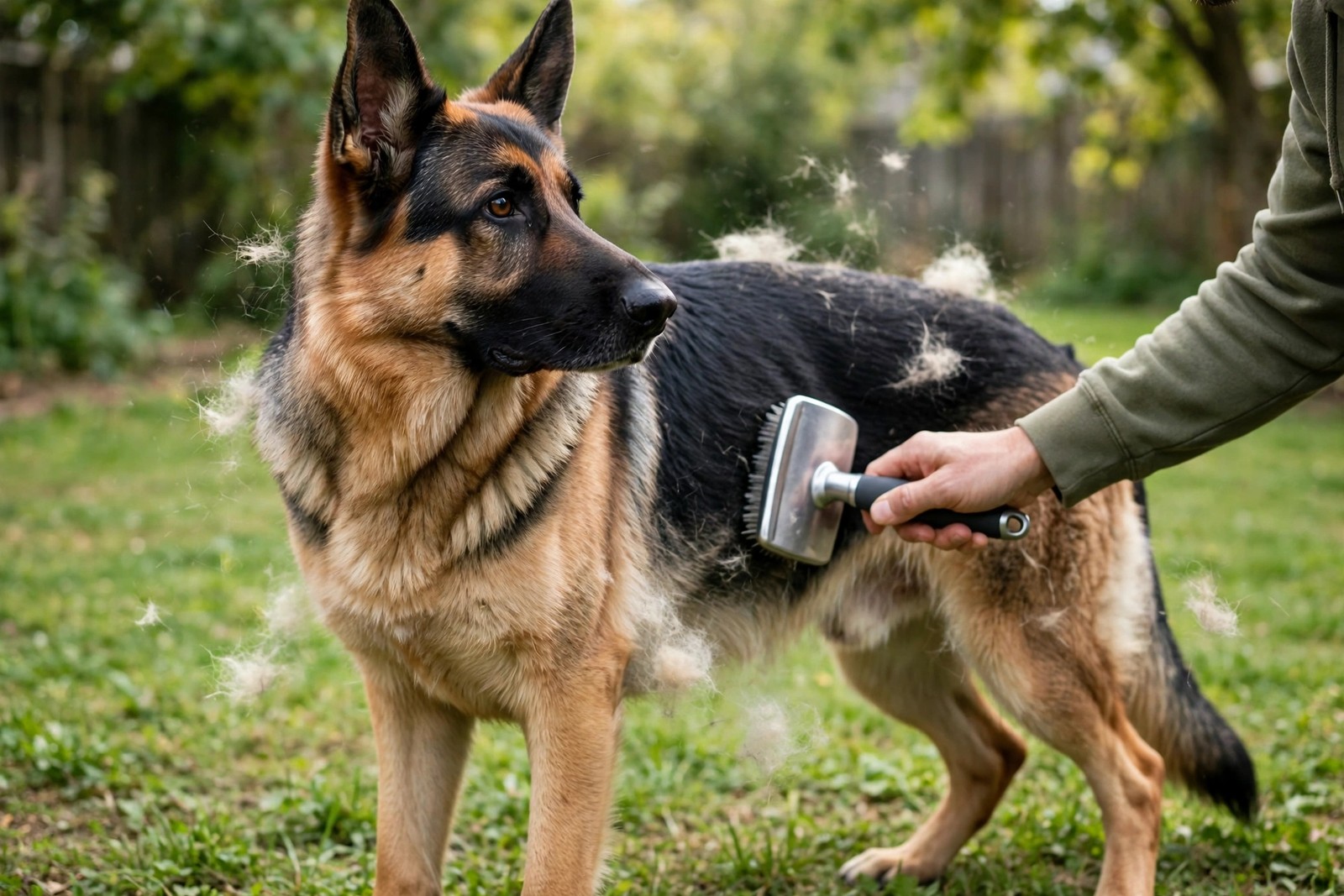
A German Shepherd's grooming rhythm is set by its double coat: a harsh outer layer over a thick, soft undercoat that sheds all year and erupts twice a year. Brush thoroughly at least once a week as a baseline — two or three shorter sessions suit most dogs better — bathe every six to eight weeks, and treat ears, nails, and teeth as part of the same weekly routine rather than separate projects.
Weekly brushing, and the twice-yearly coat blow
In a normal week, work through the coat in sections with a slicker brush, then follow with an undercoat rake to lift out the loose wool before it felts into the coat. Pay attention to the friction zones where Shepherd hair mats first: behind the ears, around the collar line, the feathering on the backs of the thighs, and the tail. Ten to fifteen unhurried minutes is typical for a full adult coat, and brushing outdoors saves considerable vacuuming.
In spring and autumn the undercoat releases in earnest — owners call it blowing the coat, and for two to four weeks you can pull out soft tufts by hand. During a blow, brush daily if you can, even briefly. Left in place, that dead undercoat packs down, traps moisture against the skin, and creates the felted patches that eventually have to be clipped out. Never shave a German Shepherd to solve shedding: the double coat insulates against heat as well as cold and protects the skin, and shaved coats often regrow patchily.
Bathing without stripping the coat
Six to eight weeks between baths suits most Shepherds, with extra baths only for genuine filth — a roll in something foul earns one, routine dust does not. Over-bathing with harsh shampoo dulls the outer coat and can leave skin dry and itchy. Use warm water, work the shampoo through to the skin (the undercoat repels water at first, so soak thoroughly), and rinse longer than feels necessary; dried shampoo residue left in a dense undercoat is a common cause of post-bath scratching. Dry the coat properly, down to the skin, before deciding you are finished.
Ears, nails, teeth, and skin checks
Upright ears stay drier than floppy ones, but check both weekly for redness, odor, or dark waxy build-up, and mention persistent head-shaking or scratching to your veterinarian rather than repeatedly cleaning an ear that may be infected. Trim nails every two to four weeks, brush teeth several times a week if your dog allows it, and run your hands over the skin during brushing — Shepherds are prone to itchy skin, and lumps, hot spots, thinning patches, or fleas are all easiest to catch early with your fingers in the coat.
Sharing the load matters with a dog who produces this much hair, so listing the weekly brush, the daily blow-season sessions, and the ear check in KinsLe's Care Teams, each assigned and timestamped when done, keeps the coat routine steady instead of sporadic.