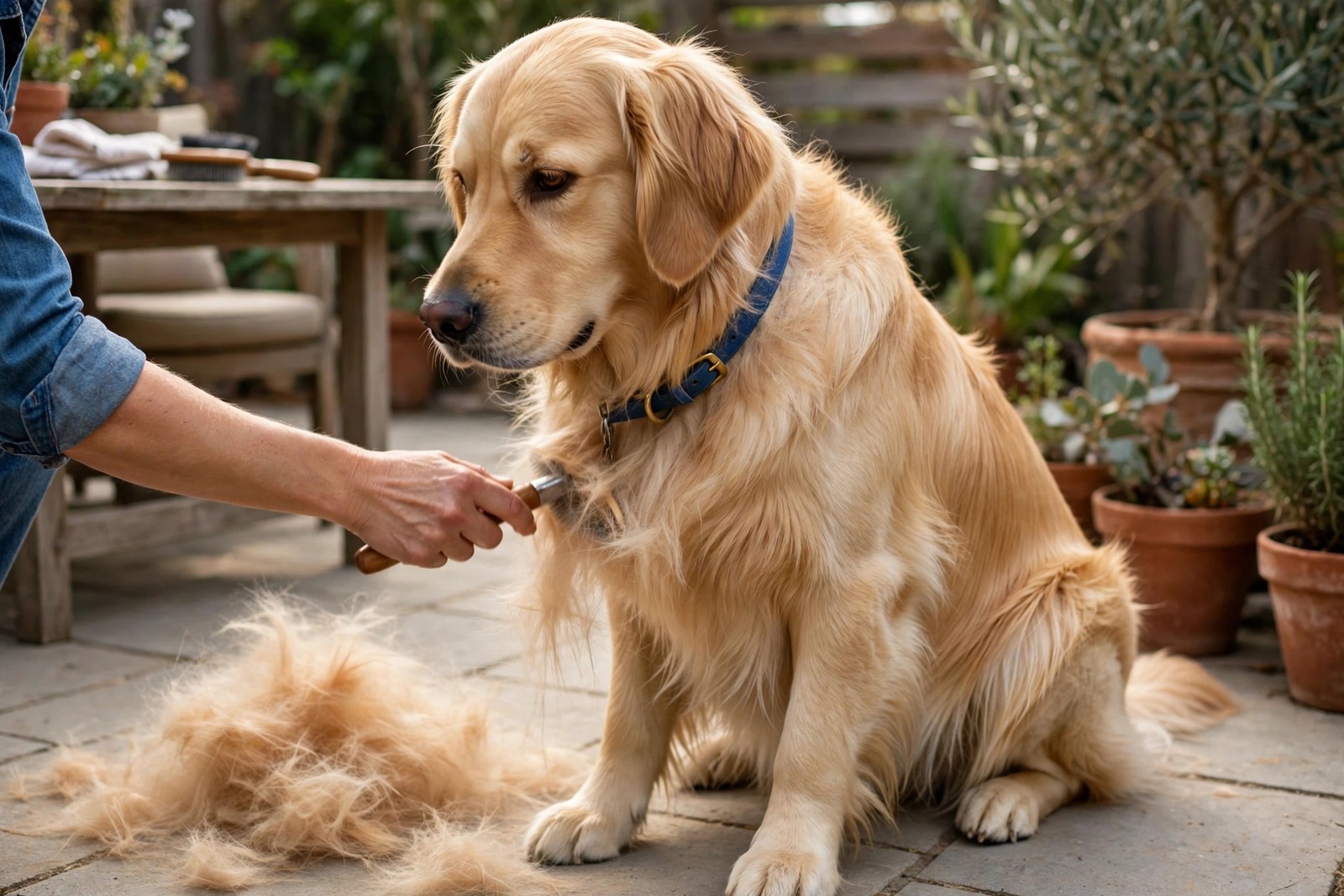
A Golden Retriever's coat looks forgiving and is not: beneath the glossy topcoat sits a dense undercoat, and the long feathering on the chest, legs, belly, and tail tangles readily. Brush at least once a week as an absolute floor, aim for two or three sessions, bathe every four to six weeks, and treat the ears as a weekly job in their own right.
Brushing the feathering before it mats
Mats in a Golden form in predictable places: directly behind the ears where the hair is finest, in the armpits, along the belly feathering, at the backs of the thighs, and through the tail plume. Work a slicker brush through those zones first, in the direction of growth, then brush the body, and finish with a comb run close to the skin — if the comb glides through, the job is done; if it catches, that tangle becomes next week's mat. A mat found early teases apart with fingers and a little patience. A mat left to tighten against the skin pulls, traps moisture, and usually ends with clippers and a vet visit if the skin beneath has become sore, so the weekly habit is genuinely preventive medicine.
Increase brushing during the spring and autumn sheds, when undercoat releases heavily, and after any walk that fills the feathering with burrs, seeds, or mud. A quick five-minute tidy after muddy walks beats a monthly excavation.
Bathing, swimming, and drying
Four to six weeks between baths works for most Goldens, flexed around real life — a dog who swims weekly in ponds will need bathing at the shorter interval, and should be rinsed with clean water after every swim to remove pond residue, chlorine, or salt before it dries in the coat. Dry the coat thoroughly, including the feathering, because a Golden left damp in warm weather can develop sore, musty patches in the dense areas. Light trimming of the paw fur, the feathering's untidiest edges, and around the ears keeps the breed's outline neat without ever clipping the coat short.
Ears: the Golden's weak point
Those soft, folded ears are the breed's grooming priority. The flap limits airflow, the ear canal stays warm and moist, and Goldens add swimming and ear-scratching enthusiasm to the mix. Lift each ear weekly and look: a healthy ear is pale, dry, and near-odorless. Dry the ears carefully after every bath and swim. Redness, a yeasty smell, dark discharge, or persistent head-shaking and scratching are vet matters, not cleaning challenges — an infected ear needs examination rather than deeper home treatment.
Add nails every two to four weeks and a hands-on skin check during brushing, and the routine is complete. Entering the brush sessions, ear checks, and post-swim rinses into KinsLe's Care Teams, assigned across the family with completions timestamped, keeps a Golden gleaming without one person carrying the whole coat.