
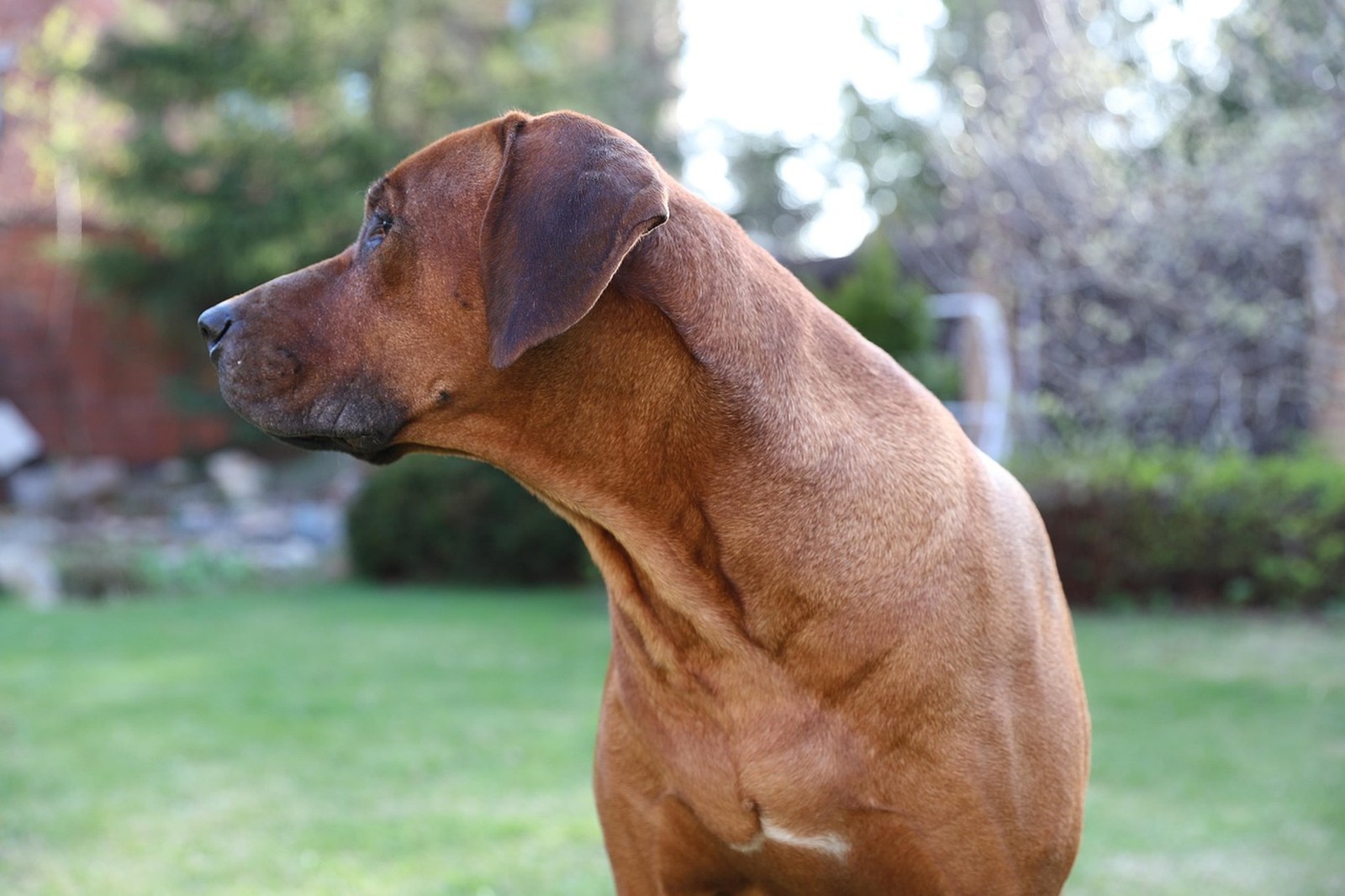
The annual visit, and when twice a year takes over
One routine checkup a year is the right cadence for a healthy adult Rhodesian Ridgeback. Puppies need the usual cluster of early visits — vaccines in series, growth and parasite checks, and a first careful examination of the ridge — before settling into that yearly pattern. From the senior years onward, six-monthly visits earn their keep: this is a large, deep-chested hound with a lifespan shorter than a small dog's, and the changes of age, from thyroid slowdown to joint wear to heart changes, reward earlier detection. Working, hunting, or lure-coursing Ridgebacks may also benefit from a pre-season soundness once-over. Any Ridgeback managing a known condition follows the interval his own vet sets, which may be considerably tighter than the standard year.
The ridge itself is part of every examination
No Ridgeback checkup is complete without the vet running careful fingers along the ridge from shoulders to hips. Breeders and vets watch for a dermoid sinus — a small tubular defect that can occur along the ridge line and may show as a tiny opening, a swirl irregularity, or a spot that repeatedly swells or drains. Finding one early matters because an infected sinus is a far bigger problem than a monitored one. Beyond the ridge, the exam weighs and conditions-scores a powerful dog prone to gaining if under-exercised, checks thyroid function when signs suggest it — Ridgebacks are among the breeds where low thyroid is a recognised concern — and assesses elbows, hips, and overall muscle. Eyes, ears, teeth, heart, and a skin check round it out, with particular attention to any lump on a short, easy-to-inspect coat.
Watching a big, stoic hound at home
Ridgebacks are dignified and not complainers, so your home observations fill the gap between annual visits. Run a hand slowly along the ridge every week or two during grooming and learn its normal texture, so any pinhead opening, raised thread of tissue, or tender swelling stands out at once. Keep a realistic eye on condition: you should feel ribs under a thin fat cover on a fit Ridgeback, and a dog who rounds out while his walks shrink is heading for joint strain and metabolic trouble. Notice the classic low-thyroid pattern if it creeps in — slowing down, gaining despite the same food, a thinning or dull coat, seeking warm spots — and write down when you first saw each change. After hard runs, watch the cool-down: heavy stiffness on rising the next morning deserves a mention at the next visit, or sooner if it repeats.
Ridgeback signs that mean book now, not later
A spot along the ridge that swells, weeps, or keeps returning after it seemed to heal should be seen promptly, as should any new lump anywhere on the body. Marked lethargy paired with weight gain, hair loss, or feeling the cold in a previously hardy dog points toward a vet visit with blood work rather than a wait-and-see month. Lameness that does not ease with a few quiet days, a swollen joint, or reluctance to climb into the car in a dog who lives for outings all warrant booking in. As with any deep-chested breed, learn the emergency picture of a swollen, drum-tight belly with unproductive retching and restlessness — that is not a routine appointment, that is an immediate emergency trip, day or night.
Each Ridgeback visit adds pieces — ridge findings, thyroid numbers, weight trend — and KinsLe's Pet Passport stores that record as one packet, so whichever vet you see works from the full picture.