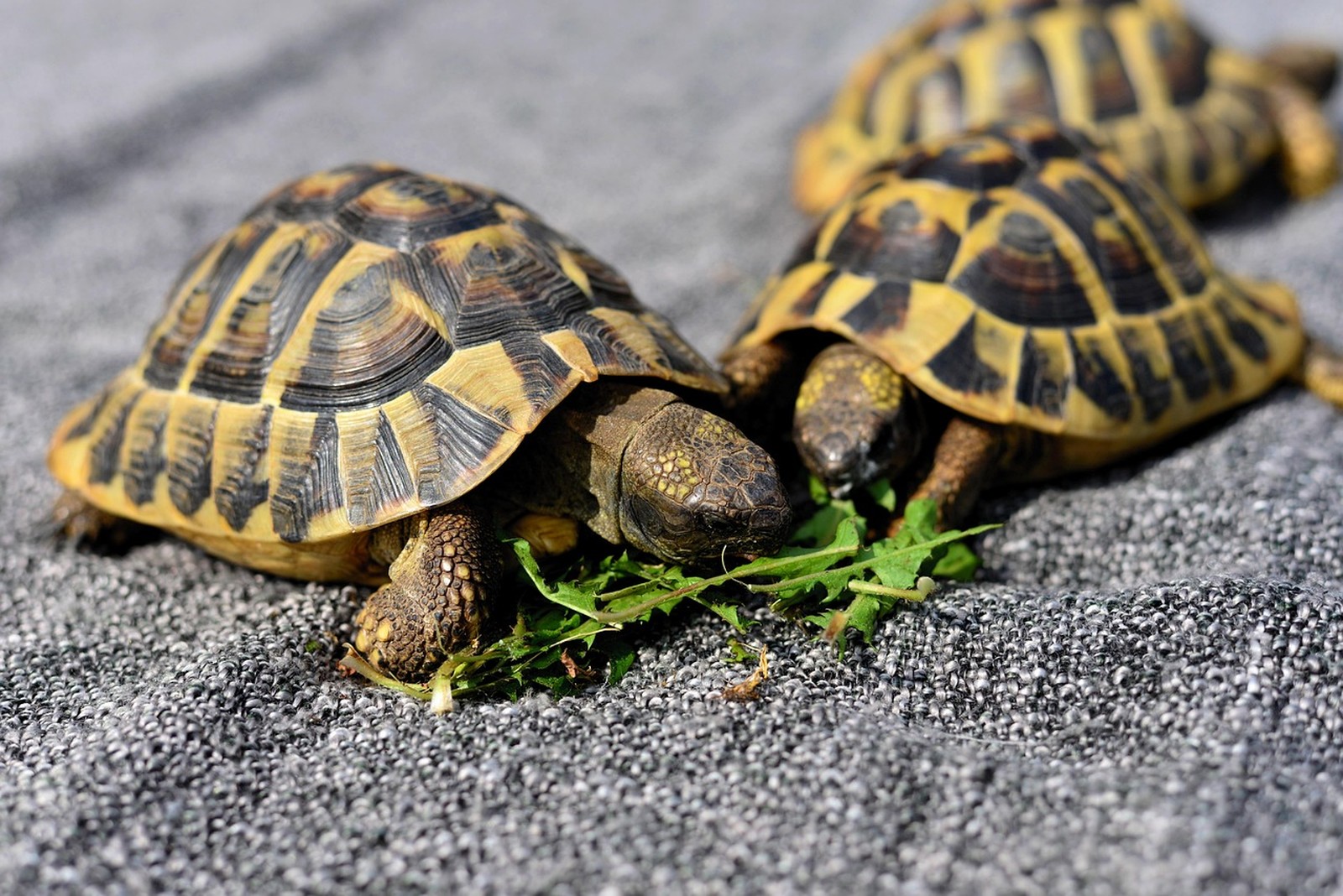
A young tortoise is building shell and bone at the fastest rate of its life, and both are made largely of calcium taken from its food. A wild youngster grazing across calcium-rich weeds on limestone country gets that mineral steadily, in small amounts, day after day. A pet tortoise fed from a bowl needs the same steady supply arranged for it, and a light dusting of calcium powder on its food on most days is how you provide it.
The routine: light, thin and on most days
Dust the food lightly on most days: a small pinch of plain calcium powder, sprinkled over the day's leafy greens so the leaves carry a faint, even coating. Dampen the greens first with a spray of water, because dry powder falls straight off dry leaves and ends up on the enclosure floor instead of inside the tortoise. The coating should look like a light frost, not a white crust. A pile of food buried under thick powder smells and tastes wrong to the tortoise, and a youngster that starts refusing dusted food is getting less calcium, not more, however generous the dusting was. Prepare the portion first, then dampen it, dust it and serve it as it is, since cutting afterwards exposes undusted surfaces.
Why ultraviolet light decides whether the powder works
Calcium powder on its own is only half the system. A tortoise uses dietary calcium properly when it can make vitamin D3 in its skin under ultraviolet light, so a young tortoise needs access to a proper ultraviolet source, either unfiltered sunshine outdoors or an ultraviolet lamp indoors used on the maker's schedule and replaced before its output fades. Without that light, extra powder does not make up the difference. Powders differ, and this is where the two kinds need separating. Plain calcium, without added vitamin D3, is the everyday powder for the most-days routine above. A calcium powder that does contain vitamin D3 is used less often, on the pattern your vet advises for your tortoise's lighting setup, because the tortoise is also making D3 under its lamp and the two sources together can overshoot. Read the tub before you buy a second one, so you know which kind you are actually dusting with each day.
Calcium from food, and the place of a multivitamin
Powder supports the diet; it does not replace a calcium-rich one. Build the bowl around leafy weeds and greens that naturally carry calcium, such as dandelion leaves, plantain and other tortoise-safe weeds, with edible flowers and a rotation of suitable leaves for variety. A cuttlebone left in the enclosure gives the tortoise a self-serve calcium source it can gnaw at will, and many youngsters use one steadily. A reptile multivitamin has a smaller, separate place: used occasionally, typically once a week on a day when you are not also dusting with a D3 powder, it covers the trace vitamins that plain calcium does not provide. Keep fruit, protein-rich foods and shop-bought salad fillers minor in a young Mediterranean tortoise's bowl, because a diet built on those undermines the calcium balance you are dusting to protect.
Signs to watch, and when to ask a vet
A young tortoise getting its calcium and light right grows slowly, with a smooth, hard shell that does not give under gentle thumb pressure, strong legs and a keen appetite. Warning signs include a shell that feels soft or rubbery, new growth coming in raised and bumpy, a beak overgrowing, trembling limbs or a youngster that stops eating and withdraws. Those signs need a vet who treats reptiles, promptly, and you should describe your dusting routine and lighting honestly at the appointment. Do not try to correct a soft shell by piling on extra powder at home; the cause may sit with the lighting, the diet or the tortoise itself, and only an examination separates them. Recording the dusting days in KinsLe Care Teams, alongside who fed the tortoise, builds the accurate routine history that appointment will call for.