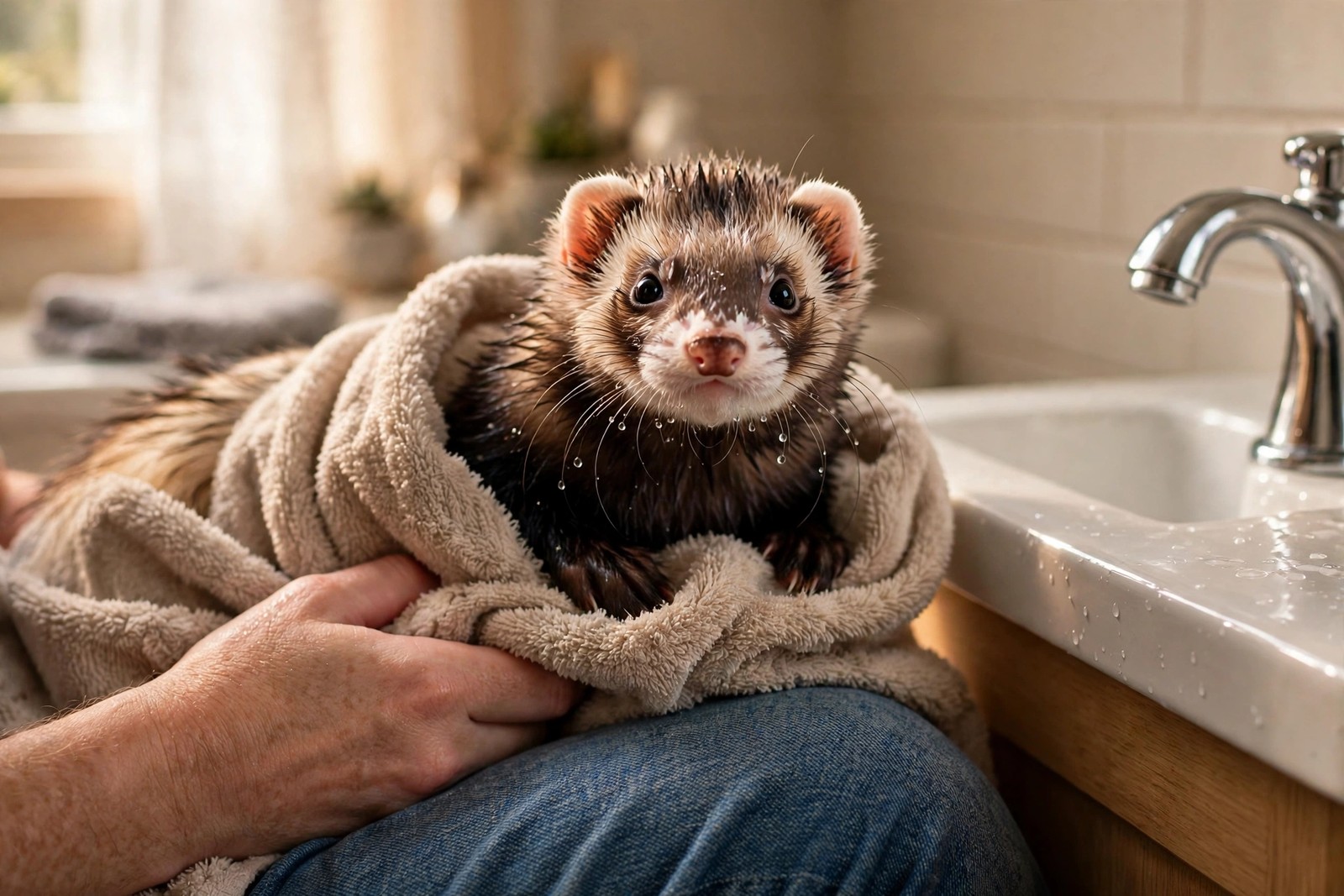
A healthy ferret rarely needs a bath more than once a month, and many ferrets thrive on a handful of baths a year. That surprises new owners, because the instinct when a ferret smells musky is to wash it more. With ferrets, washing more is usually the very thing making the smell worse, and understanding why changes how you approach the whole question.
Why Over-Bathing Backfires
A ferret's skin produces oils that carry its natural scent, and those oils also keep the coat soft and the skin comfortable. Shampoo strips the oils off, the skin reads that as dryness, and it responds by producing oil faster than before. Within days the ferret smells stronger than it did pre-bath, the coat can turn coarse, and the skin may flake and itch, which leads to scratching that owners then misread as dirtiness. Bathing also cannot fix the main sources of household ferret odor: bedding that holds scent, a litter box that needs daily scooping, and ears that need gentle cleaning. Washing hammocks, blankets, and bedding weekly does more for the smell of a room than any bath does.
When a Bath Is Actually Warranted
Bathe when there is something to remove: a ferret who has dug through a plant pot or litter, rolled in something messy, or come home dusty from a dig box, or when your veterinarian asks for a bath as part of care for a skin problem. Use lukewarm water in a sink or tub with a few inches of depth, support the ferret's body so it never panics and scrambles, and keep water and shampoo away from the face and inside the ears. A small amount of gentle shampoo made for ferrets or kittens is enough; rinse thoroughly, because leftover shampoo is itself an itch trigger. Dry the ferret completely with a towel and keep it somewhere warm until the coat is dry, then expect the classic post-bath burst of energy, when a damp ferret races around rubbing itself on towels and carpet to get its scent back onto everything.
Between Baths: The Care That Matters More
For everyday freshness, wipe a grubby ferret down with a damp cloth, rinse dirty feet in plain water, and keep the real odor sources under control: litter scooped daily, bedding washed weekly, and the cage wiped down regularly. A play session in a box of clean water, which many ferrets enjoy splashing in, rinses off dust without shampoo or oil-stripping. Watch instead for changes that are not about bathing at all: a sudden increase in odor, patchy hair loss, flaky or reddened skin, or persistent scratching deserve a vet visit, since ferrets cannot tell you when something is wrong beyond these outward signs.
Keeping Track of Bath Days
Because the right interval is measured in weeks, it is easy for two people in one household to each assume the other has not bathed the ferret recently, and the animal ends up washed twice in a fortnight. Writing the date down solves it. In KinsLe, adding bathing to your ferret's Care Teams duties, where the completed bath is marked with a timestamp everyone can see, keeps the schedule at once-in-a-while instead of whenever someone next notices the smell.