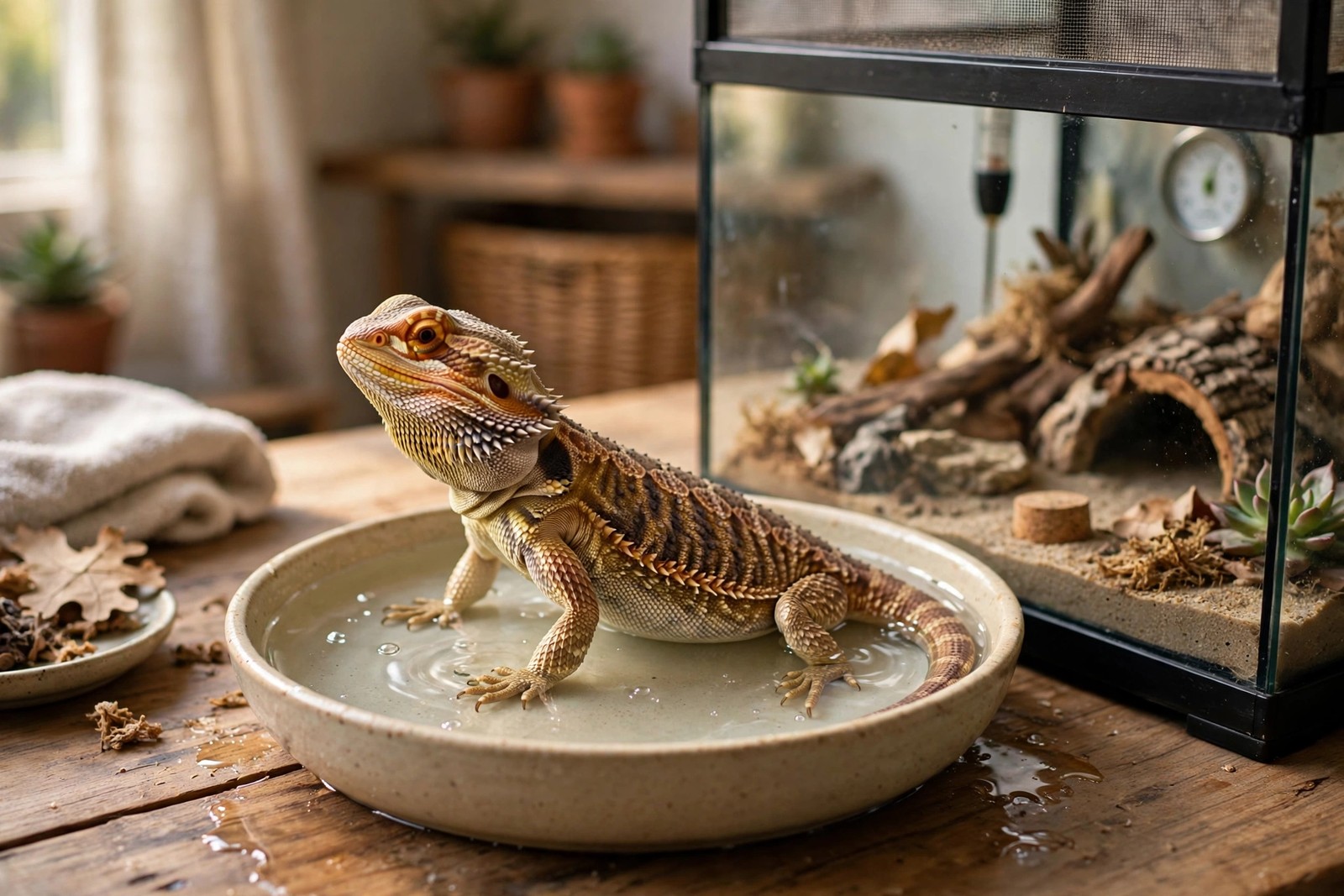
Bathe a bearded dragon occasionally, not on a fixed washing rota. A healthy adult that drinks and has a water bowl in its enclosure usually needs no more than one lukewarm soak of 10 to 20 minutes every week or two, and some keepers soak less often than that without any harm. The soak is a tool for particular jobs: softening a patch of retained shed, encouraging a reluctant drinker to take in water, and prompting a dragon that has not passed droppings for a while to go. It is not a substitute for correct temperatures, lighting, and diet inside the enclosure.
How to run a soak properly
Use a clean, shallow container set aside for the dragon, and fill it with lukewarm water at roughly 85 to 95 degrees Fahrenheit (29 to 35 degrees Celsius), tested on the inside of your wrist so it feels warm rather than hot. The water should reach no higher than the dragon's elbows when it is standing, so it can keep its head up without effort and is never at risk if it lowers it. Stay in the room for the whole soak; a dragon can get into difficulty in shallow water if it becomes stressed or tips over, and 10 to 20 minutes is long enough for the water to start cooling toward room temperature anyway.
Support the body with a hand as you lift the dragon in, let it stand rather than swim, and splash a little water gently over its back if shed needs softening. Many dragons drink during a soak, pausing with the head lowered and lapping slowly, so give an uninterested dragon a few quiet minutes before deciding it does not want water. Afterwards, pat the dragon dry with a soft towel and return it to the warm end of its enclosure so it can bask and warm up properly.
Never use soap, shampoo, or disinfectant in the water. A dragon's skin does not need washing products, residues can irritate it, and a dragon that drinks the water would take the product in as well. If the dragon fouls the water, lift it out, replace the water, and start again rather than letting it sit or drink in a soiled bath.
Bathing around shedding
Shedding is when soaks earn their place. A bearded dragon sheds in patches, and skin that stays stuck around the toes, the tip of the tail, or the spines can tighten as the dragon grows and restrict circulation. During a shed, a short soak on a few consecutive days, paired with the humidity and rough basking surfaces the enclosure should already provide, usually loosens a stubborn patch. Never pull at shed skin that is still attached, however loose an edge looks, because the new skin beneath may not be ready and tearing it leaves a raw area open to infection. Retained shed that will not shift after several days of soaks, any toe that looks swollen or discoloured at the tip, or skin that smells or weeps is a reason to see a reptile vet.
When a bath is not the answer
A dragon that soaks contentedly but is lethargic, off its food, losing weight, or showing a persistently dark beard is not a dirty dragon; it is an unwell one, and bathing will not fix it. Check the basking temperature and the age of the ultraviolet light source in the enclosure first, because both drift out of range quietly, and then book a vet if the picture does not improve promptly. Babies and thin dragons chill faster, so keep their soaks shorter and closely supervised.
Keep a brief note of each soak, whether the dragon drank, and whether it passed droppings, because that pattern is exactly what a vet will ask about. KinsLe's Care Teams can turn those soaks and daily shed checks into named duties for the people sharing your bearded dragon's care, with each completed task timestamped so nothing depends on memory.