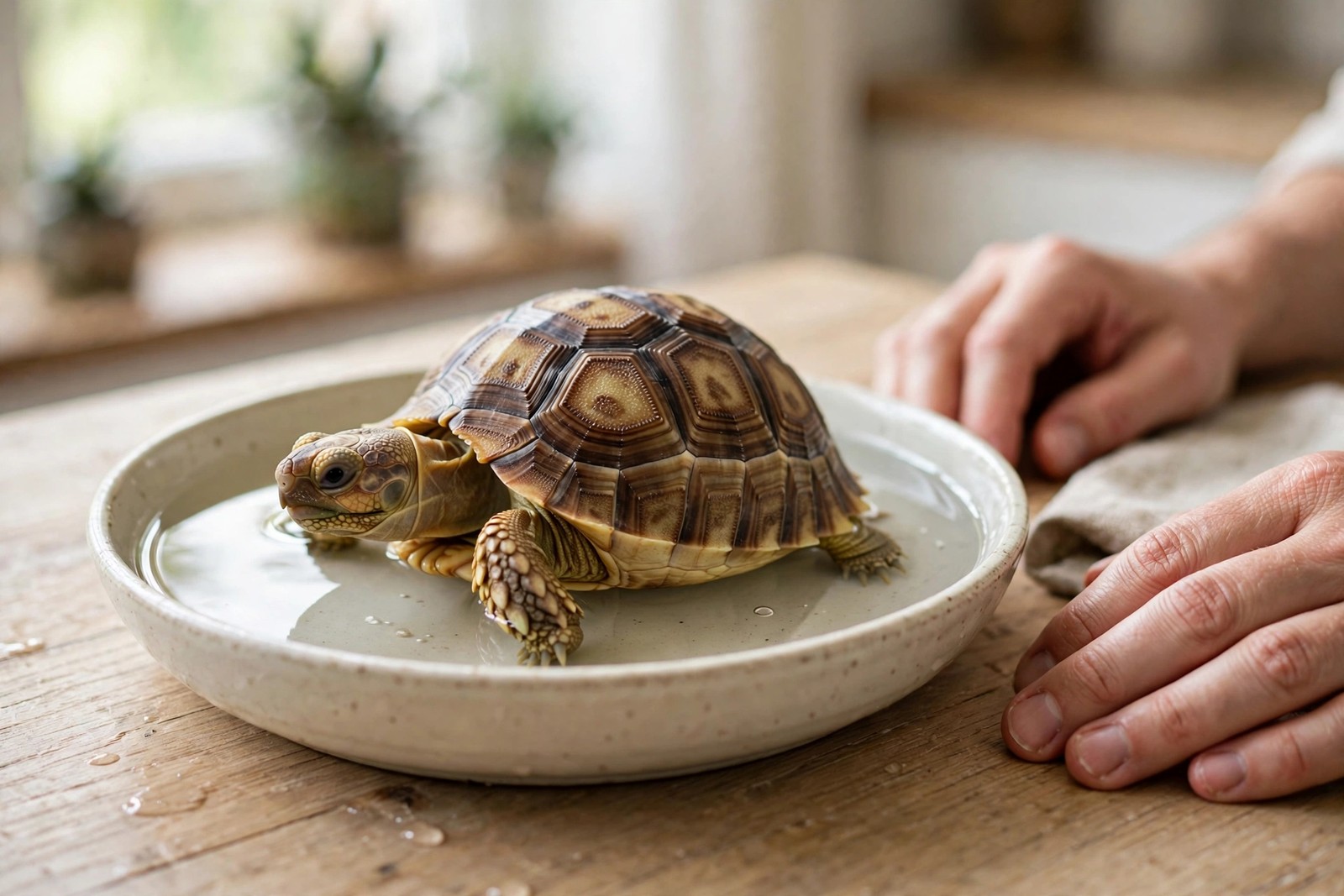
Bathing a tortoise means a supervised soak in shallow water, not a scrub in a sink, and its main jobs are hydration and toileting. Tortoises drink with the head lowered into water, and a soak gives a reliable drinking opportunity while also often prompting the tortoise to pass waste in the bath rather than in the enclosure. How often to soak depends mainly on age: youngsters lose and use water faster than adults, so they soak more often, while a healthy adult with constant access to drinking water needs the bath less frequently.
The schedule by age
Bathe a young tortoise two to three times a week. A hatchling or a juvenile is small, active and still growing, and regular soaking is a simple safeguard against the quiet dehydration that slows appetite and growth. Bathe a healthy adult once a week. That weekly soak maintains the drinking and toileting routine without turning bathing into a daily disturbance the tortoise has to endure. Every soak, at either age, lasts fifteen to twenty minutes; that is long enough for a good drink and for the tortoise to toilet, and short enough that the water stays near its starting temperature and the tortoise does not become chilled or restless. A newly arrived or unwell tortoise may need a different pattern for a while, set by a vet who treats reptiles.
Setting the bath up properly
Use a washing-up bowl or similar container with low sides and a flat base, dedicated to the tortoise. Fill it so the water reaches about halfway up the shell: deep enough to cover the lower shell and let the tortoise drink with its head dipped, shallow enough that it rests with its head comfortably above the surface without swimming or straining to breathe. The water should feel lukewarm on the inside of your wrist, around 85 to 95 degrees Fahrenheit (29 to 35 degrees Celsius). Water that feels properly warm to you is too warm for this job, and cold water is too cold. Place the bowl somewhere steady and draught-free, lower the tortoise in gently, and stay beside it for the whole fifteen to twenty minutes. A tortoise must never be left alone in water: even a healthy one can tip onto its back while scrambling at the sides, and in water that position is dangerous within moments.
During and after the soak
Expect the tortoise to drink, often in long, slow swallows with the head under the surface, and to pass waste in the water; both are the bath working as intended. If the water is fouled or cools noticeably, change it for fresh lukewarm water and finish the session in that. Never use soap, shampoo or disinfectant on the tortoise or in its bath water. A soft cloth can wipe away a smear of dried food or soil if one bothers you, but a healthy shell needs nothing more than the soak itself. Lift the tortoise out at the end of the fifteen to twenty minutes, pat it dry, and return it to its enclosure to warm up and bask. Tortoises often eat eagerly after a soak, so offering the day's greens on return makes the bath a routine the tortoise learns to expect.
Soaking as part of a wider routine
A bath supplements drinking water; it never replaces it. Keep a shallow, heavy water dish in the enclosure every day, refreshed daily, even for a tortoise that soaks on schedule, because the bath happens on set days and thirst does not. Watch what the soaks tell you: a tortoise that drinks desperately at every bath may be telling you its enclosure is too warm or too dry, and one that stops toileting or drinking deserves a vet visit. Putting soak days into KinsLe Care Teams, where each completed soak is marked complete with a timestamp, keeps two to three soaks a week for a youngster, or the weekly adult soak, happening on schedule even when different family members share the job.