
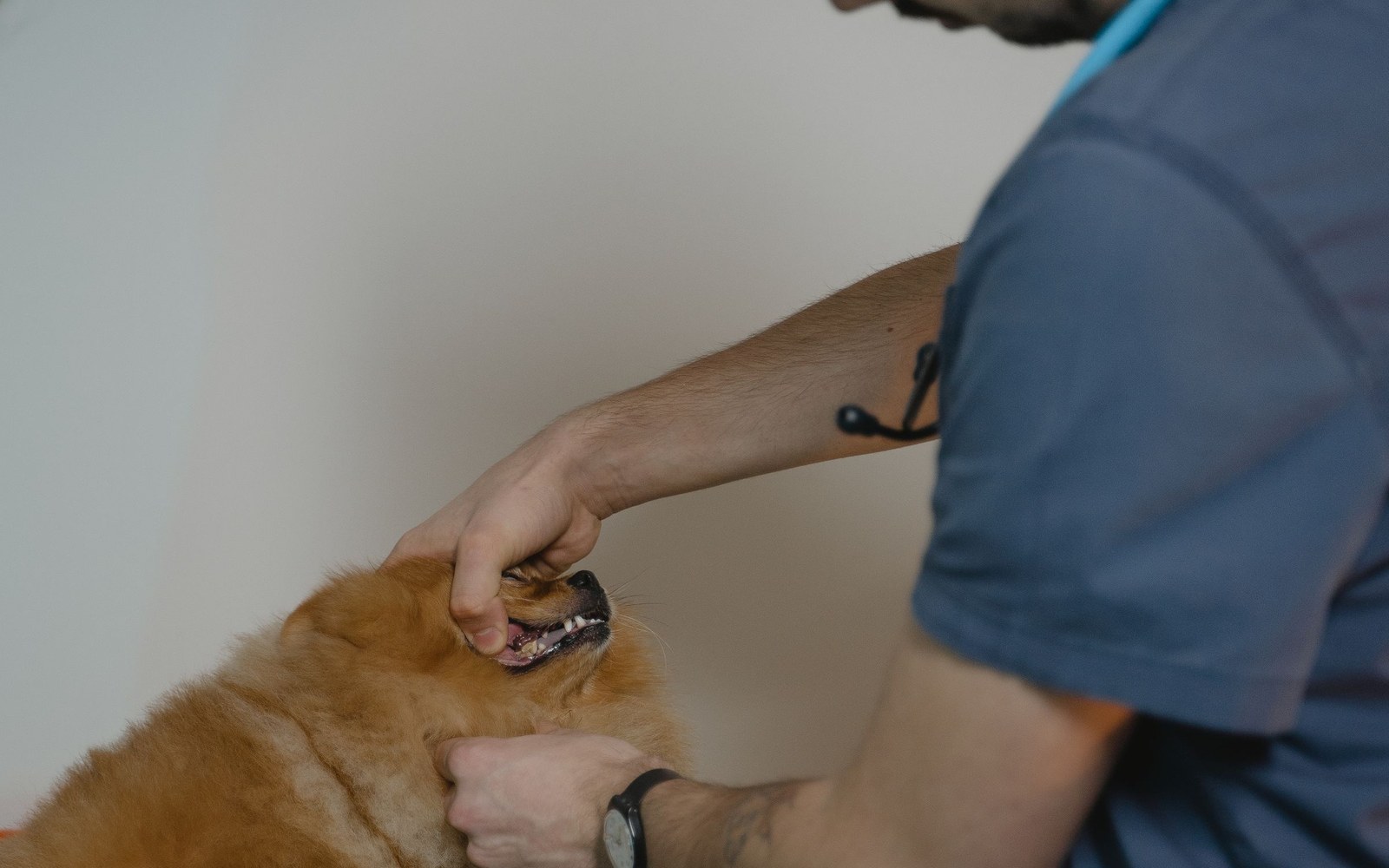
Daily brushing is the gold standard for your dog's teeth, but a few times a week with a dog-safe toothpaste still makes a real difference against plaque and tartar. The honest goal is not perfection on day one — it is a routine your dog tolerates calmly enough that you will still be doing it a year from now.
Why Dog Dental Care Earns the Effort
Plaque forms on teeth within hours and mineralizes into tartar within days, and tartar cannot be brushed away at home. As it builds along the gumline, bacteria inflame the gums and, over time, loosen teeth and make eating painful. Dogs are stoic about mouth pain: a dog may keep crunching kibble with a miserable mouth and show nothing more dramatic than slightly worse breath, eating on one side, or dropping food.
Small breeds like Yorkshire Terriers, Chihuahuas, and Dachshunds are especially prone to dental disease because their teeth crowd into small jaws, but no breed is exempt. Starting early matters — a puppy who grows up with the toothbrush treats it as normal life, while an eight-year-old introduced cold needs patient retraining.
A Start-Up Plan That Does Not End in a Wrestling Match
Rushing a brush into a reluctant dog's mouth is how owners give up. Build the habit in stages over one to two weeks:
- Flavor first. Let your dog lick dog-safe toothpaste off your finger for a few days — never human toothpaste, which can contain ingredients unsafe for dogs who swallow it.
- Finger, then gauze. Rub the teeth and gums gently with your finger or a gauze square, a few seconds at a time, followed by praise or a small reward.
- Short brush sessions. Use a soft dog toothbrush or finger brush, angle toward the gumline, and work the outer surfaces — that is where plaque accumulates most. Thirty cheerful seconds beat five miserable minutes.
- Same time, same cue. Attach brushing to an existing routine — after the evening walk, before the last treat — so it happens by habit rather than by remembering.
Dental chews, water additives, and dental diets can support a program, and your vet can tell you which are worthwhile, but none fully replaces the mechanical action of brushing.
Knowing When It Is a Vet Problem, Not a Brushing Problem
Brushing maintains a healthy mouth; it does not treat a diseased one. Book a dental check if you notice persistent bad breath, red or bleeding gums, brown tartar crusts, pawing at the mouth, or reluctance to chew. Your vet can examine under the gumline — where most disease hides — and advise whether a professional cleaning under anesthesia is needed. Never scale tartar off at home with sharp tools; you can scratch enamel and injure gums while leaving the under-gum disease untouched.
Share the Duty So It Actually Happens
The most common reason dog teeth go unbrushed is that everyone in the household assumes someone else did it. KinsLe's Care Teams fix exactly that: you can assign tooth-brushing as a regular duty alongside feeding, walks, meds, and grooming, and each completed task is marked with a timestamp, so the whole family can see whose turn it is and whether it got done. Set the rotation once, and your dog's dental routine stops depending on memory and good intentions. The Care Teams rotation on KinsLe puts tooth-brushing on a named turn alongside feeding and walks, and a stamped completion after each session shows the next person exactly where the dental routine stands.