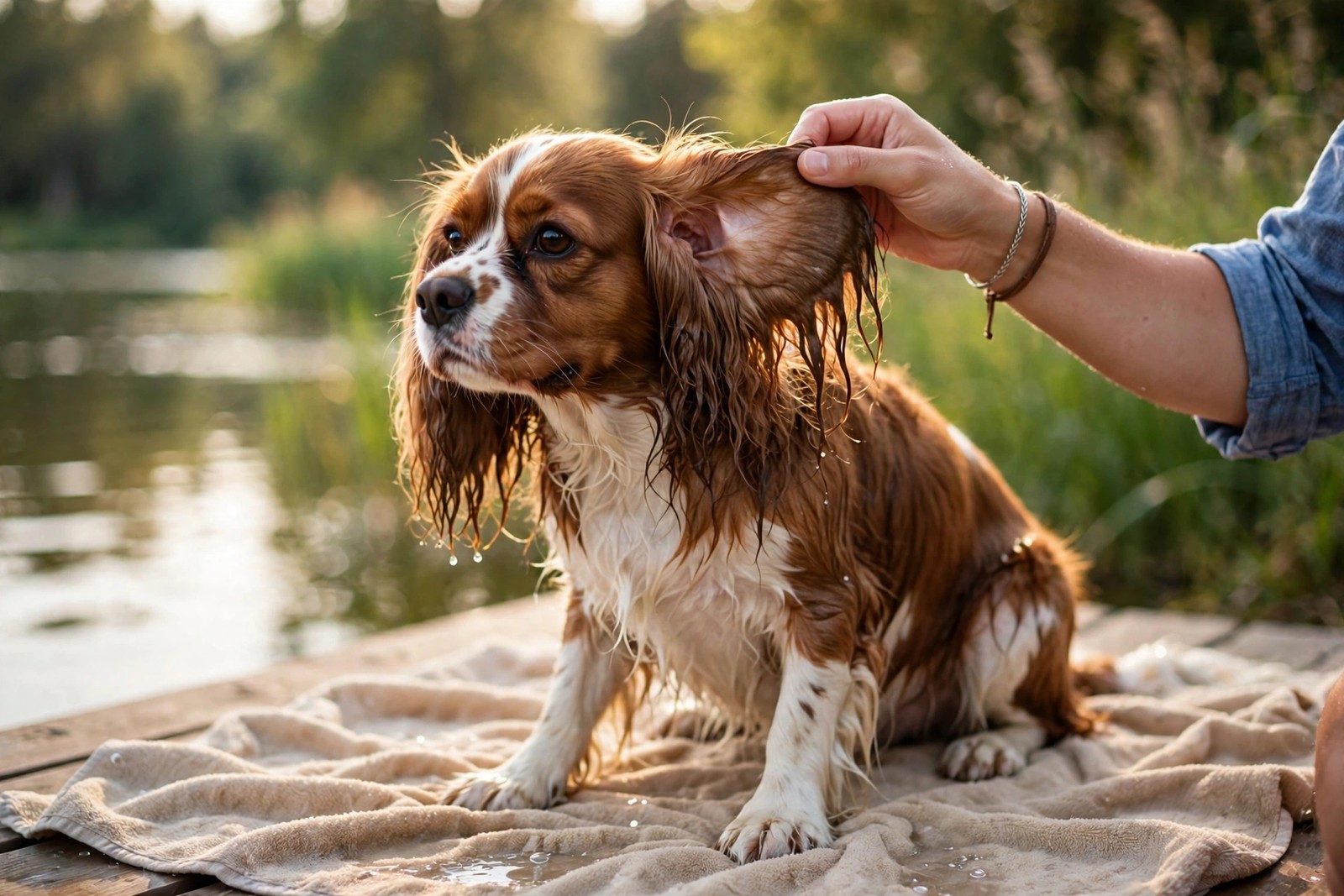
A floppy ear is a warm, covered space with limited airflow, and humid summer weather makes it warmer and damper still. That is why spaniels and other drop-eared dogs need watching through the summer rather than a fixed cleaning schedule. The rhythm that works is checks two or three times a week, with cleaning done only when a check actually finds something to clean.
Checking Two or Three Times a Week
Lift the ear flap somewhere calm and well lit, two or three times a week, and make it a ten-second habit tied to something you already do. Look at the inner flap and the opening of the canal: healthy skin is pale and dry, with at most a little light wax. What you are watching for is change: redness, dark or crumbly wax building up, flaky skin, or swelling at the canal opening. Then sniff. A healthy ear smells like very little; a sour, sweet or yeasty odour is often the earliest sign that the ear's balance has shifted, arriving before the dog shows any discomfort. Finish by watching the dog rather than the ear for a day or two: new head shaking, tilting, scratching at one ear or rubbing it along the floor all say the next step is a vet call, not another look.
Clean Only When There Is Something to Clean
Cleaning on a calendar, whether the ear needs it or not, is the mistake this routine exists to avoid. Clean when you can see surface dirt or wax at the opening, or after swimming, and leave clean, pale, dry ears alone. When you do clean, use only a product made for dogs, apply it exactly as its label directs, let the dog shake, and wipe away what comes out with a soft pad, working only at the opening you can see. Never push cotton buds or tools down into the canal, where debris can be packed deeper and the lining is delicate. If your vet recommends a drying cleaner for a dog that swims often or grows damp ears, use that product as directed; if no such recommendation has been made, do not add drying products on your own initiative, because an ear that is already irritated needs examining, not drying out.
When Cleaning Is the Wrong Move
Some ears should not be cleaned at home at all. An ear that is red, painful to touch, swollen or strongly smelly goes to the vet uncleaned, because cleaning an inflamed ear is painful, can worsen the problem, and can wash away exactly what the vet needs to see and sample. The same applies if your dog yelps, pulls away sharply, or has any discharge you cannot account for, and to any ear where you suspect something is lodged after running through long grass. Book the appointment and say plainly that the ear is sore and uncleaned; that information helps the clinic. Head shaking that follows a swim and settles within the hour is usually just water finding its way out, but shaking that persists, or one-sided scratching, belongs in the vet category too.
Drying After Swims and Baths
Since water in the ear is a common summer trigger, drying is the other half of the routine. After swimming or a bath, gently dry the inner flap and the opening with a soft cloth, and let the dog shake freely outside or on a washable floor. Dogs that swim daily in summer may need their checks at the upper end of the range through the season. Keep the hair around the ear opening tidy if your groomer advises it for your breed, so air reaches the canal more freely. Through Care Teams in KinsLe, the post-swim dry and the midweek check can be logged by whoever was there, building a simple record of which ear changed and when.