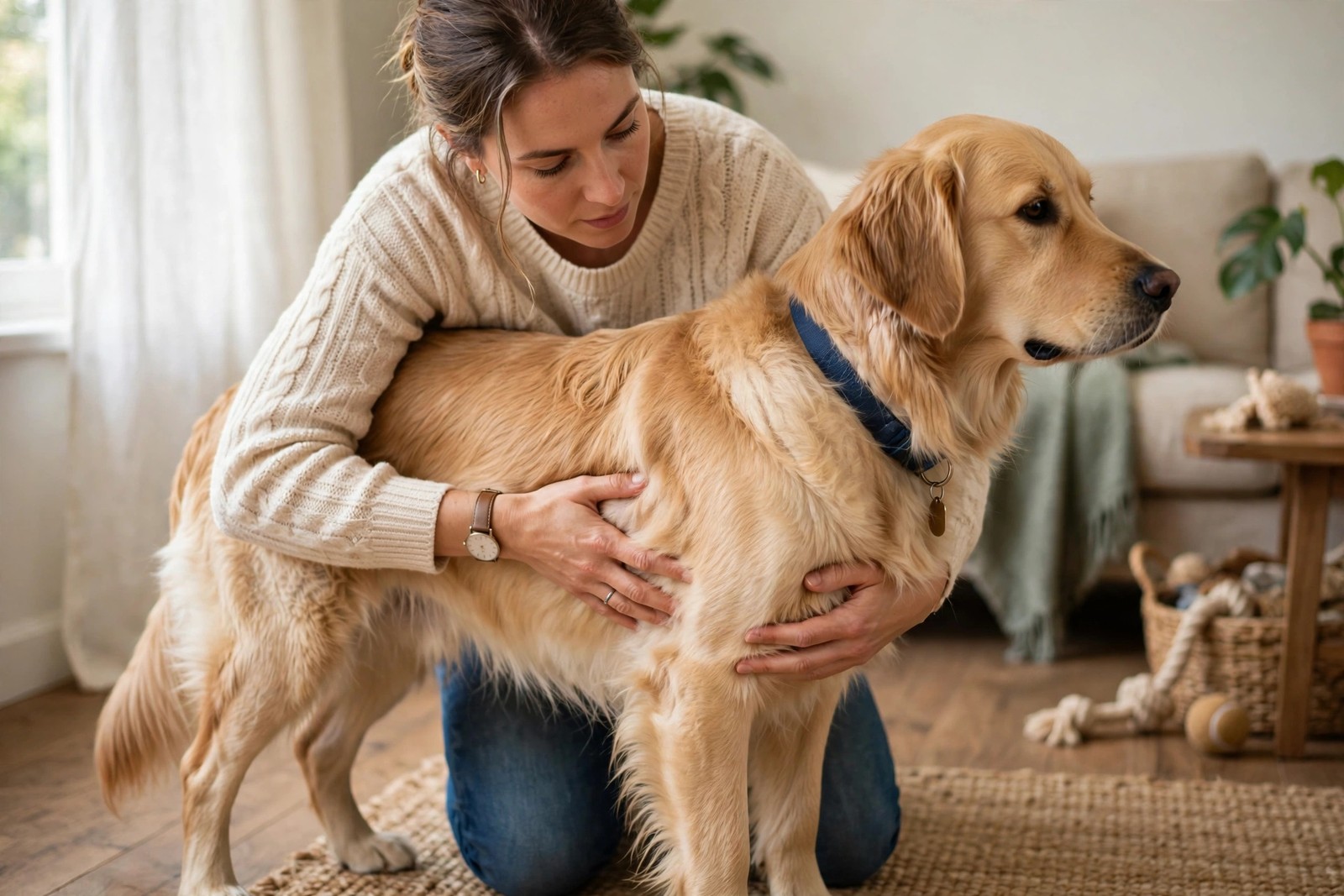
Once a month, give your dog a deliberate hands-on once-over, and add a proper look any time your fingers catch something unfamiliar while grooming or stroking. Work slowly from head to tail: behind the ears, down the neck and throat, across the chest and into the armpits, over the belly and groin, down each leg to the toes, and around the tail base. You are feeling for anything that was not there last month — a lump, bump, wart, skin tag, thickened patch, or sore spot. Note the size (compare to a coin or pea), where it is, and whether it moves freely under the skin or feels attached.
Tracking Changes Is the Real Skill
Most lumps in dogs are benign, especially slow-growing soft ones in older dogs, but no owner can diagnose by feel — the point of monthly checks is spotting change early. A simple map helps: jot the location, size, and date in your notes, or take a dated photo with a coin for scale, and re-check in a month. What should fast-track a vet visit: a lump that grows noticeably, changes shape or colour, ulcerates or bleeds, is painful, appears suddenly and is large, or shows up in a puppy or young dog. Vets often sample lumps with a quick needle test, which is simple and far more informative than monitoring alone.
Working With Your Vet
What you feel at home sorts nothing by itself — only a veterinarian can judge what a lump is, usually after examining it and often after sampling cells with a fine needle. Your monthly notes still matter: the date you first felt a lump, how fast it has grown, and whether its feel has changed turn a vague worry into evidence your vet can act on.
Book promptly for any lump that is growing, changing, sore, or attached-feeling, and mention all lumps — even ones you are relaxed about — at routine checkups so they are on your dog's record. Older dogs and breeds prone to skin growths benefit from keeping the monthly habit without fail.
Fold the lump map into her wider health picture: a new lump alongside weight loss, fading appetite, or lower energy is a different conversation from a soft, unchanged lump on an otherwise thriving older dog, and dated notes are what let you describe that context accurately.
With her Pet Passport on KinsLe, the lump map, its dates, and her vaccination and visit history sit inside a single portable packet, so each appointment builds on the last set of findings instead of starting cold.