
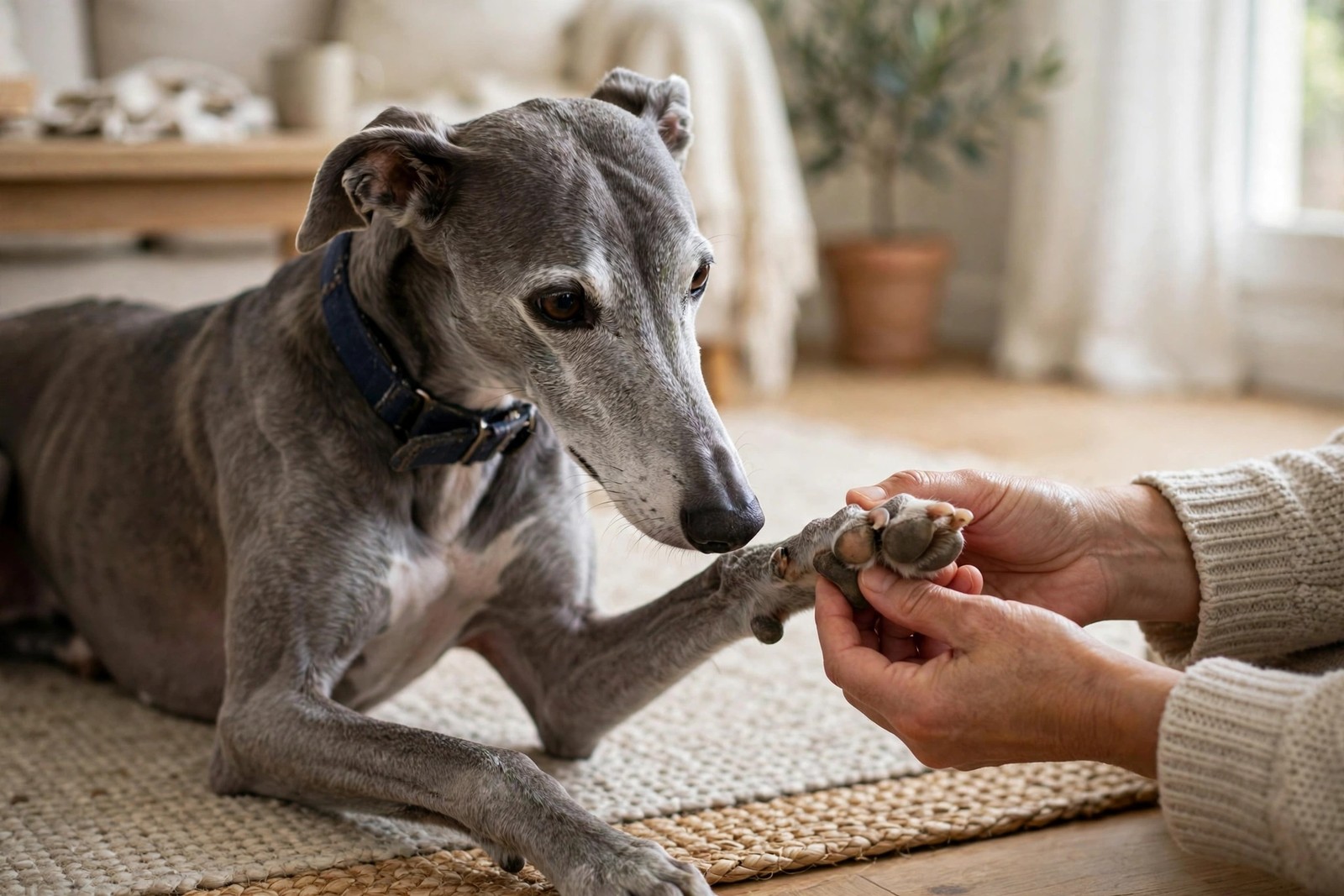
Check your dog's paws briefly after walks and give them a closer look about once a week. The quick post-walk glance catches thorns, burrs, and grit stuck between the toes, while the weekly hands-on check lets you spot cuts, cracks, swelling, and worn or broken nails before any of it turns into a limp. Paw problems are easiest to fix when they are still small, and most only stay small if somebody is looking.
What a good paw check actually involves
Lift each paw and spread the toes gently. Look between the toes and around the pads for:
- Thorns, burrs, foxtails, small stones, or tar and gum stuck in the fur.
- Cuts, cracks, redness, or swelling on the pads or between the toes.
- Broken, split, or overlong nails, and any nail that seems tender.
- Mats of fur between the pads, which trap moisture and debris.
Feel as well as look — a flinch, a pulled-away paw, or heat in one foot tells you something your eyes might miss. Check all four paws even if your dog is favoring one; the sore one is not always the only problem.
Make paw handling a non-event
Dogs who have their paws handled calmly from puppyhood barely notice checks; dogs who do not can turn a thirty-second inspection into a wrestling match. Build the habit gradually: touch a paw, reward, release — then work up to spreading toes and holding the foot a little longer, always pairing handling with treats and praise. Keep sessions short and end them on a win. If your dog is already paw-shy, go slower and consider asking a groomer or trainer to help rebuild the association; never pin a frightened dog down to force a check, because that teaches them the paw grab really is something to fear.
Seasonal paw care worth adding
Paws face different enemies across the year. In summer, hot pavement can burn pads — test surfaces with the back of your hand and walk in cooler hours. In winter, ice, grit, and de-icing salt irritate and crack pads, so rinse or wipe paws after walks. Dry, cracked pads at any season may benefit from a dog-safe paw balm, and keeping the fur between the pads trimmed helps prevent ice balls and trapped debris. Active dogs on rough ground may need more frequent checks — after every hike rather than once a week.
When a paw needs the veterinarian
Call your veterinarian if you notice persistent licking or chewing at one paw, redness or swelling that does not settle, a cut that keeps bleeding or looks deep, limping, or a broken nail. A dog who suddenly refuses to bear weight on a foot should be seen promptly. Likewise, a thorn or foxtail you cannot fully remove — or any suspicion something has worked under the skin — is a vet visit, not a home excavation project. Note when the licking or limping started; that timeline genuinely helps your vet.
Paw Questions Worth Asking Between Checks
Checks raise questions a schedule cannot answer. Does a shallow pad crack call for balm and rest, or is it the kind of thing to watch for a day first? How soon after a hike on grit should you recheck a paw your dog licked once and left alone? Does winter salt change what you look for between the toes? Bring those questions to Kinny, the built-in AI assistant on KinsLe, as they come up, and sort out what can wait and what should not. Healthy paws carry your dog through every walk, hike, and game of fetch. After a hike over grit, road salt, or hot pavement leaves you unsure what deserves a vet call, Kinny in KinsLe will answer follow-up questions about paw and pad checks, drawing from KinsLe Answers' own library.