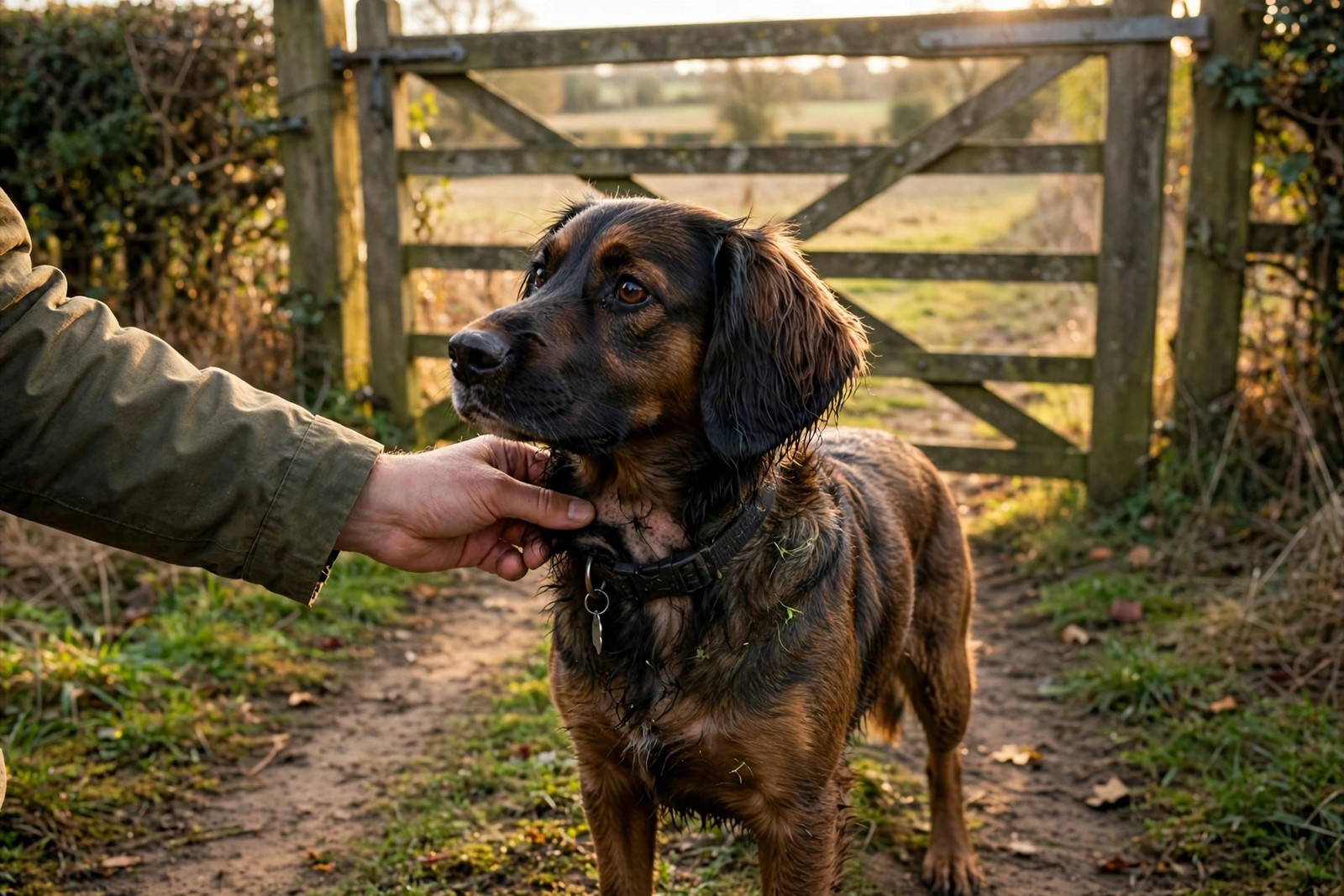
After every countryside walk is the frequency, not a rough habit kept for when you remember. Ticks quest on grass and low vegetation and transfer to a passing dog in seconds, and a tick that is found the same day is usually still small, easy to remove cleanly and has had far less time attached than one discovered days later under a thick coat. The door is the natural checkpoint: coat off, lead away, hands over the dog before it flops down for the evening.
Hands First, Then Eyes
Start by running your hands over the whole body against the lie of the coat, feeling for small bumps on the skin that were not there yesterday; an attached tick often feels like a tiny skin tag or a small pea, depending on how long it has fed. Then look properly, in good light, at the places ticks favour and hands miss: inside and around the ears, in the armpits, in the groin, between the toes and around the paw, and under the collar, where a tick can sit hidden against the strap line. Part long hair down to the skin in those spots rather than glancing at the surface. The same door check doubles as a sweep for grass seeds between the toes and burrs in the coat, which travel home from the same walks. Long-coated dogs need the slower version of this check; a quick pat over the top of the coat finds almost nothing.
Removing a Tick Safely
Tick removal is the one procedure in this area that owners can and should do at home, promptly, with the right tool. Use a fine-tipped tick remover kept in your walking kit or by the door. Grasp the tick as close to the skin as you can, then pull steadily away from the skin without jerking or twisting unless your tool's instructions say otherwise. Clean the bite site once the tick is out, dispose of the tick without handling it more than needed, and note the date. Do not burn the tick, smother it in oil or alcohol gel, or squeeze its body, since those folk methods risk harming the dog and do not remove the tick faster. If part of the tick appears to remain in the skin, or the site becomes swollen or sore, call your vet for advice rather than digging at it.
Watching the Weeks After a Bite
Removal is not the end of the episode. Over the following weeks, watch the bite site and the dog as a whole: spreading redness or a sore that does not settle, reduced energy, loss of appetite, stiffness or reluctance to exercise are all reasons to contact your vet, and to mention the tick and the date you removed it. That dated note is why logging each find matters; symptoms that appear a fortnight later are far easier to connect to a bite you recorded than to one you half remember. Dogs walked daily in sheep, deer or long-grass country will collect ticks repeatedly through the season, so talk to your vet about preventive options that suit your dog and your walking ground, and treat the door check as permanent rather than seasonal if your routes stay rural in winter too.
Making the Check Automatic
Habits survive when they attach to something fixed, and the end of a walk is as fixed as routines get. Keep the tick remover in the same pocket or by the same door, run the check in the same order each time, ears to toes, and it soon takes under two minutes. Teach everyone who walks the dog the same circuit, since a check done by one walker and assumed by another is a check that quietly never happens. Puppies can learn the handling as part of ordinary post-walk towelling, standing still for treats while hands travel over them. With Care Teams in KinsLe, each walker can record the door check against that day's walk, giving the household one shared picture of what was found and when.