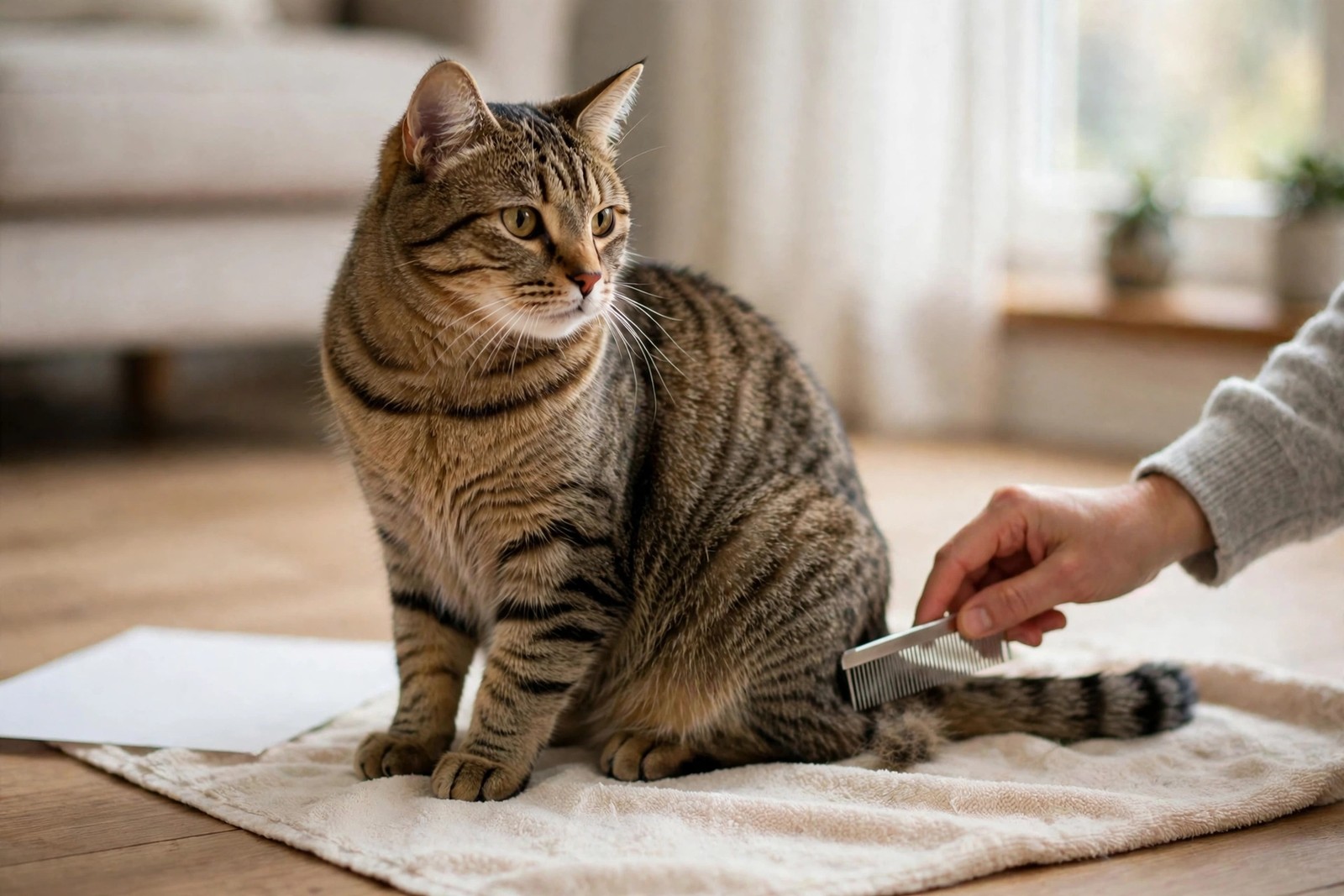
Yes, indoor cats get fleas, and the right checking rhythm depends on exposure, not on whether the front door stays shut. For a cat who never goes out, in a home with no other pets coming and going and no past flea problem, a thorough comb-through about once a month is a sensible baseline. Move to weekly checks the moment risk rises: a dog who walks outdoors daily, visiting pets, fostering, a recent move, or any previous infestation. Flea eggs and larvae also arrive on shoes, clothing, and shopping bags, and heated homes let the life cycle tick along through winter, so "indoor" lowers the odds rather than removing them.
How to Do a Check That Actually Finds Something
Work slowly with a fine-toothed flea comb, concentrating where fleas favour: the neck, along the back, and especially the warm, sheltered base of the tail. Comb over white paper or a pale towel so anything that falls out shows up. Live fleas are fast and easy to miss, so the more reliable evidence is flea dirt — tiny black specks that look like ground pepper scattered in the coat, often with flaky skin underneath.
Confirm it before you react. Dab the specks onto damp white tissue: genuine flea dirt softens into reddish-brown smears because it is digested blood, while ordinary grit stays grey and gritty. Check every pet in the home on the same day, not just the cat who was scratching, because fleas feed across animals and a silent carrier keeps the cycle running.
If You Find Fleas, and When to Involve a Vet
Act on the whole household at once. Wash the cat's bedding on a hot wash, vacuum carpets, sofa seams, and skirting boards thoroughly and repeatedly — vibration encourages pupae to hatch out where you can remove them — and empty the vacuum outside. Talk to your vet about prevention suited to your cat's age, weight, and health, and never use a product intended for dogs on a cat, as some dog treatments are dangerous for cats.
Book a vet appointment rather than waiting if your cat is over-grooming, has scabs around the neck, is losing patches of hair, or scratches for weeks after one or two bites — some cats react strongly to flea saliva and need a vet-led plan. Kittens, elderly cats, and any cat with pale gums, heavy flea numbers, or lethargy should be seen promptly, since a large burden drains a small animal quickly. This is general information, not a diagnosis: your vet can examine the skin and decide what your particular cat needs.
Making the Rhythm Stick
Tie the check to something monthly that already happens, such as payday or the first Sunday groom, and weekly checks to a fixed day during higher-risk periods. Jot down the date, where you combed, and whether you saw dirt, a live flea, or nothing at all; three months of those short notes show whether a problem is building or clearing far better than memory does. Note, too, any change in exposure — a new dog-walking route through long grass, a pet-sitting guest, building work bringing dust and debris indoors — because those are the moments to move from monthly back to weekly.
Keeping those dates, findings, and product conversations together in KinsLe's Pet Passport means the next check starts from a written record of the last one, and your vet can see the pattern at a glance.