
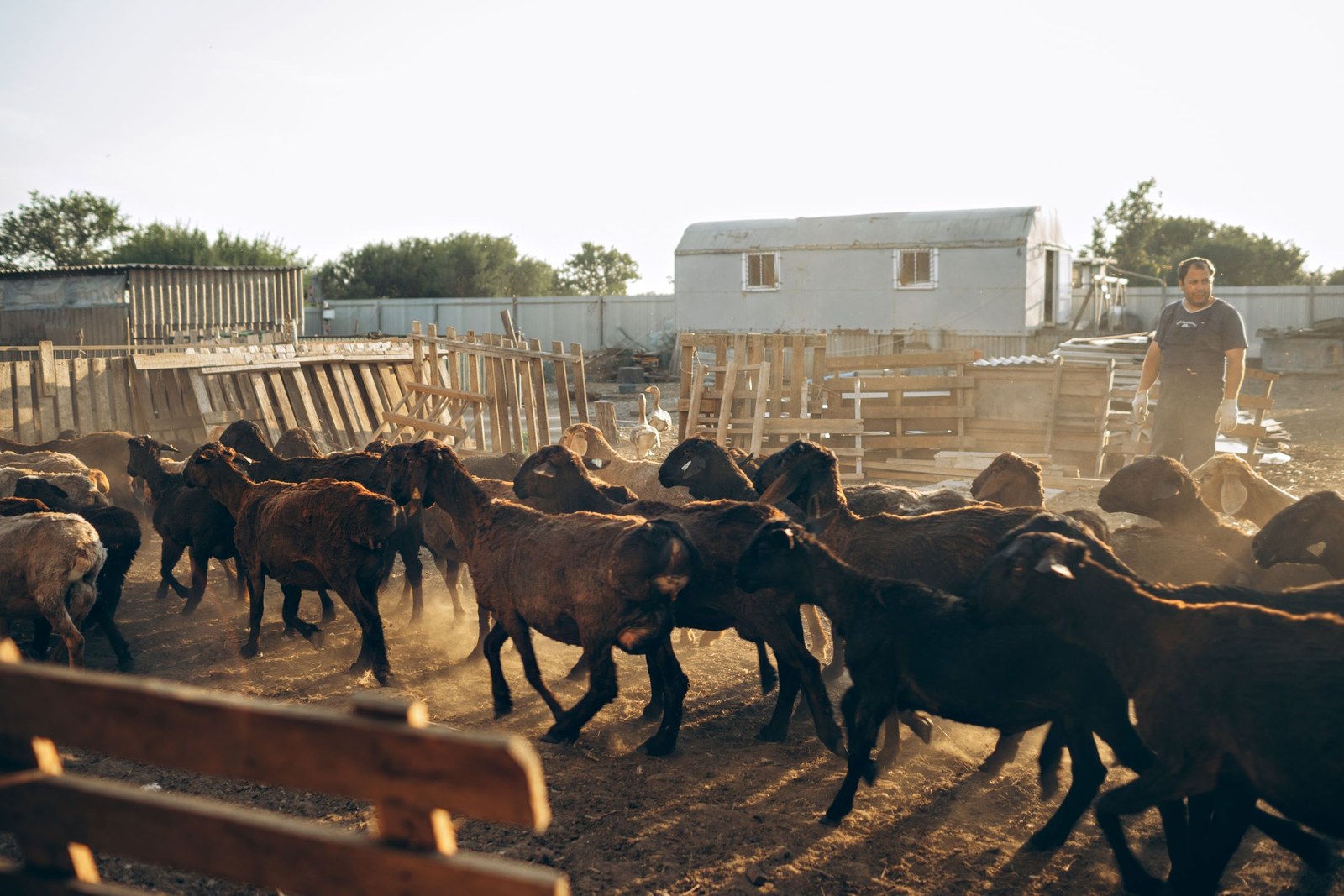
Check on your farm animals at least twice a day — once in the morning and once in the evening. Those two rounds, done properly, are how you catch a stuck goat, an empty waterer, a sick hen, or a broken fence line before a small problem turns into an emergency.
What a real morning check looks like
A check is more than a glance over the fence. Walk in among the animals and look at each one individually. Is everyone up, moving normally, and interested in feed? Appetite is one of the earliest health signals you get — the goat that hangs back from the grain or the hen still sitting hunched on the roost when the others have poured out deserves a closer look. Confirm water is present, clean, and unfrozen, and top up feed and hay. Count heads. It sounds obvious, but a headcount is how you notice a missing chicken before a predator pattern sets in.
The evening round: closing the loop
Evening checks are about security and settling. Refill water so nobody goes through the night short, gather eggs so they do not attract predators or get broken in the boxes, and watch everyone come in to roost or bed down — an animal reluctant to enter the shelter sometimes knows something you do not, like a predator smell inside. Lock the coop, latch gates, scan the fence line, and check that heat lamps, tank heaters, or fans are running as they should for the season.
What you are actually watching for
- Water: empty, tipped, frozen, or fouled troughs are the most common daily failure.
- Movement: limping, stiffness, or an animal separated from the group.
- Manure: sudden diarrhea or a complete absence of droppings tells a story.
- Fences and gates: a leaning post or sprung wire is tomorrow's escape.
- Feed stores: running out of hay mid-storm is a planning failure, not bad luck.
When twice a day is not enough
Some seasons and situations demand more. During lambing or kidding, checks every few hours — including overnight — are normal for a stretch. Extreme heat calls for a midday water and shade check, especially for pigs that cannot sweat. Deep cold snaps warrant an extra look at water heaters and at elderly or very young animals. A sick or injured animal under a vet's guidance may need several checks daily, and new arrivals should be watched closely for their first week while they settle into the pecking order or herd hierarchy.
Keeping a simple record
You do not need elaborate paperwork, but a few notes pay off: who looked off and when, egg counts dropping, a ewe off her feed on Tuesday. Patterns you would never remember become obvious on paper, and if you do call a vet, "she stopped eating two days ago and her droppings turned watery yesterday" is far more useful than "she seems off." Date your observations and keep them where everyone who helps can see them.
One thread for the whole crew with KinsLe Messenger
On many small farms, the morning round is done by whoever is up first — a spouse, a teenager, a neighbor helping out. KinsLe Messenger is the per-pet communications hub, so whoever does the morning check can post the all-clear — or flag a concern with a photo of that questionable fence post — in one place where everyone caring for the animals sees it, instead of scattered texts nobody can find later. Your KinsLe Messenger thread on KinsLe gives every helper the same morning and evening notes for each animal — water, fencing, appetite, and eggs — so a concern raised at dawn is still visible when the night round begins.