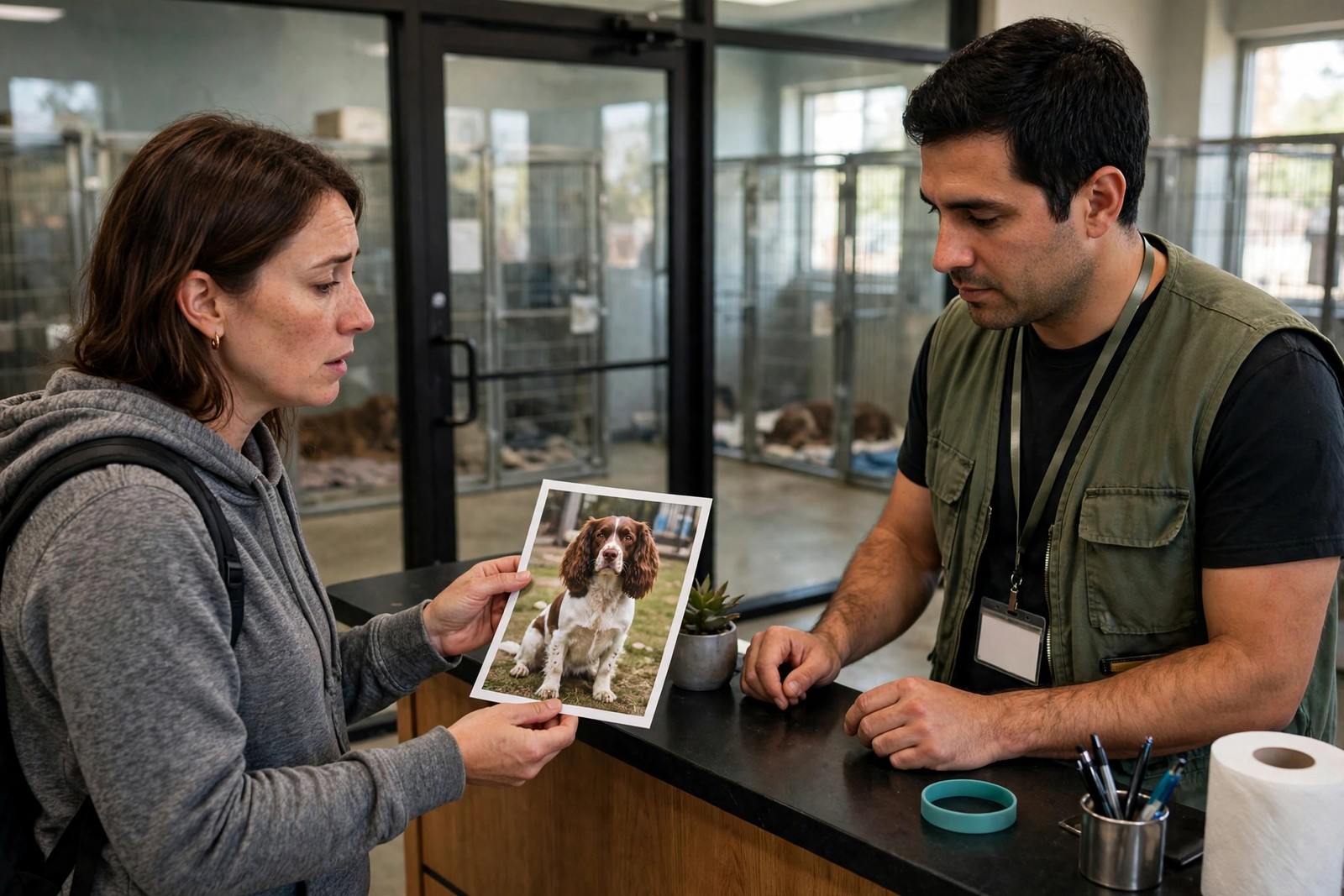
While your dog is missing, walk the shelter kennels yourself on a one-to-three-day cycle, without exception, and scan online found-dog listings and phone lines every day between visits. That rhythm feels exhausting in week two of a search, which is exactly when it matters most: dogs are handed in days or weeks after they vanish, picked up streets or towns away from home, and a search that fades early misses them.
Why phone and online checks are not enough
Shelter intake is fast, pressured work, and descriptions get approximate. Your dog may be logged as a different breed mix, a shade lighter or darker, the wrong sex, an estimated age years off, or simply 'brown dog, medium'. Photographs are often a single dim kennel shot of a wet, frightened animal who looks nothing like your family photos. Microchips usually help, but chips migrate, scanners occasionally miss, and a chip with an out-of-date phone number cannot reach you. The only person guaranteed to recognise your dog through all of that is you, walking the kennels. Ask at each visit to see every dog, including those in medical, isolation, and stray-hold areas not on public view, and check the shelter's records of dogs found deceased as well — painful, but closure matters and the record may be yours.
Stray-hold periods are the other reason for urgency. In many areas a shelter must hold a stray only a matter of days before the dog can be adopted, transferred to a rescue, or moved to another facility. A weekly checking habit can miss that entire window.
Building your visiting circuit
List every shelter, municipal pound, humane society, rescue with a physical site, and emergency veterinary clinic within a reasonable radius — start with your area and widen it weekly, because dogs travel and finders transport dogs to shelters near their own homes rather than near yours. At each one, file a lost report in person with clear recent photographs, note distinguishing marks, scars, and collar details, and leave the report even if staff say no matching dog is in. Ask how long reports stay active and renew yours before they expire, since some systems purge old reports after a set period.
Keep a simple log: which facilities you visited, on which days, who you spoke to, and when each lost report lapses. Split the circuit between family and friends if you can, so the one-to-three-day rhythm survives work and exhaustion, and keep flyers and social-media appeals running in parallel the whole time.
How long to keep going
Do not set an early end date. Dogs are reunited after weeks and occasionally months, particularly once lost reports are renewed and the visiting circuit continues. Reduce the emotional cost by making the routine mechanical — same route, same questions, same log — and by letting technology widen the search while you cover the shelters. As a companion to those visits, the Lost Pet Alert System on KinsLe stays free in your dog's profile, ready for the person who finds your dog to get in touch with you straight away.