
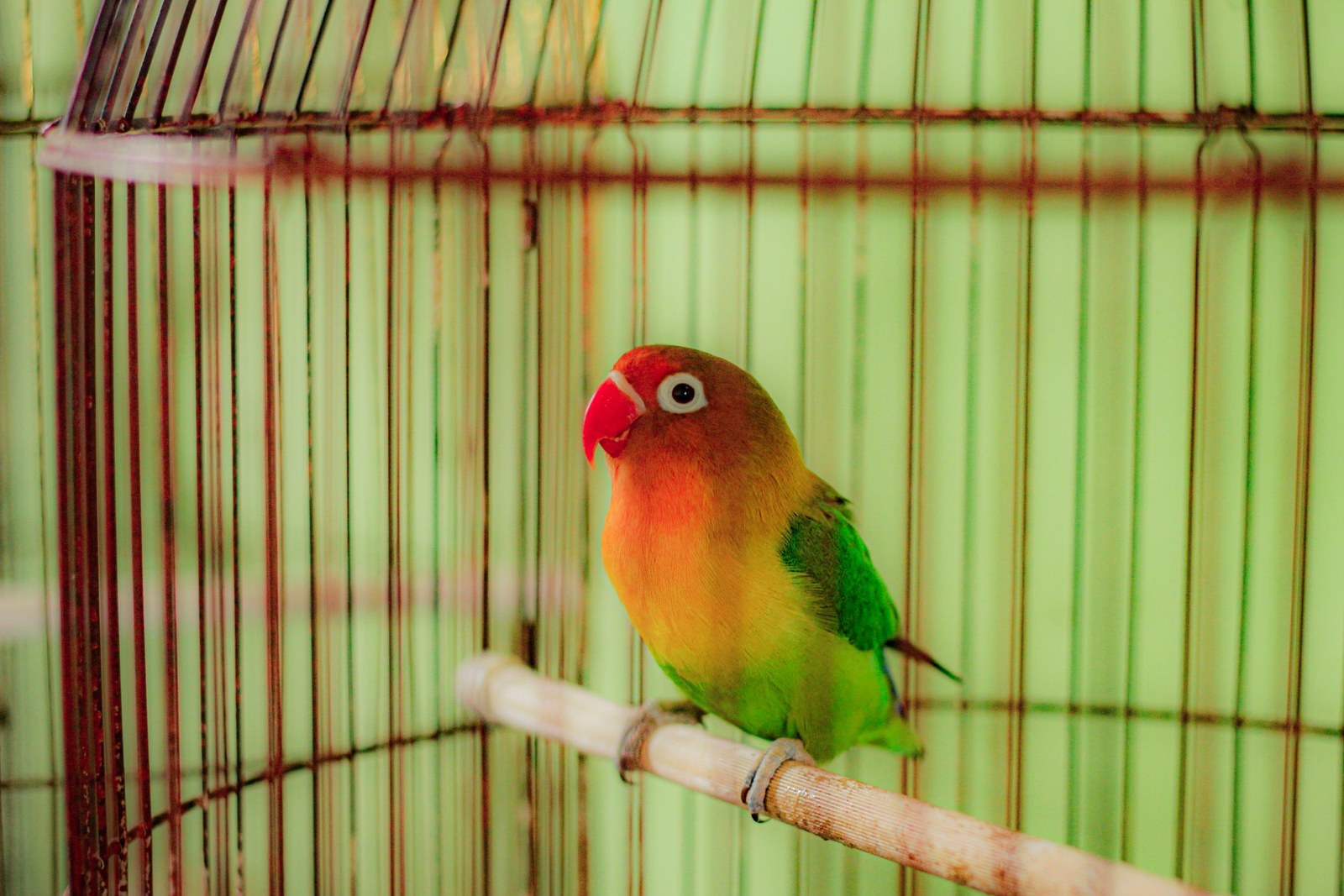
Clean your bird's cage on three rhythms: change the liner and wash food and water dishes every day, spot-clean messes as they happen, and do a deeper scrub of the cage, perches, and toys about once a week. Birds are sensitive to waste buildup, stale food, and cleaning fumes, so this schedule is a health routine, not housekeeping fussiness — a dirty cage is one of the most common and most preventable sources of illness in pet birds.
The Daily Five Minutes
Fresh paper or liner each day lets you do double duty: you remove droppings and spilled food before bacteria and mold get started, and you get a daily look at your bird's droppings — one of the earliest health indicators birds give you. A sudden change in colour, consistency, or amount is worth noting and, if it persists, a call to your avian vet. Wash food and water dishes in hot soapy water daily, rinse thoroughly, and refill with fresh food and water. Birds dunk food in water and bathe in dishes meant for drinking, so yesterday's water is never good enough for today. Wipe splash zones around dishes while you are there.
The Weekly Deep Clean
About once a week, move your bird to a safe play stand or travel cage and scrub the whole setup:
- Wash bars, tray, and grate with a bird-safe cleaner or hot soapy water, then rinse until no residue or scent remains.
- Scrub perches — droppings bake onto them — and let them dry fully before returning them; keep a spare set so the swap is instant.
- Wash or rotate toys, checking for frayed rope, cracked plastic, or loose parts to retire.
- Clean the area under and around the cage, where husks, feathers, and dander collect.
Monthly and Seasonal Jobs
Monthly, inspect the cage itself: rust spots, peeling coating, bent bars, and worn latches are safety issues, not cosmetics — birds chew everything. Review perches for deep cracks that harbour grime, replace cuttlebones and mineral blocks as they are used up, and deep-clean any cage cover. If your bird has been ill, ask your vet about disinfecting the cage and replacing porous items like wooden perches.
Cleaning Safely Around Birds
This is the part that protects your bird from the cleaning itself. Birds' respiratory systems are extremely sensitive. Never spray cleaners near your bird, move the bird out of the room for deep cleans, and let everything dry and air out before the bird goes back. Avoid bleach fumes, oven cleaners, scented products, and aerosol sprays around birds entirely, and rinse scrubbed items until they smell like nothing. Clean one section at a time if a full move-out stresses your bird — consistency beats intensity.
Sharing Cage Duty With KinsLe
Cage care collapses when it lives in one person's head. KinsLe's Care Teams let your household assign feeding, cleaning, and grooming duties for your bird, with timestamped completions so the weekly scrub is confirmed done — not assumed done. Assigning those jobs by name means liner day and scrub day never quietly slip. The Care Teams cleaning chart on KinsLe assigns liner changes, dish washing, and the weekly scrub to named household members, and each stamped completion proves the cage rhythm was kept rather than assumed.