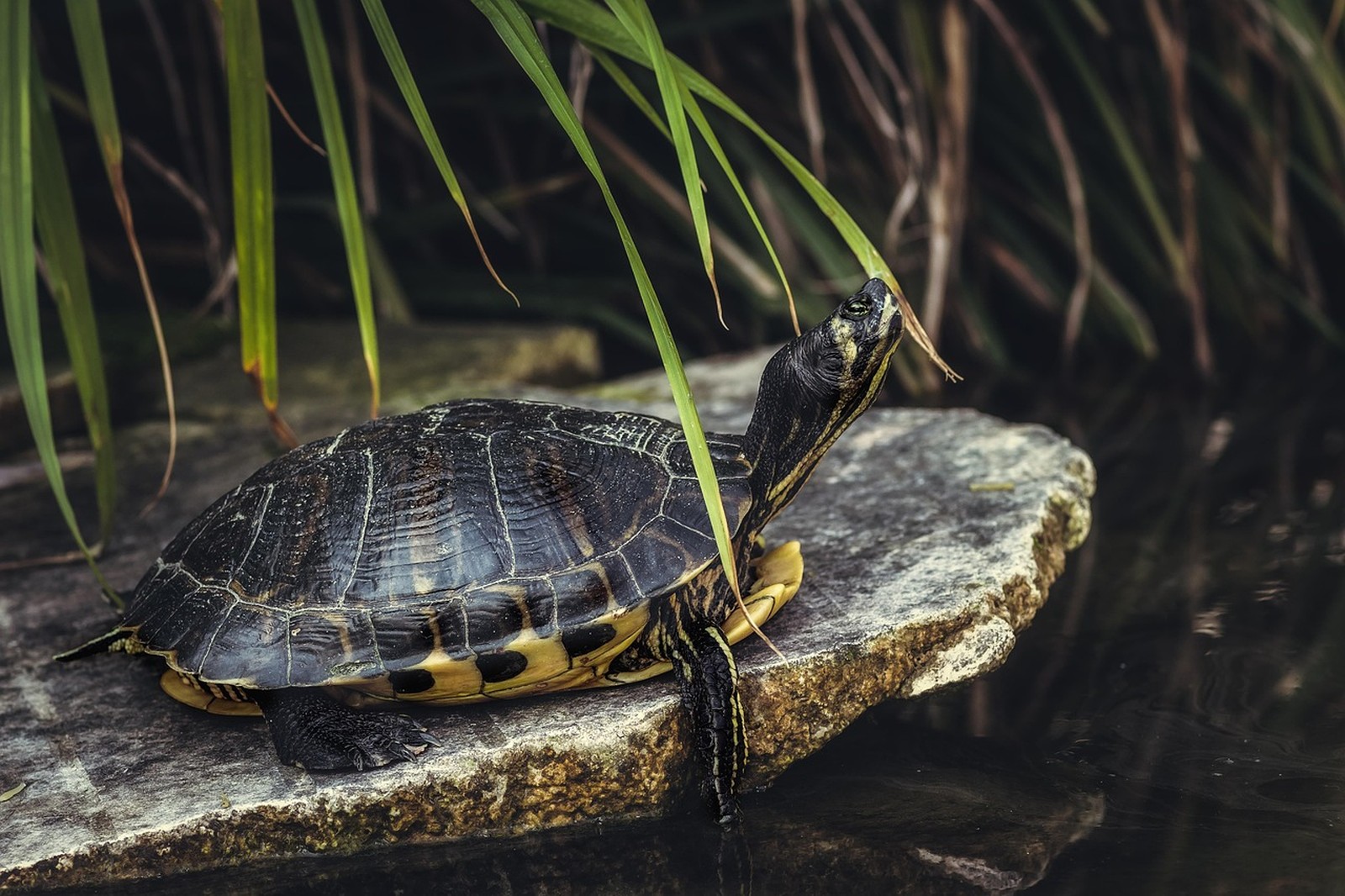
Healthy adult aquatic turtles usually do well with pellets every other day and greens available most days, while juveniles should be fed daily — and a useful portion guide is roughly the volume of your turtle's own head for each pellet meal.
Age Sets the Basic Schedule
Growth drives frequency. A juvenile is building shell and body and burns through food quickly, so daily feeding suits it, tapering as growth slows through the second and third years for many common species. A fully grown slider, painted turtle, or cooter maintains itself comfortably on feeding days spaced out — pellets every other day, or on three or four set days a week — with low-calorie greens filling the gaps. Very old or unwell turtles may deviate from either pattern, and any turtle that stops eating for more than a few days outside of cold conditions deserves a husbandry check and, if it persists, a veterinarian's input.
The Head-Size Rule and the Begging Problem
Turtles are opportunistic feeders who will eat far past full, and in a tank there is no walking it off. Offering a pellet portion about the size of the head — imagine the pellets gathered into the space the head would occupy — keeps meals sensible without weighing anything. Feed in the water, watch the meal finish within a few minutes, and remove leftovers so they do not rot and foul the filter. Treats such as shrimp and worms count toward the day's total; a turtle that filled up on treats has had its meal, whatever the calendar says about pellet day.
A Weekly Rhythm That Works
Structure helps more than willpower. Many keepers settle into a pattern like this:
- Monday, Wednesday, Friday, Saturday: pellet meals, head-sized portion
- Most days: fresh leafy greens or aquatic plants to graze
- Sunday: a protein treat such as an earthworm, in place of part of a meal
- One lighter day: greens only, giving digestion and water quality a break
Adjust the template to your species — a more carnivorous species keeps protein more prominent, a herbivorous adult cooter leans further into plants — but keep the set days consistent once you choose them.
Water Quality Is a Feeding Issue
Overfeeding shows up in the tank before it shows on the turtle: cloudy water, a struggling filter, and algae blooms usually trace back to portion size and uneaten food. If water quality keeps slipping, audit feeding before upgrading equipment. Feed, observe, remove, and note — a small log quickly reveals which household member's 'little extra' is the real problem.
Preventing Double-Feeds With KinsLe
Turtles beg at everyone who passes the tank, and in a busy home that can mean three breakfasts. KinsLe's Care Teams let you assign feeding days and tasks to specific people, with each completion marked and timestamped, so well-meaning family members can see at a glance that Tuesday's pellets were already given at 9 a.m. and the turtle's pleading is theatre, not hunger. Begging loses its power once pellet days, daily greens, and the Sunday worm are listed in the Care Teams plan on KinsLe, each feeding owned by one person and marked complete with a timestamp.