
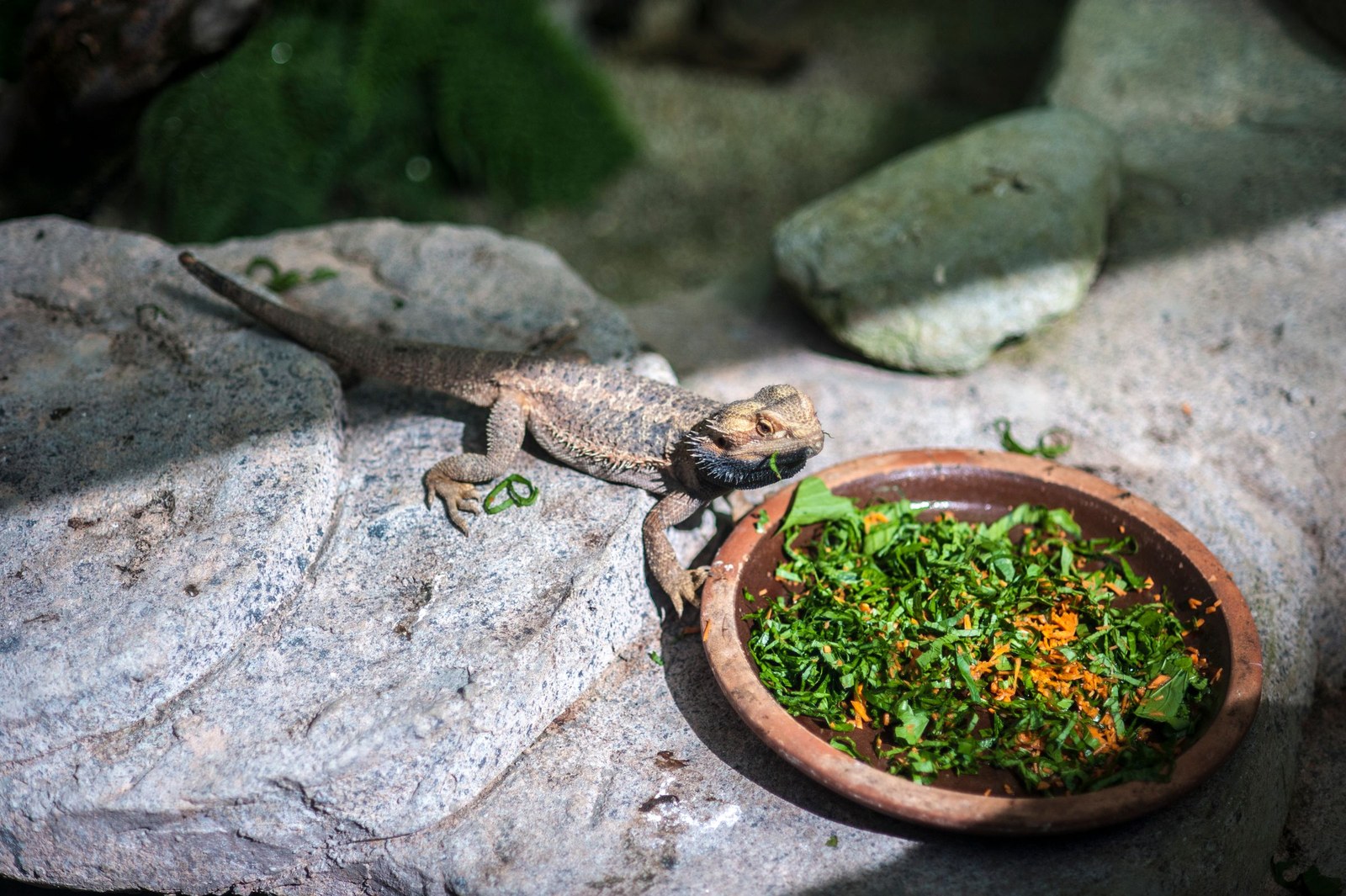
A baby bearded dragon needs insects several times a day plus daily greens, a juvenile shifts toward one or two insect meals daily, and an adult eats mostly salads with insects only a few times a week. The pattern flips as your dragon grows: protein-heavy early on for growth, plant-heavy later to keep weight and organs healthy. The stages below give you a workable rhythm for each phase.
Babies: under about four months
Offer small insects — tiny dubia roaches, black soldier fly larvae, or pinhead-to-small crickets — in two to three feeding sessions a day, letting the baby eat its fill in ten to fifteen minutes each time. Even at this age, put a fresh salad of collard or mustard greens down every morning; most babies nibble little at first, but early exposure builds the salad habit adults depend on. Nothing offered should be wider than the space between the dragon's eyes.
Juveniles and subadults: four to twelve months
Growth is still fast, so keep one to two insect sessions a day, gradually consolidating to one as the dragon approaches a year. Salads become a bigger share — many juveniles start polishing off their greens once insects arrive a little later in the morning, a gentle trick for reluctant salad eaters. Watch body condition: a growing dragon should look filled out along the tail base and thighs without a sagging belly dragging on the ground.
Adults: over twelve to eighteen months
Adults flip to roughly eighty percent greens and vegetables and twenty percent insects. Offer a generous fresh salad daily and insects two to three times a week — a serving of roaches or larvae rather than an all-day buffet. Staple greens include collards, dandelion, mustard and turnip greens, with squash and bell pepper as toppings. Lettuce alone is mostly water and shouldn't be the staple, and spinach is best kept occasional.
Habits that support every stage
- Dust insects with calcium as directed for your dragon's age, and provide proper UVB lighting so that calcium can actually be used.
- Feed insects in a smooth bowl or separate tub so loose crickets don't roam the enclosure and nip at a sleeping dragon.
- Offer water via a shallow dish, misted greens, and regular baths if your dragon drinks that way.
- Weigh monthly; sudden loss or relentless gain is worth a conversation with a reptile vet.
Avoid wild-caught insects, which can carry pesticides and parasites, and skip fireflies entirely — they are toxic to bearded dragons.
Hand the plan over with KinsLe
Feeding rules change fast in the first year, and a sitter guessing from an old note can undo your routine in a weekend. KinsLe's Care Pass lets you share your dragon's current feeding schedule and salad list through a temporary, scoped link — the sitter needs no account or app to view it. For a four-day trip only, your regular sitter can work through the Care Pass packet on KinsLe, which lays out just the morning collard salad, the insect portion sized to the gap between the eyes, and the calcium dusting for each day away.