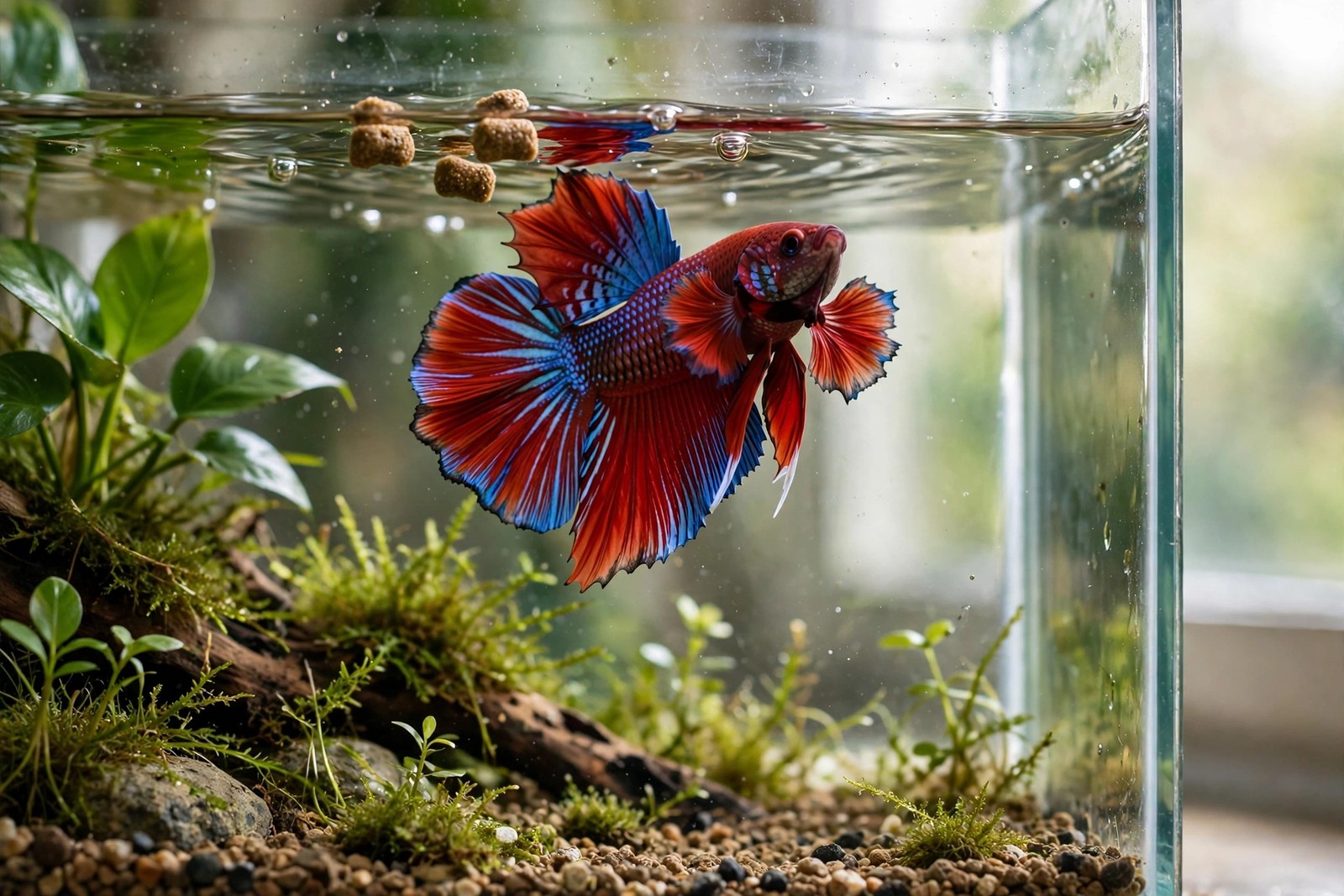
Feed an adult betta once or twice a day, and keep each meal small: two to four pellets, gone within about two minutes. A betta's stomach is roughly the size of its eye, and in the wild these fish pick at tiny insects and larvae through the day rather than eating large meals. Overfeeding, not underfeeding, is the common mistake in home tanks, and most feeding problems owners describe trace back to portions that were simply too generous.
Portion Size Beats Meal Count
Whether you choose one meal or two, the total for the day matters more than the split. Pellets also swell as they absorb water, so a portion that looked modest in the spoon expands in the stomach; some keepers soak pellets briefly in tank water before feeding so the size you see is the size the fish gets. Feed at the surface a pellet or two at a time and watch the betta eat each one, which stops food sinking uneaten into the gravel. Any food still floating after a couple of minutes should be lifted out with a net, because decomposing food in a small tank drives ammonia up quickly and clouds the water.
Variety and the Fasting Day
A quality pellet made for bettas works as the daily staple, with variety offered a few times a week: frozen or live foods such as daphnia or bloodworms, given in small amounts as enrichment rather than a second dinner. Many experienced keepers also build in one fasting day a week, skipping food entirely for a day; bettas are prone to bloating and constipation, and a rest day gives the digestive tract time to clear. If your betta's belly looks rounded and it seems sluggish, a skipped meal is a reasonable first response, while persistent bloating, loss of appetite, or stringy pale waste are signs to check water parameters first and seek aquatic-vet advice if they continue.
Reading Your Fish and Your Water
Your betta's body tells you whether the schedule is right. A healthy fish has a smooth, gently tapered body, active swimming, and bright interest at feeding time. A pinched belly and hollow look suggest portions are too small or meals are being missed; a permanently swollen belly, lethargy, and leftover food suggest the opposite. Test the water when appetite changes, because a betta that stops eating is often reacting to ammonia, temperature drift, or a failing heater rather than to the food itself. Bettas are tropical fish that eat best in warm, stable water, and a cold fish is a slow, uninterested one.
Stopping the Accidental Second Meal
The biggest scheduling risk in a shared home is the friendly double feed: one person feeds at dawn, another adds a meal at noon because the betta 'looked hungry,' and bettas always look hungry. Agree on who feeds and when, and make the completed feeding visible. In KinsLe, putting your betta's meals on a Care Teams duty list means the morning feed is marked done with a timestamp, so everyone in the household can see breakfast already happened and the pleading face at the glass gets admired rather than fed.