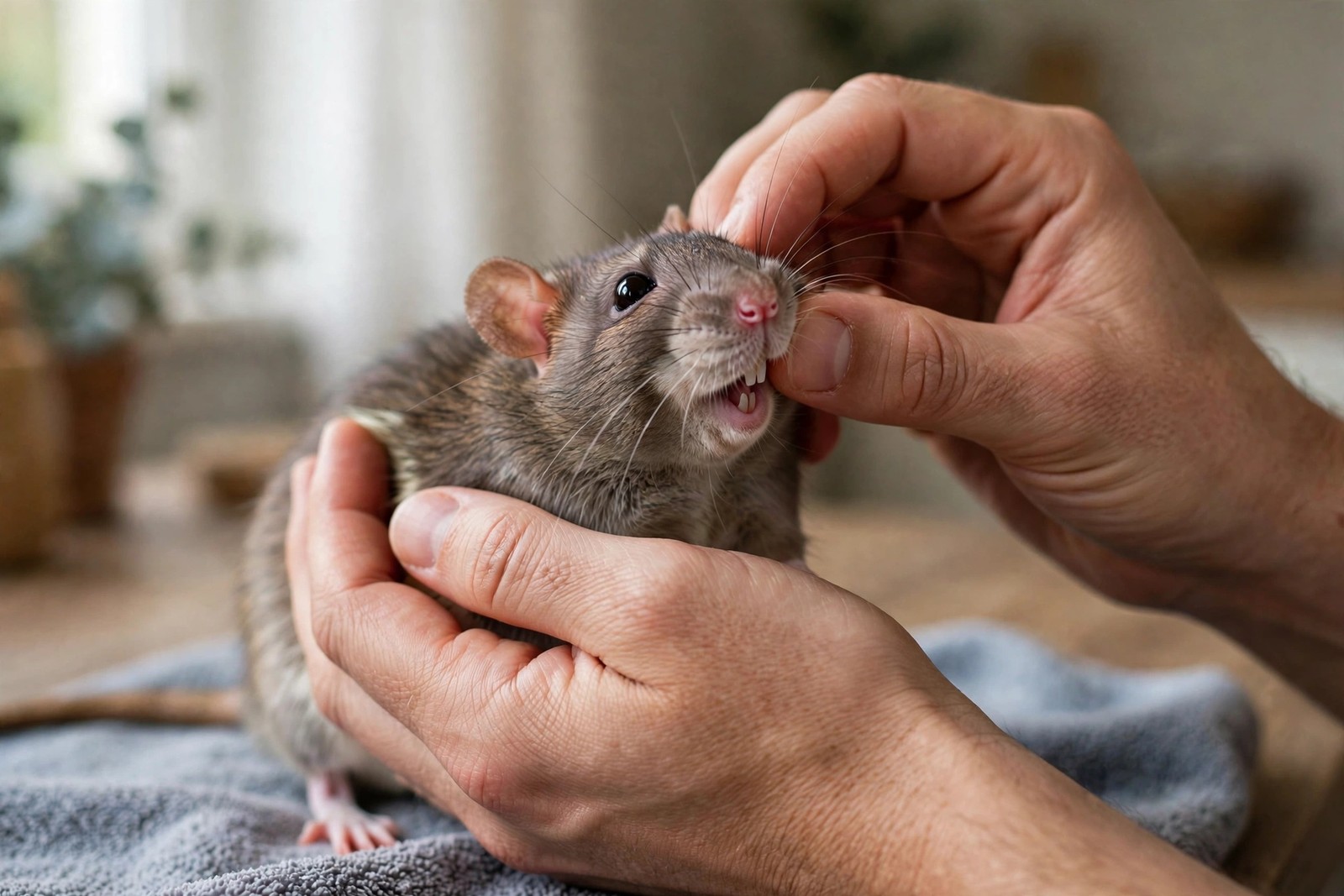
Give each rat a hands-on check once a week, tucked into handling time they look forward to. Rats live short lives and change fast, so a seven-day rhythm means weight loss, lumps and any shift in breathing surface while each is still a minor finding. Between those sessions, watch rather than handle: note whose breathing stays quiet, who seems brightest, and who arrived first for food. At the weekly check, weigh each rat on a kitchen gram scale (a few grams down in a rat is significant), run your fingers slowly over the whole body for lumps (mammary tumours are very common, especially in females), look at eyes, ears, teeth, feet and tail, and listen at rest for any wheeze, click, or whistle in the breathing.
Breathing and Lumps Are the Rat Story
Respiratory disease is the rat's signature health problem, driven by a near-universal background infection that flares with stress, ammonia from dirty bedding, and age: early signs are sneezing fits, a reddish discharge around eyes and nose (porphyrin — often called 'red tears', it is not blood), a rough coat, and quieter behaviour. Airflow-friendly housing, low-dust bedding, and prompt vet care for flares keep rats comfortable far longer than waiting. Lumps should be marked on a calendar the day you find them — size and growth rate are the information a vet needs, and in rats most lumps grow fast enough that 'found it last month' is a very different conversation from 'found it on Tuesday'. Handle any lump gently and do not squeeze it; your job is dates and measurements, not diagnosis.
Working With Your Vet
For rats, the details that matter are measurements: the date a lump appeared, its size then and now, any new wheeze at rest, and how the weekly weights are trending. Only a veterinarian can diagnose what a lump or a breathing change actually is, so bring those dated notes, a note of bedding and cage mates, and any recording of the breathing sound, and let the examination settle the question.
A rat breathing with effort, making constant respiratory noise, losing weight, or with a fast-growing lump should see a vet within days — breathing distress is same-day.
Keep the weekly record brief for each rat: gram weight, appetite, water, droppings, energy, and any lump or breathing note, dated on the day you found it. Across a month, those entries reveal whether a lump is creeping or racing and whether breathing is stable, in a way a remembered impression cannot, and they hand the vet growth rates rather than guesses. Refresh your sense of normal after a cage move, a new cage mate or a change of bedding, because each can shift behaviour and breathing for a few days.
At the clinic, KinsLe's Pet Passport presents each rat's dated weights, lump notes and visit history as one packet, so nothing about a fast-changing patient rests on memory alone.