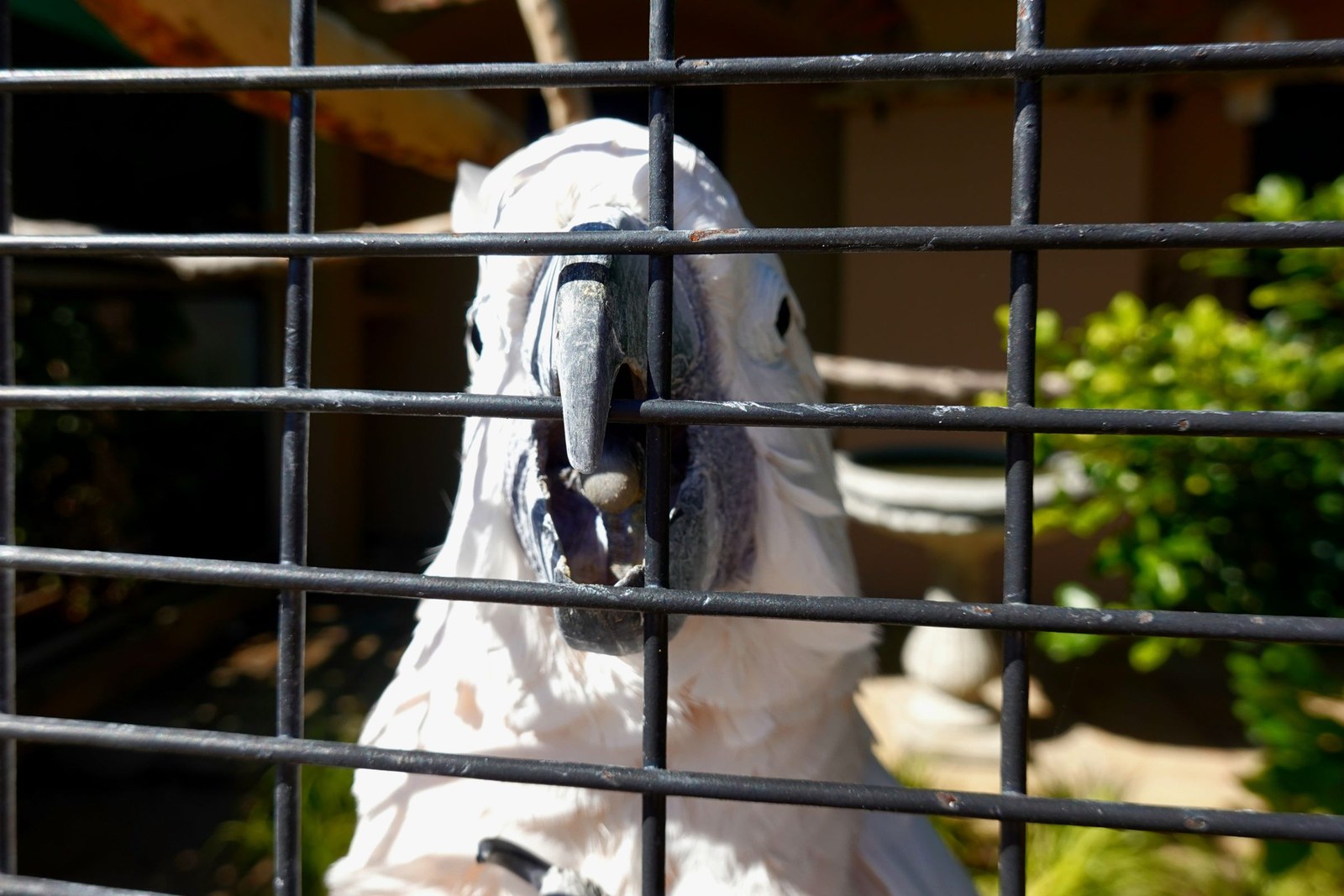
Most parrots do best with a toy rotation every one to two weeks — but swap only a couple of toys at a time rather than redecorating the whole cage at once. Parrots are creatures of habit living in a brain built for novelty, and rotation done well threads that needle: the cage feels fresh, while the favourite perch toy your bird sleeps beside stays reassuringly in place.
Why the gradual swap works
A total cage makeover can genuinely unsettle a parrot, especially shy species like African greys or newly rehomed birds, who may avoid a brand-new object for days. Changing two or three items keeps one foot in the familiar. Behaviourists call it controlled novelty: new things to investigate, anchored by things already proven safe. You will usually see the pattern within a day — cautious beak-testing, then full demolition mode.
Build a rotation stash
Keep a small storage box of clean toys outside the cage, divided loosely into:
- Current favourites, ready to return after a rest
- New toys, introduced one at a time
- Foraging refills — paper, cardboard, wood blocks — that refresh old toys cheaply
A toy that has been away for three weeks often gets a hero's welcome, as if it were brand new. Washing matters: scrub washable toys, let them dry fully, and retire anything with frayed rope, cracked bells, or rusty hardware instead of cycling it back in.
Make old toys feel new
Rotation is not only about swapping objects. Move a hanging toy to a different corner, thread a strip of paper through its links, or hide a favourite treat inside its foraging compartment and the same toy becomes a new problem to solve. Present toys outside the cage first during playtime if your parrot is wary — an object already played with on the stand carries a "safe" stamp into the cage.
Read your individual bird
Schedules are guidelines, not laws. A busy cockatoo or caique may demolish and tire of toys in days and thrive on twice-weekly partial swaps. A thoughtful grey may prefer the same arrangement for a month, with one new item appearing occasionally. Watch the signals: ignored toys, increased screaming, or attention turning to feathers and cage hardware all suggest the environment has gone stale, whatever the calendar says.
How KinsLe helps
Toy rotation is an easy routine to share. With KinsLe's Care Teams, one person can own the weekend toy refresh as an assigned duty alongside feeding and cleaning, and its completion is timestamped so the whole household can see it actually happened — no more "I thought you swapped them." Set up your parrot's free profile and explore more pet answers on KinsLe.